Late last night, a nineteen-year-old YUVA volunteer sent me a message that refused to let me sleep: “Sir, everyone keeps telling me I am the future. What am I supposed to be until then?” I have been turning her question over ever since, because International Youth Day 2026 arrives on 12 August with a theme that deserves more than ceremonial applause: Different Contexts, Common Aspirations.
Young people across the world live in wildly different realities, yet they want strikingly similar things: dignity, meaningful work, and a voice that actually counts. So my message this year is not really addressed to the young at all. It is addressed to the rest of us, about a habit we barely notice, and they feel every single day.
What International Youth Day 2026 Is Really Asking
Every 12 August, the United Nations invites the world to look at its young people honestly. Most years, the theme becomes wallpaper: worthy words on a banner nobody reads twice. This year should be different. The official UN theme for International Youth Day 2026, Different Contexts, Common Aspirations, names something obvious and routinely ignored: a school leaver in Bihar, a graduate in Port Louis and an apprentice in Singapore inhabit entirely different economic realities, yet their deepest wants rhyme. The theme pays particular attention to young people in the world’s least developed countries, where the distance between aspiration and opportunity stretches widest.
Having founded YUVA and spent years around young people in Mauritius and India, I can confirm this from the ground rather than the podium. Contexts differ enormously. Aspirations barely differ at all. Which leaves us with the uncomfortable question this theme quietly asks of adults: if the young are so clear about what they want, why do we keep answering them in the language of postponement?
Future-Tensing: The Compliment That Cancels
Here is the habit I want to name, because naming it is half the cure. I call it future-tensing: our practice of addressing young people almost entirely in the future tense, so that we never have to take them seriously in the present. You will be a great leader one day. Your generation will change the world. The future belongs to you.
It sounds like encouragement. Listen more carefully, and it functions as deferral. In Neuro-Linguistic Programming we watch for presuppositions, the assumptions a sentence smuggles in without ever stating them. “You will matter” presupposes, gently but firmly, that you do not matter yet. Repeat it from enough podiums and a young person learns the real message beneath the applause: wait your turn, and we will decide when your turn arrives.
Future-tensing is how a society compliments its young while quietly removing their chair from the table. Most of us do it with complete sincerity, which is exactly why it survives.
So pause with me for a moment. When did you last change your mind because someone under twenty-five argued better than you did? When you praise a young person, are you describing who they are, or deferring who they might become? And if you are young yourself, where in your own life have you accepted the waiting room as a permanent address?
Different Contexts, Common Nervous Systems
Psychology explains why this theme rings true across borders. Beneath every context sits the same human architecture. Our brains run a quiet background process researchers call neuroception, the nervous system’s below-awareness scanning for signals of safety, belonging and threat. A young person in a village and a young person in a glass tower are running identical software, asking identical questions: am I safe here, do I belong here, does my effort count for anything?
When the answer keeps coming back no, the cost is not abstract. The World Health Organization estimates that one in seven adolescents worldwide experiences a mental health condition. I have written before about the crowded loneliness of modern society, where connection is constant and belonging is rare, and about the counterfeit attunement young people now seek from machines when the adults around them are too busy to listen. Both are symptoms of the same wound. We keep telling the young they are tomorrow’s priority, and their nervous systems keep recording today’s neglect.
A Chair at the Table
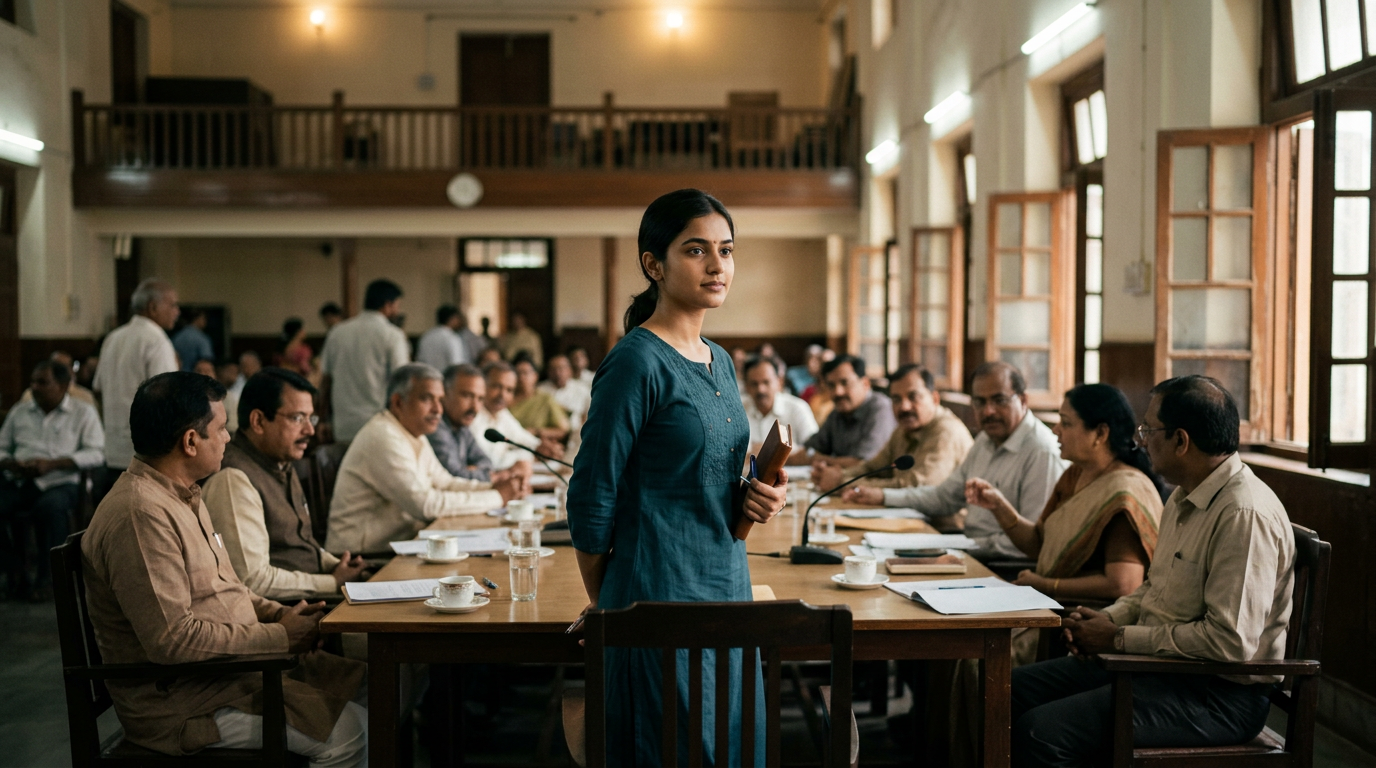
Let me offer a composite, drawn honestly from many young people I have met through YUVA rather than from any single memory. A woman of twenty-two, call her Ritika, runs weekend literacy circles in her neighbourhood. Forty children read because of her. At a felicitation event, a dignitary pats her shoulder and says, with real warmth, “One day you will do great things for this country.” She smiles, thanks him, and admits later that the sentence stung more than any criticism could. She had already done the thing. He simply could not see it, because he was looking at her through the future tense.
What she needed was not another prophecy. She needed what every young person in every context needs: a mentor who sees them now rather than a guru vacancy where guidance should be, responsibilities with real stakes attached, and adults willing to treat their work for social change as work, not as rehearsal.
Young people are not the leaders of tomorrow. They are the citizens of today, and tomorrow will judge us by how we treated them now. Every “leader of tomorrow” speech is a chair quietly removed from today’s table.
My Message, Then
To the young reading this: refuse the waiting room, politely but firmly. You do not need permission to matter later, because you already matter now. Find one place this month where your voice changes an outcome, however small, and let your nervous system learn what agency actually feels like. Evidence beats affirmation every time.
And to my own generation: this International Youth Day 2026, retire one “future” speech and replace it with one present-tense act. Ask a young person’s opinion and let it genuinely move you. Hand over a task that matters and resist the urge to hover. Different contexts, common aspirations, one shared table.
If something here touched a nerve, whether you are a young person tired of the waiting room or a leader wondering how to open the table, I would be glad to think it through with you in a free fifteen-minute conversation. One chair is always open.


