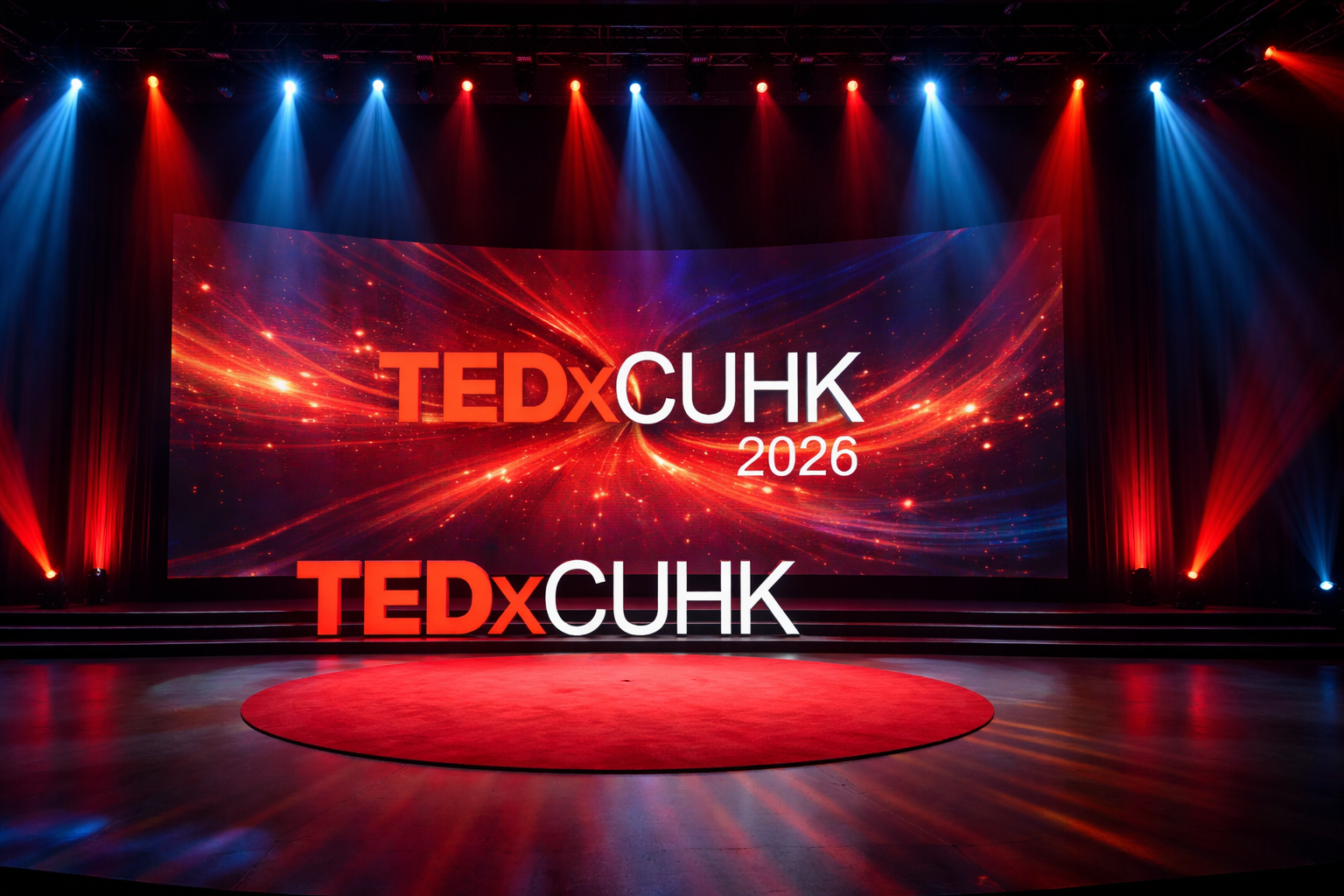
Some news arrives like a bell you did not realise you needed. Not loud. Not flashy. Just unmistakably clear. I have been selected as a speaker for TEDxCUHK this May 2026, and the feeling is both grand and humbling.
Grand, because TEDx has a way of lifting an idea onto a stage where it can travel far beyond one room. Humbling, because the room is never just a room. It is a collection of nervous systems, stories, private battles, quiet victories, and all the brave faces we wear in public.
My talk is called: “The Game of Reactions: The Psychology of Reflex vs Response.”
And yes, it is personal. It is also deeply practical. Because I have watched too many brilliant people lose their peace, not because they lack intelligence, but because their nervous system presses “play” before they can press “pause”.
The Game We Are All Playing, Even When We Pretend We Are Not
We live in a culture that rewards speed. Fast replies. Fast opinions. Fast outrage. Fast success. Fast everything, except healing.
Social media trains our thumbs to react before our minds have even arrived. Workplaces reward the person who “handles pressure” while quietly punishing the person who admits they are overwhelmed. Families often celebrate obedience over honesty, and then act shocked when resentment becomes the family heirloom.
Here is the uncomfortable question I keep returning to: Are we becoming a society of reflexes?
Not because we are weak. Because we are overstimulated, under-rested, and constantly performing.
This is why reflex vs response matters. It is not a motivational phrase. It is a psychological dividing line between living consciously and living on autopilot.
The Central Idea: Most “Personality” Is Actually a Nervous-System Habit
I know that sentence can provoke resistance. People love their personality. It feels like identity. It feels like truth.
But if you have ever said, “That’s just how I am,” right after snapping at someone you love, you already know something is off.
A large portion of what we call “personality” is often a nervous-system habit. Patterns learnt through repetition. Reinforced through stress. Strengthened by life events, family dynamics, culture, and sometimes trauma.
The neuroscience is simple enough to respect without needing jargon. When the brain senses threat, real or perceived, it prioritises survival. Your body mobilises before your mind writes its speech. This is not moral failure. It is biology doing what biology does.
The tragedy is when we mistake this for character. We say, “I’m impatient.” Or “I’m blunt.” Or “I’m anxious.” When what we might be describing is a nervous system that never learnt how to come down from alert.
The Moment Before the Story: Where Real Power Lives
In my coaching, I often ask people to recount an incident that felt “out of character”. They will tell me the story first: what someone said, what it meant, why it was unfair.
Then I ask a different question. “What did you feel in your body three seconds before you spoke?”
That is when the room changes.
A tight jaw. A hot flush. A chest clamp. A sinking belly. A sudden urge to defend. A wave of nausea that comes out as sarcasm.
The body signals first. The story comes second.
When you learn to spot the body signal before the story, you regain choice. That is the real magic of reflex vs response. You stop treating your reaction as fate.
I think of it like this: the body is the fire alarm, and the mind is the dramatic narrator. If you only listen to the narrator, you will spend your life arguing with smoke while ignoring the spark.
My Own Humbling Lesson: The Day I Heard Myself From the Outside
Let me offer a small confession, the kind that still tastes slightly bitter.
Years ago, I was in a conversation where I wanted to appear calm, wise, and composed. You know, the full “coach” costume. Someone challenged me, and I responded quickly. Too quickly. I told myself I was being articulate.
Later, I replayed the moment in my mind and realised I had not been responding at all. I had been protecting. Protecting my image, my authority, my sense of being “right”.
My body had signalled it first. A tightness in the throat. A slight heat behind the eyes. Then the mind wrote the justification at Olympic speed.
That day taught me something I now teach others: the reflex feels like truth because it arrives with certainty. The response feels slower, sometimes awkward, because it requires presence.
And presence is a skill, not a personality trait.
The 60-Second Method: Interrupt One Reaction, Choose One Response
In the talk, I will share a 60-second method that anyone can use in real time. Not in a monastery. Not on a retreat. In a meeting. In traffic. In your kitchen, while someone you love says something that lands badly.
The aim is not to become robotic. The aim is to become free.
Because “calm” is often misunderstood. Calm is not numbness. Calm is the capacity to feel a surge and still choose your next move.
By the end of the talk, the audience will know how to catch one reaction, interrupt it, and choose a response without becoming robotic. Not every time. We are human. But often enough to change the direction of a relationship, a career, even a life.
The bigger promise is this: when you practise reflex vs response, you do not just improve behaviour. You reclaim dignity. You stop apologising for versions of you that only show up when your nervous system is cornered.
Why This Matters Now: The Cost of Untrained Reaction
We are living through a time where reactions travel faster than reflection.
A single comment can cost someone a job. A single misread text can spiral into days of cold war. A single reactive leadership moment can break trust in a team more effectively than any strategic mistake.
We have normalised reactivity as “being real”. But realness without regulation is not authenticity. It is leakage.
This is where the yogi in me gently clears his throat. The ancient aim was not perfection. It was mastery of attention. And attention begins in the body.
If we are serious about leadership, parenting, partnership, and mental health, then we have to stop treating emotional regulation as a private hobby. It is a public skill. It shapes culture.
What I Hope You Take From This Announcement
Yes, I am honoured to be speaking at TEDxCUHK in May 2026. And yes, there is a part of me that is quietly proud.
But more than anything, I am grateful. Because this topic is not a performance for me. It is a practice. One I keep returning to on days when I am tested, tired, or tempted to react.
If my talk helps even one person pause before a reflex that would have harmed a relationship, a reputation, or their own self-respect, then the stage will have done its job.
Until May, I will keep doing what I always do: listening closely, studying the mind, respecting the nervous system, and practising the pause like it is prayer.
Because in the end, the most powerful version of you is not the one who never reacts. It is the one who can feel the reaction, and still choose the response.


