
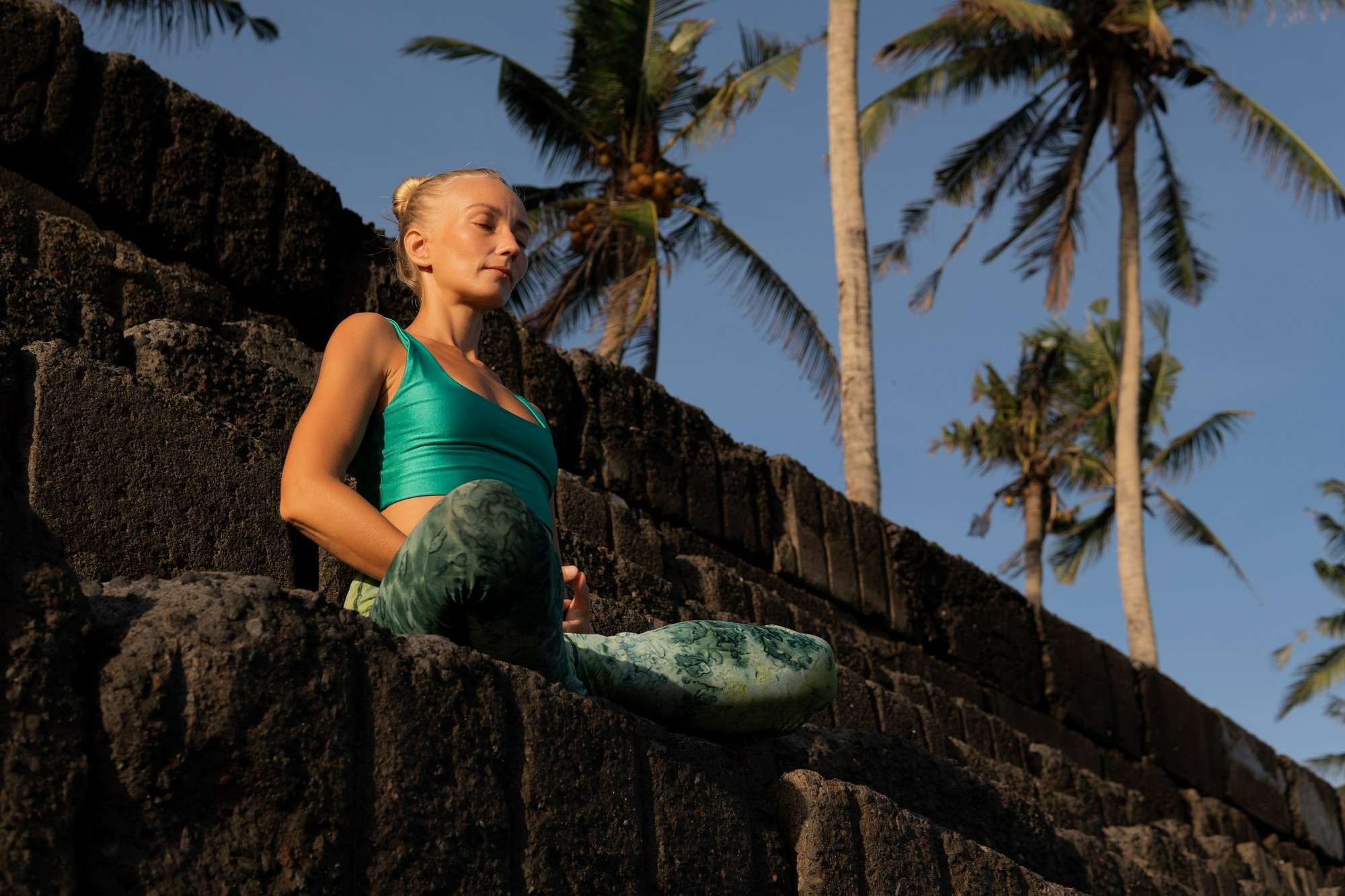
From the Mountains to the Ocean: How Yoga in Mauritius Connects Body, Mind and Nature
I still remember the first morning I rolled my mat out on the sand at Flic-en-Flac. The horizon was blurred in pink light, the air still cool, and the faint rhythm of waves seemed to whisper something ancient and unhurried. I bowed forward, palms pressed together, and for a brief moment, I understood why so many come to Mauritius in search of peace. This island is not only a postcard paradise. It is a breathing, living classroom for anyone willing to rediscover balance—through yoga, through stillness, through presence.
For many, yoga in Mauritius begins as a pursuit of wellness. Tourists arrive with eco-friendly mats tucked into their backpacks, ready to stretch by the sea before breakfast. Locals join evening sessions on mountain terraces, their eyes tracing the sun’s descent over Le Morne. It looks beautiful, it feels healthy, and yet, beneath this visible layer lies something much deeper. Yoga in Mauritius is not simply another imported fitness routine. It is becoming a way for people to reconnect with themselves and with a world that is quietly asking us to slow down.
Mauritius, despite its serenity, mirrors the same psychological chaos that defines much of our modern life. We rush between obligations, often forgetting that success without inner stability is a fragile kind of victory. The island’s economic growth, digitalisation, and social pressures have left many people with overstimulated minds and undernourished souls. When I speak to my clients as a life coach, I often sense this subtle exhaustion—an unspoken longing for something real, something grounding. Yoga, in its purest form, offers exactly that: a return to the rhythm of the self.
Practising yoga here is not about escaping reality; it is about re-entering it with more awareness. When you move through sun salutations under a Mauritian sunrise, the experience is psychological as much as physical. The mountain wind touches your skin and suddenly the idea of “balance” stops being a metaphor. You feel it. The body bends and breathes with the earth beneath it. There is a reminder that nature does not rush, yet everything gets done.
I have seen people who began yoga as a way to tone their bodies only to discover that the real transformation was invisible. A young banker from Port Louis once told me after a retreat in Chamarel, “I came here to stretch my back; I ended up stretching my life.” That sentence stayed with me because it captures what the practice truly does. Yoga in Mauritius, when approached sincerely, invites us to dismantle our inner noise and question how we have been living.
There is something profoundly psychological about this journey. We speak often about physical flexibility, but rarely about emotional flexibility—the ability to stay open when life bends us in uncomfortable directions. The ocean, with its calm and chaos, teaches the same lesson. When you practise yoga by the shore, you realise that stillness does not mean the absence of movement. It means being at peace within the movement. That is mindfulness in motion, and Mauritius provides a perfect mirror for that insight.
What fascinates me most is how yoga here bridges cultures and generations. The island’s mosaic of influences—Indian, African, European, and Creole—finds an unexpected harmony in this ancient practice. In many ways, yoga in Mauritius has become a metaphor for the island itself: diverse, resilient, always seeking equilibrium. Even those who have never stepped into a formal class speak of feeling “lighter” after a few breaths facing the ocean. It is as if the island itself guides you back to yourself.
Yet, I also question how easily we turn something sacred into something consumable. Wellness tourism has become a booming industry, and yoga, unfortunately, is often packaged as a lifestyle accessory. I have attended sessions where the focus was on the perfect photograph rather than the imperfect self. This commercialisation worries me. When yoga is reduced to performance, we lose the very silence that gives it meaning. Practising yoga in Mauritius should not be about curating serenity; it should be about confronting what prevents us from feeling it in the first place.
As a life coach, I often ask my clients: what would happen if you stopped trying to “find” balance and instead allowed balance to find you? The island has a way of answering that question. Climb Le Pouce at dawn and you will see how the mist lifts slowly from the valleys, revealing villages, rivers, and reefs. The world does not wake up all at once. It unfolds. Our inner transformation must do the same. Yoga teaches patience—the kind that accepts that healing is not linear, that awareness does not arrive on demand.
There is also a collective dimension to this practice. When groups gather for full moon yoga on the beach or community classes in the parks of Moka, something subtle happens. Strangers begin to breathe together. For a society often divided by pace, politics or perception, this shared silence becomes revolutionary. It reminds us that beneath our differences lies a universal longing for calm. Yoga, in that sense, becomes not just a personal tool but a social compass pointing us back towards empathy and interconnectedness.
The connection between body, mind and nature in Mauritius feels almost effortless. You inhale mountain air and exhale salt from the sea. You walk through sugarcane fields and sense life’s quiet persistence. You realise that well-being is not a personal achievement but a natural alignment. The body knows how to heal when the mind stops interrupting. The island’s landscapes seem to conspire gently with this realisation.
Still, practising yoga here is not always idyllic. The same serenity that attracts many can also confront you with your own restlessness. The mind, stripped of distractions, begins to speak truths you have avoided hearing. During one silent retreat, I spent hours simply observing the movement of clouds over the lagoon. I thought I was meditating; in truth, I was learning to tolerate my own stillness. That is the uncomfortable yet necessary part of the practice—the psychological unravelling before renewal.
Yoga in Mauritius, when stripped of trend and ornament, becomes a conversation with existence itself. It teaches us that peace is not imported from retreats or retreats sold to tourists; it is cultivated in the space between one breath and the next. The mountains, the coral reefs, the trade winds—they are not backdrops to the practice. They are partners in it, reminding us of the cyclical, imperfect beauty of being alive.
So yes, yoga in Mauritius is beautiful. But more importantly, it is brave. It asks us to question the pace at which we live, the things we chase, and the moments we ignore. It invites us to listen—to the ocean, to our breath, to that quiet part of the self that still believes in harmony. In a world obsessed with doing more, yoga on this island gently insists that we become more by doing less.
Every time I finish a class here, I close my eyes and feel the heartbeat of the island beneath me. I realise that balance was never something to be achieved. It was something to be remembered. Mauritius, in all its natural grace, simply helps us remember.


Leave a Reply