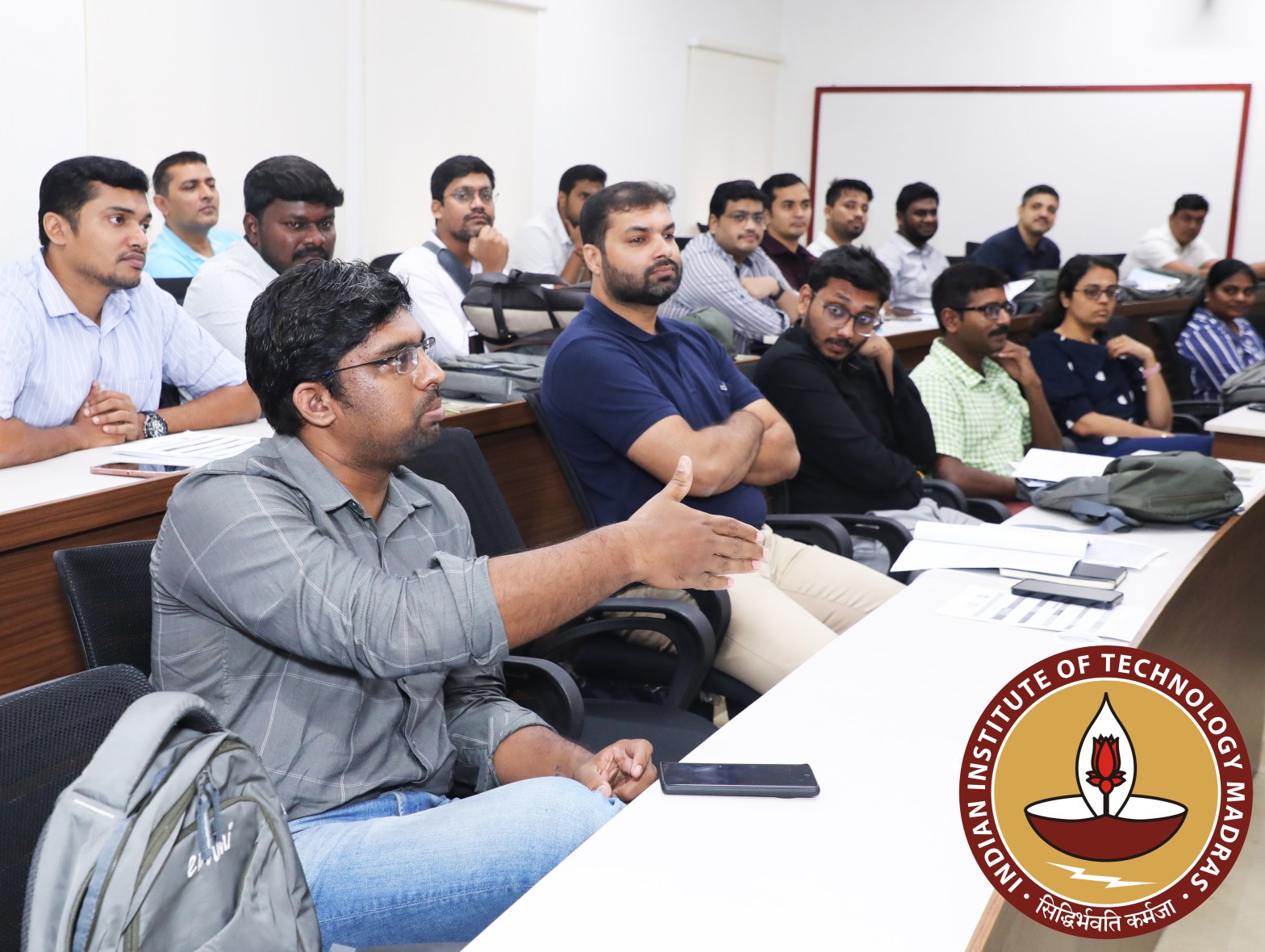
Most people who write about IIT Madras write about getting in. Very few write about getting out. I arrived as an IIT Madras international student from Mauritius, enrolled in the Executive MBA at the Department of Management Studies (DOMS), and I left before finishing, because the curriculum did not hold me and did not meet what I had come for.
This is the full account: the admission, the arrival, the classroom, and the quieter decision to walk away. I am telling it because the leaving taught me more than the staying ever could. If you are a Mauritian student weighing a move to India, or anyone sitting inside a prestigious commitment that no longer fits, this is written for you.
Why IIT Madras, and why the EMBA at DOMS
The name did a lot of the work. IIT Madras sits at the top of India’s rankings year after year, and for a young professional from Mauritius, being admitted to one of its programmes felt like a form of arrival. I was not looking for an undergraduate seat. I was already working, already curious about how organisations behave, and the EMBA programme at DOMS promised what I wanted on paper: a rigorous management education, a technology-forward lens, and a peer group of mid-career professionals.
The application itself was demanding in the way all serious applications are. Academic records, a statement of purpose, proof of work experience, and the long administrative patience that any international student learns to develop. When the acceptance arrived, I felt what most people feel: a mixture of pride, relief, and a faint fear that I would need to become someone new to deserve it.
Arriving in Chennai as a Mauritian student
The campus is extraordinary. Anyone who has walked through it knows the feeling: a forest with an institution inside it, deer crossing the road, old trees shading newer buildings. Chennai itself was a shift. Mauritius is small, multilingual, and slow in a way that feels like kindness. Chennai was large, fast, and full of a cultural texture I recognised from my heritage and yet had never lived inside.
I have written before about managing cultural diversity in Indian rooms, and much of what I understand about it began in those first weeks. Language, food, the pace of conversation, the unspoken rules of a classroom: all of it was new, and all of it was manageable, mostly because the people around me were generous. Homesickness came and went. So did the ordinary stress of adjusting, which I later learnt to treat as information rather than weakness, something I explore in my piece on managing stress.
None of that was the problem. The problem was what happened once the novelty settled and the actual learning began.
What I expected from the curriculum, and what I found
I want to be careful here, because this is not a complaint about IIT Madras. The faculty were knowledgeable. The institution is serious. Many of my peers found exactly what they came for, and they were right to.
What I found was that the curriculum did not attract me. I had arrived hoping to study how people lead, decide, resist change, and grow, the human architecture underneath management. What I met was a programme built, quite reasonably, around functional business foundations and analytical tools. It was well designed for the outcome it promised. It simply was not designed for the question I was carrying.
There is a neurological truth underneath this. Adult attention is not a matter of willpower alone. The brain’s reward circuitry, driven largely by dopamine, lights up when new information connects to a question you already hold. Relevance is the fuel. When material arrives without that connection, attention thins, memory weakens, and the mind starts doing what minds do when they are under-stimulated: it wanders, it resents, it counts the hours. I sat in rooms full of capable people and felt my own curiosity draining out of me, week by week.
I tried the usual remedies. I read more around the subjects. I told myself the relevance would come later. I reminded myself what the name on the certificate would mean. None of it changed the basic experience of learning things I did not want to know in order to earn a credential I was increasingly unsure I wanted.
The decision to leave
I have come to call what kept me there for longer than I should have stayed the prestige tax: the price you keep paying, in time, energy, and self-respect, to remain attached to a name that no longer feeds you.
The prestige tax is collected quietly. It shows up as the sunk-cost fallacy, the belief that because you have already invested so much, leaving would waste it, when in truth the investment is gone either way and only the future is still yours to spend. It shows up as loss aversion, the brain’s tendency to feel the pain of giving something up far more sharply than the pleasure of gaining something better. And it shows up socially, in the imagined conversation where you have to explain to family and friends why you walked away from IIT Madras.
I paid the tax for a while. Then I stopped. I withdrew from the programme, not in anger and not in failure, but with a clear sense that the seat I was occupying belonged to someone whose question it could answer.
Was it hard? Yes. Was it a mistake? No. The degrees I went on to earn, the story of how I came to coaching, and the framework I eventually built all trace back to that one decision to stop learning what I did not care about and start pursuing what I did.
What leaving taught me about learning
Three things stayed with me, and they now shape how I coach.
The first is that fit matters more than prestige. A programme, a job, or a relationship can be excellent by every external measure and still be wrong for you, and the wrongness is not a verdict on either party.
The second is that disengagement is data. When your attention refuses to stay somewhere, it is usually telling you something about alignment, not about discipline. Before you force yourself to try harder, ask what the resistance is protecting.
The third is that leaving well is a skill. I left without burning anything. I kept the friendships, the respect for the institution, and the memory of the campus. You can exit a commitment cleanly and still carry its gifts with you.
I see the prestige tax often in the coaching room. A composite of several clients: a senior manager who has spent four years in a role at a famous company, visibly depleted, who opens our first session by saying “I know I should be grateful.” The gratitude is real. So is the depletion. Our work is rarely about whether to stay or go. It is about separating the value of the name from the value of the experience, and then deciding with both eyes open. I have written elsewhere about how executive coaching reshapes leadership, and this separation is often where it begins.
A moment to reflect
- Where in your life are you currently paying the prestige tax?
- If the name attached to that commitment disappeared tomorrow, would you still choose it?
- What is your disengagement trying to tell you that your discipline keeps overriding?
Comparing education in Mauritius and India
Both systems gave me something. The Indian system, at least as I met it, is intensely competitive and rewards analytical depth, a culture the National Education Policy 2020 is now trying to broaden. The Mauritian system is smaller and more balanced, shaped by its mixed British and French inheritance and a multilingual population. Neither is better. Each produces a particular kind of mind, and knowing which kind you are is half the work of choosing where to study.
Would I recommend IIT Madras to Mauritian students?
Yes, and with a condition. Go for the right reasons. If the programme’s curriculum matches the question you are carrying, you will find world-class teaching, a remarkable campus, and a network that lasts. If you are going mainly for the name, read the course outline twice, speak to current students, and be honest with yourself about what you actually want to learn.
A prestigious institution cannot supply the curiosity. It can only reward it.
Reflections on my journey
I do not tell this story as a failure, and I do not tell it as a success. I tell it as a turning point, which is more accurate and more useful. IIT Madras gave me an admission, a campus, a culture, and a clear experience of my own disengagement. I took the first three with gratitude and acted on the fourth. Everything I do now as a coach rests on that act.
If you are sitting inside a commitment that looks right from the outside and feels wrong from the inside, you are allowed to examine it. That examination is exactly what a free fifteen-minute consultation is for.
FAQs
Why did you choose IIT Madras as a Mauritian student?
For its reputation, its academic seriousness, and the promise of studying management in a technology-led environment at the Department of Management Studies.
Which programme were you enrolled in at IIT Madras?
The Executive MBA at DOMS, IIT Madras, which is designed for working professionals.
Why did you leave IIT Madras without completing the EMBA?
The curriculum did not attract me and did not meet my expectations. I had come to study the human side of leadership, and the programme, while well designed for its purpose, was built around a different set of questions.
Do you regret dropping out of IIT Madras?
No. Leaving freed me to pursue the qualifications and the work that eventually became my coaching practice. I left on good terms and with lasting respect for the institution.
Would you recommend IIT Madras to other Mauritian students?
Yes, provided the curriculum matches what they want to learn. It is an excellent institution for the right student with the right question.


