
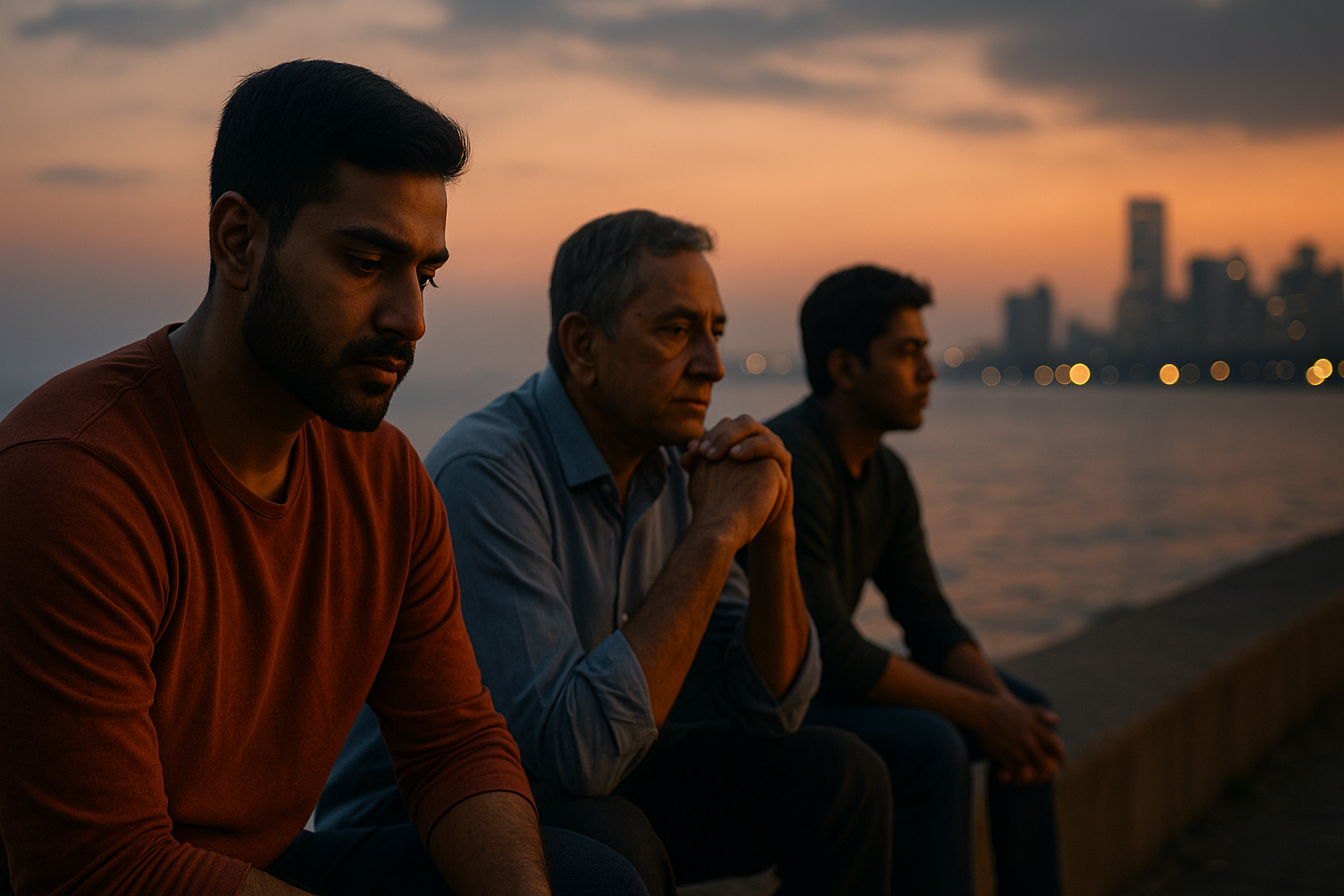
Tomorrow is International Men’s Day. By the time many men hear about it, it will probably be through a meme or a brand offer on razors. As a life coach, I rarely meet a man who says, “I want to talk about my feelings.” I meet men who say, “I am fine,” while their eyes tell a different story.
This day is not about putting men on a pedestal. It is about finally naming the quiet pain that modern men carry and almost never speak about. When we ignore modern men’s mental health, we do not just hurt individual men. We quietly affect partners, children, workplaces and whole communities.
The Silent Script Of Strength
When I coach male clients, there is usually an invisible script running in the background. It says, “Real men do not complain. Real men fix.” A young professional in Mumbai once told me, “If I cry, my father will say I am weak. So I do it in the shower, quickly.”
Modern men’s mental health is shaped by this script. Men learn to solve problems but not to sit with pain. They know how to provide and perform, yet many have never been taught how to grieve, how to apologise, or how to ask for comfort. Society rewards the stoic mask and quietly punishes emotional honesty.
We clap for the man who never breaks, then act surprised when he breaks all at once.
The Lonely Provider In A Changing World
The role of provider is changing fast. Families often need two incomes. Women are rightly demanding equality and independence. Yet the old expectation has not entirely shifted. Many men still feel they must be the financial backbone, even if their partner also earns well.
One client said to me, “If I lose my job, I lose my worth.” That sentence is not just about money. Modern men’s mental health becomes brittle when their value is tied only to salary slips, promotions and social status.
Here is the irony. While men work hard to provide, they often feel unable to ask for emotional support themselves. They are banks that give out loans of care and encouragement, but never feel safe to make a withdrawal.
Fathers Who Were Never Fathered Emotionally
Many men grew up with distant or authoritarian fathers. Their dads may have been physically present but emotionally unavailable. Now they are trying to father their own children in a more conscious, gentle way, but they have no model.
One father in Port Louis told me, “I do not know how to talk to my son without sounding like my father. So sometimes I just stay quiet.” His silence is not lack of love. It is fear of repeating the past.
Men want to hug their sons, but their arms feel stiff with inherited discomfort. They want to tell their daughters that it is safe to trust good men, yet they do not always trust themselves emotionally. Modern men’s mental health is deeply affected by this generational gap.
Boys Who Were Told To “Man Up”
If we want to understand men, we must go back to their boyhoods. Boys in our cultures are often told, “Stop crying like a girl” or “Be a man” by the age of eight. Their first lessons in emotional literacy are actually lessons in emotional suppression.
I once coached a 30-year-old who could not remember the last time he cried. Not because he did not feel sadness, but because at some point his body simply stopped producing tears. His modern men’s mental health struggle was invisible to others. Outside, he was successful and charming. Inside, he was emotionally anaesthetised.
When boys are taught that tenderness is shameful, they grow into men who cannot easily receive tenderness from partners, children or friends. They may long for intimacy, yet feel embarrassed when it appears.
Work, Money And The Quiet Panic
We often discuss stress at work, but we rarely discuss the secret panic many men carry about staying relevant. In a rapidly changing economy, men in their thirties and forties can feel that younger, more tech fluent colleagues are breathing down their necks.
One corporate leader in Bengaluru confessed, “I am terrified of becoming obsolete, but I cannot tell anyone at work. They expect me to be the steady one.” His modern men’s mental health struggles were masked by his expensive watch and confident voice.
Financial pressure is also very real. Many men support not only their nuclear family, but parents, siblings and extended relatives. When they worry about money, they do not always say, “I am scared.” Instead, they become irritable or withdrawn. Their partners see the behaviour but not the underlying fear.
Relationships And Emotional Labour
Modern relationships ask more from men emotionally than previous generations ever did. Women are increasingly emotionally literate, reading about attachment styles, trauma and boundaries. Men are expected to open up, communicate and share responsibility for emotional labour at home.
This is healthy, yet it can be overwhelming for men who never received emotional education. Some feel constantly wrong in the relationship, as if they are sitting an exam where the questions keep changing.
Redefining Strength For Modern Men
If we want to honour International Men’s Day, we have to upgrade our definition of strength. Strength is not silence. Strength is not emotional numbness. Strength is the courage to stay present with uncomfortable feelings and still choose wise action.
In my work, I often ask men one simple question: “Who holds you?” The room usually goes quiet. Some mention a partner. A few mention a close friend. Many have no answer at all.
Modern men’s mental health cannot thrive if men are only ever the holders and never the ones being held. It is time to normalise male friendships that go beyond sport, business and banter, especially in Indian and Mauritian contexts where male bonding is common, yet emotional depth is rare.
What Men Need From The Rest Of Us
This International Men’s Day, I am not asking you to buy a gift for the men in your life. I am inviting you to see them. Look beyond the role, the income, the sarcasm and the occasional bad mood.
Ask him how he really is, then wait long enough to hear the second answer. Notice when he is trying to change, even if he stumbles. Encourage him to seek therapy or coaching without labelling it as weakness. Offer appreciation not just for what he does, but for who he is when no one is watching.
And if you are a man reading this in India or Mauritius, know this. Your modern men’s mental health journey is not a luxury. It is an act of responsibility. When you heal, you do not only heal yourself. You change the emotional climate of your family for generations.
The world does not need perfect men. It needs honest men who are willing to look within, ask for help and redefine what it truly means to be strong.


Leave a Reply