
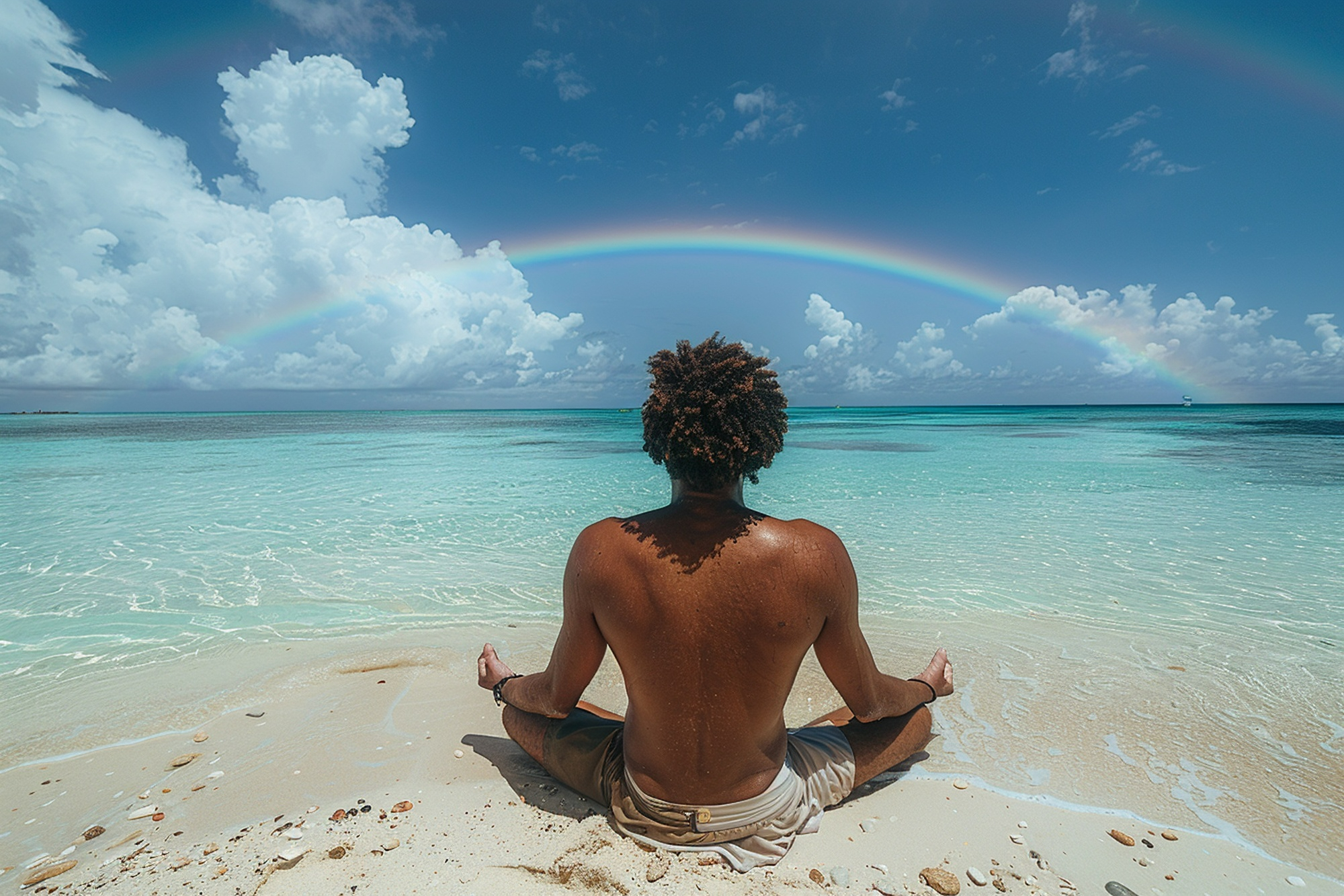
A few months ago, a client sat in front of me in Quatre Bornes, looked out of the window and said, almost apologetically, “I do not have the right to feel like this.” Moments like these reflect the quiet reality of Mental Health in Mauritius —the belief that living in a paradise island should somehow cancel out emotional pain. “I live in Mauritius,” they added. “People come here for holidays.”
That sentence captures the paradox of mental health in Mauritius. We live on a postcard, yet so many minds feel like storm season.
This is why I want to talk about mental health in Mauritius openly, honestly and without drama. Not as a distant clinical topic, but as something that is shaping our families, our workplaces and our sense of self right now.
From paradise island to pressured island
When people abroad hear “Mauritius”, they picture turquoise lagoons, honeymoon packages and luxury resorts. We picture traffic on the M1, loans to repay, the price of milk, pressure to perform, and family expectations that never sleep.
The gap between the fantasy of the island and the reality of living here creates a subtle guilt. Many people tell me, “Others have it worse, so I should not complain.” That guilt is one of the quietest enemies of mental health in Mauritius. It silences people before they even name what they are going through.
Mental health does not ask if you live near a beach. It asks how you sleep at night, how you speak to yourself, how you handle stress, loneliness, conflict and uncertainty.
The polite smile culture: “Mo ok, pa traka”
In Mauritian culture, we are trained to be pleasant. We know how to smile in front of elders, how to say “mo ok”, how to avoid making others uncomfortable. We learn early that anger, sadness and fear are private emotions.
The result is a country of people who can function, work, study, joke and still feel unbearably alone inside. I often hear, “No one knows what I am going through, doctor,” and I believe them. We have built a culture where emotional honesty feels like a risk, not a virtue.
When mental health in Mauritius is treated as a “luxury topic” or a “weakness”, people hide. They drink a bit more, scroll a bit more, work a bit more, joke a bit more. Anything but sit with what hurts.
Three powerful forces shaping mental health in Mauritius today
First, rapid change. Mauritius is shifting from a small, familiar, slower paced island to a competitive, globally connected economy. Expectations are rising faster than emotional skills. Young professionals feel pressure to be high earning, globally minded, always available and constantly upgrading themselves. The nervous system is not designed for permanent acceleration.
Second, shifting family structures. Many people tell me they miss the old extended family feeling, yet they also feel suffocated by traditional expectations. We are caught between “respect the family” and “be independent”. That tension can show up as anxiety, resentment, or quiet burnout.
Third, digital overload and comparison. Mauritians no longer compare themselves only to neighbours or cousins. They compare themselves to influencers, to people in London, Dubai, Mumbai and everywhere else, all within a few swipes. When you constantly see curated lives, your own life starts to look inadequate, even when it is perfectly human.
How Mauritians actually ask for help without saying the words
Many people in Mauritius do not come to a coach or therapist saying, “I think I have anxiety” or “I feel depressed.” They come saying, “Mo perdi motivation,” “I am always tired,” “We fight all the time at home,” or “I just do not feel like myself.”
Some first go to the GP for headaches, stomach issues, sleep problems. Others go to religious leaders, friends or HR. Some joke about their own breakdowns as if they are telling a funny story at a party.
These are all ways of asking for help without breaking cultural rules. The sentence “I am not coping” still feels heavy in our context. So we circle around it.
Part of transforming mental health in Mauritius is learning a new emotional language. Words like “overwhelmed”, “burnt out”, “numb”, “triggered” and “unsafe” need to become as normal as “tired”, “hungry” or “busy”
Stigma, shame and the myth of the strong Mauritian
There is a stubborn myth that “real” Mauritians are strong. We survive cyclones, political drama, family quarrels and financial pressures. We keep going. We make jokes. We move on.
Strength is beautiful, but when it becomes armour, it suffocates. Stigma around mental health in Mauritius comes from a misunderstanding of strength. People think:
If I ask for help, it means I am weak.
If I take medication, it means I am broken.
If I see a coach or therapist, it means I cannot handle my own life.
In reality, the opposite is true. It takes far more strength to say, “I am not coping” than to pretend everything is fine while you slowly fall apart. It takes courage to unlearn patterns that your family has repeated for generations.
Stories from the coaching room
I think of the young man from the Plaines Wilhems area who came to me convinced that he was “lazy and useless”. Once we explored his schedule, we discovered that he was working, studying part time, helping at home and dealing with an unresolved grief that no one had allowed him to talk about. He did not need motivation. He needed permission to be human.
I think of the woman in her forties who believed she was “too emotional”. In our sessions, it became clear that she had been carrying everyone’s problems for years. She had never been taught boundaries. Her so called “over sensitivity” was her nervous system crying for protection.
These are not rare cases. They are the everyday faces of mental health in Mauritius. People do not need to be “fixed”. They need to be seen, heard and supported in learning new ways to live with their minds.
Workplaces, schools and the cost of silence
Companies in Mauritius still underestimate how mental health shapes performance, innovation and retention. Many managers quietly know that their teams are exhausted, but they are unsure how to respond beyond a wellness day or a motivational talk.
True commitment to mental health in Mauritius would look like psychologically safe workplaces, training in emotional intelligence, healthier boundaries around working hours, and leaders who model vulnerability rather than perfection.
Our schools are also under pressure. Teenagers face academic expectations, body image issues, online bullying and family stress in a small, tightly connected society where everyone knows someone who knows your parents. When young people say “I am tired of everything,” we should not dismiss it as drama. We should hear it as data.
What genuine healing might look like in Mauritius
In my experience, healing here does not mean becoming permanently calm or happy. It means becoming more honest, more integrated and more skilled at being with your own mind.
For some, it looks like finally going to therapy after years of saying “I am fine”. For others, it is learning to say “no” to family demands without drowning in guilt. For a couple, it might be learning to talk without shouting or silent punishment.
At a community level, healing around mental health in Mauritius would mean fewer jokes about “fou” and more curiosity about what people are carrying. It would mean asking, “How are you, really?” and having the time and courage to listen.
A new definition of resilience for Mauritians
I would love us to retire the idea that resilience means never breaking. I prefer a different definition.
Resilience is the ability to fall apart in safe places, learn from it and reorganise your life in a wiser way. It includes tears, hard conversations, boundary setting and sometimes medication or long term support.
If we adopt this definition, seeking help becomes an intelligent strategy, not a shameful admission.
If you are struggling in Mauritius today
If any part of this article feels uncomfortably familiar, let that discomfort be information, not accusation. You are not weak, dramatic or ungrateful. You are a human living in a changing, pressured, beautiful and complicated island society.
Start small. Confide in one trusted person. Speak to a professional if you can. Give your feelings names. Notice the moments you feel slightly better and study them. Question the old stories about what it means to be “strong”.
Mental health in Mauritius is not an abstract policy topic. It is your mornings, your late night thoughts, your relationships, your ability to hope.
As a life coach who has listened to many Mauritian hearts, I can tell you this with certainty. You are not the only one who feels this way. You are not behind. You are not broken. You are simply at a point where your old way of coping has reached its limit. That is not the end. That is the beginning of a different, more honest chapter of your life.


Leave a Reply