
There is a quiet emergency unfolding in Mauritius. Youngsters from every background, from coastal villages to elite colleges, are getting hooked on synthetic drugs. Police and public health reports show a sharp rise in new psychoactive substances among 15 to 25 year olds, cutting across class, gender and region.
As a life coach, I have sat across teenagers and young adults whose eyes carry a mix of bravado, shame and exhaustion. Some come from families that are struggling to survive. Some are the children of professionals, ministers and respected academics. The substance may be the same, but the story behind it rarely is.
Everyone keeps asking the same question. “Who is at fault?” I believe that is the wrong place to begin.
Why synthetic drugs feel so attractive
Synthetic drugs in Mauritius are not simply a “bad choice”. They are a symptom of a system under strain. These substances are often cheaper than alcohol, easier to hide from parents, and disturbingly accessible in neighbourhoods, online spaces and even near some schools.
Now add a brain that is still under construction. Neuroscience shows that the adolescent brain is wired for risk, novelty and belonging. The regions that handle impulse control and long term planning mature much later than the emotional and reward centres.
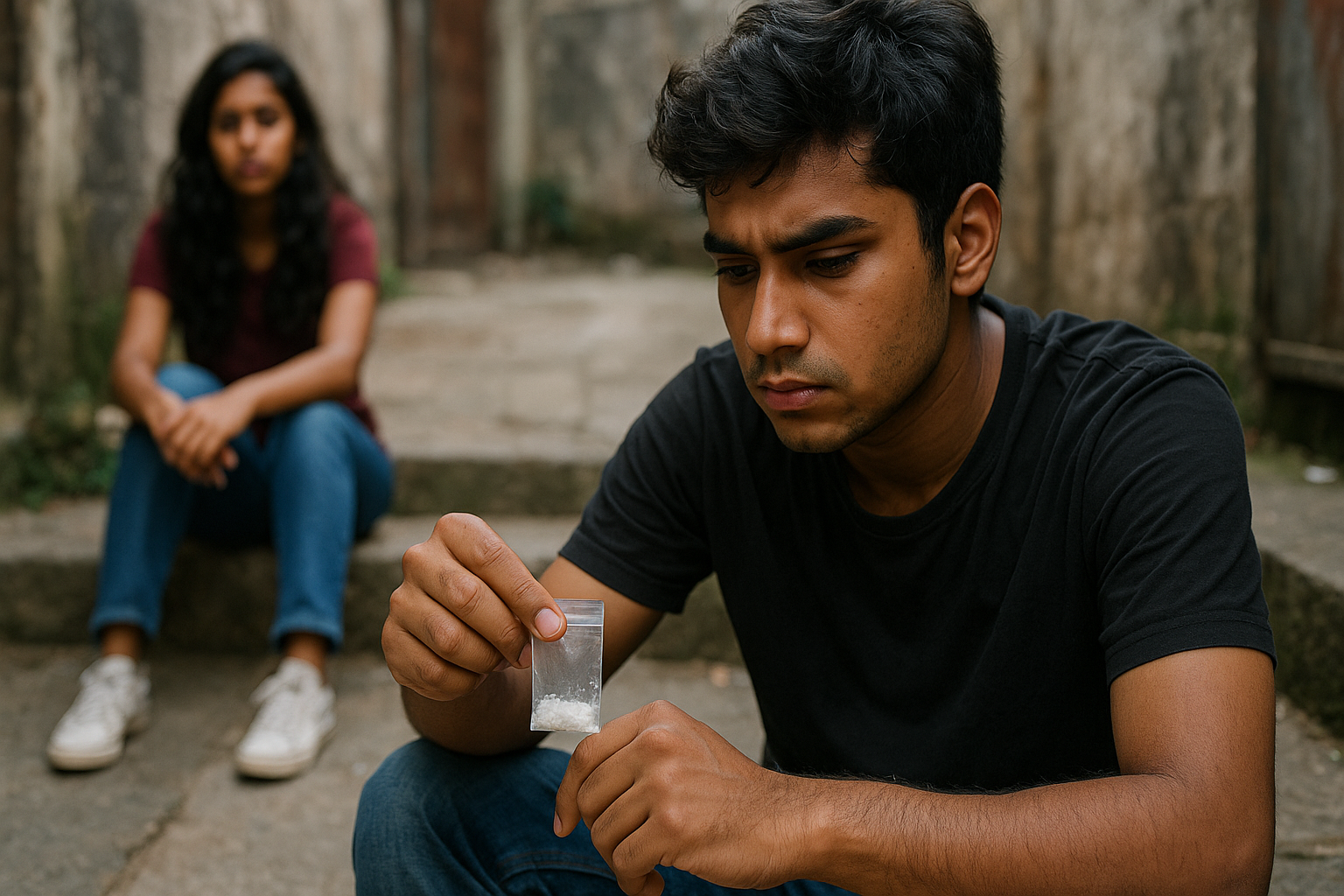
So when a 17 year old sits on a football pitch after college and someone offers a small packet that promises escape, confidence or simply “something to feel”, it is not a fair fight. Social anxiety, exam pressure, heartbreak, childhood trauma, untreated ADHD or depression all make that packet look less like danger and more like medicine.
In Mauritius, many young people describe feeling squeezed between high expectations and low emotional support. They are told to score marks, secure a job, respect elders and behave, yet rarely taught how to regulate emotions, handle rejection or sit with discomfort. Drugs then become a secret therapist, a rebellion and a coping mechanism, all in one.
Who is really at fault?
When a young person ends up on synthetic drugs in Mauritius, it is convenient to blame the user, the “bad company” or the “careless parents”. The truth is more uncomfortable.
Research on adolescent substance use shows that risk is shaped by a web of factors. Early mental health problems, poor parental supervision, family conflict, peer pressure, academic stress, boredom, poverty, easy access to drugs and weak community structures all play a part.
In Mauritius, national surveys have found thousands of people between 18 and 59 using illicit drugs, with synthetic drugs emerging strongly among youth. This is no longer a story about “a few bad areas”. It is a mirror held up to the whole society, including comfortable suburbs and powerful families.
So who is at fault? The dealer who sees youth as a market. The adult who chuckles when a teen drinks but is shocked when the same child turns to chemicals. The school that worships marks and ignores mental health. The system that spends more on punishment than on prevention and treatment. And the parts of us, as parents, teachers and leaders, that prefer denial to difficult conversations.
Inside the mind of a youngster on synthetic drugs
Let me share a brief composite story based on many real sessions.
A 19 year old university student, bright and articulate, says to me:
“I started with weed. It was fun. Then the synthetic stuff came. Cheaper, stronger, and I did not smell of smoke when I went home. The first time felt incredible. My thoughts finally went quiet. I was not the anxious guy in class any more.
Now I wake up and my hands shake. My mum thinks I am just tired. I look at my little sister and I feel like a fraud. Sometimes I want to stop. Sometimes I think, what is the point?”
Psychological research tells us that addiction quickly stops being about pleasure. It becomes about relief. Relief from withdrawal, from inner emptiness, from unbearable emotions. Synthetic drugs in Mauritius and globally alter brain circuits linked to memory, motivation, mood and perception, and can trigger anxiety, depression, paranoia and even psychotic symptoms.
So when we see a young person high on a pavement, we are not just looking at someone “seeking thrills”. We are often looking at someone who has silently absorbed years of bullying, loneliness, family conflict and hopelessness, with no safe place to put that pain.
The deeper roots we avoid
Behind the statistics on synthetic drugs in Mauritius, I keep hearing the same themes.
There is a crisis of belonging. Many young people feel emotionally disconnected from families who are busy, exhausted or wounded themselves. Conversations at home revolve around results and behaviour, not feelings and meaning.
There is a crisis of meaning. If success is defined only as money, status and a foreign degree, then those who are struggling academically already feel like failures by sixteen. Drugs offer a shortcut to feeling powerful, even if only for a night.
There is a crisis of trust. Youngsters watch news of corruption, drug scandals and powerful people who seem untouchable. They see some “big fish” walk free while small users are paraded in handcuffs. The message is simple. The game is rigged. If the rules are unfair, why play clean?
And there is a crisis of silence. In Mauritius, families often whisper about addiction as if it is a moral defect rather than a health condition. Youngsters learn very quickly that it is safer to hide than to ask for help.
Why punishment alone will not save our youth
Punishment has a place. Drug trafficking must be tackled firmly. Communities deserve safety. But when policy focuses almost entirely on raids, arrests and harsher sentences, we create more fear than healing.
Evidence from different countries, including work in Mauritius, shows that a purely punitive approach does little to reduce addiction. What works better is a public health approach that treats addiction as a chronic condition linked to mental health and social factors, and invests in early prevention, harm reduction and rehabilitation.
When a 20-year-old first-time user receives a long prison sentence with no real treatment, we do not “teach him a lesson”. We push him deeper into a criminal environment, stamp him with a label and send him back with fewer options and more shame.
Compassion is not softness. It is strategy.
What government and society must do differently
If we are serious about tackling synthetic drugs in Mauritius, the government and society need to move beyond crisis management and photo opportunities.
We need properly funded, youth-friendly mental health and addiction services in hospitals, schools and communities, not just one centre in the capital. A teenager should be able to walk in and say “I need help” without feeling judged or terrified of legal consequences.
We need prevention programmes in primary and secondary schools that teach emotional regulation, stress management, healthy risk taking and refusal skills, not only slogans about saying no to drugs.
We need stronger regulation and intelligence to disrupt the supply chains of synthetic drugs, including digital channels, while protecting young users from being treated as hardened criminals.
Families can begin by creating homes where emotions are allowed. A child must be able to say “I feel anxious, I feel lost, I messed up” without being shamed. Curiosity is more powerful than control. Ask, listen, stay present. You do not need perfect answers.
Schools can stop treating counselling as a token accessory and place wellbeing at the heart of education. A young person who feels seen and supported is far less likely to seek refuge in substances.
Religious institutions, youth clubs and sports associations in Mauritius can offer spaces where youngsters find belonging, mentoring and purpose that feel stronger than the pull of synthetic drugs.
Most importantly, we must change our language. Instead of saying “drug addicts”, we can speak of “young people struggling with addiction”. Words matter. They decide whether a young person sees a door or a wall.
Choosing a different future
Every time I work with a teenager or young adult wrestling with synthetic drugs in Mauritius, I remind myself of one thing. This is not a lost generation. This is a generation asking us a fierce question. “Will you see my pain before you judge my behaviour?”
If we answer that question with compassion, honesty and courage, change is possible. Not instantly, but step by step, conversation by conversation, policy by policy.
The real test of any society is not how harshly it punishes those who fall, but how deeply it understands why they fell in the first place, and how bravely it helps them stand again.


Leave a Reply