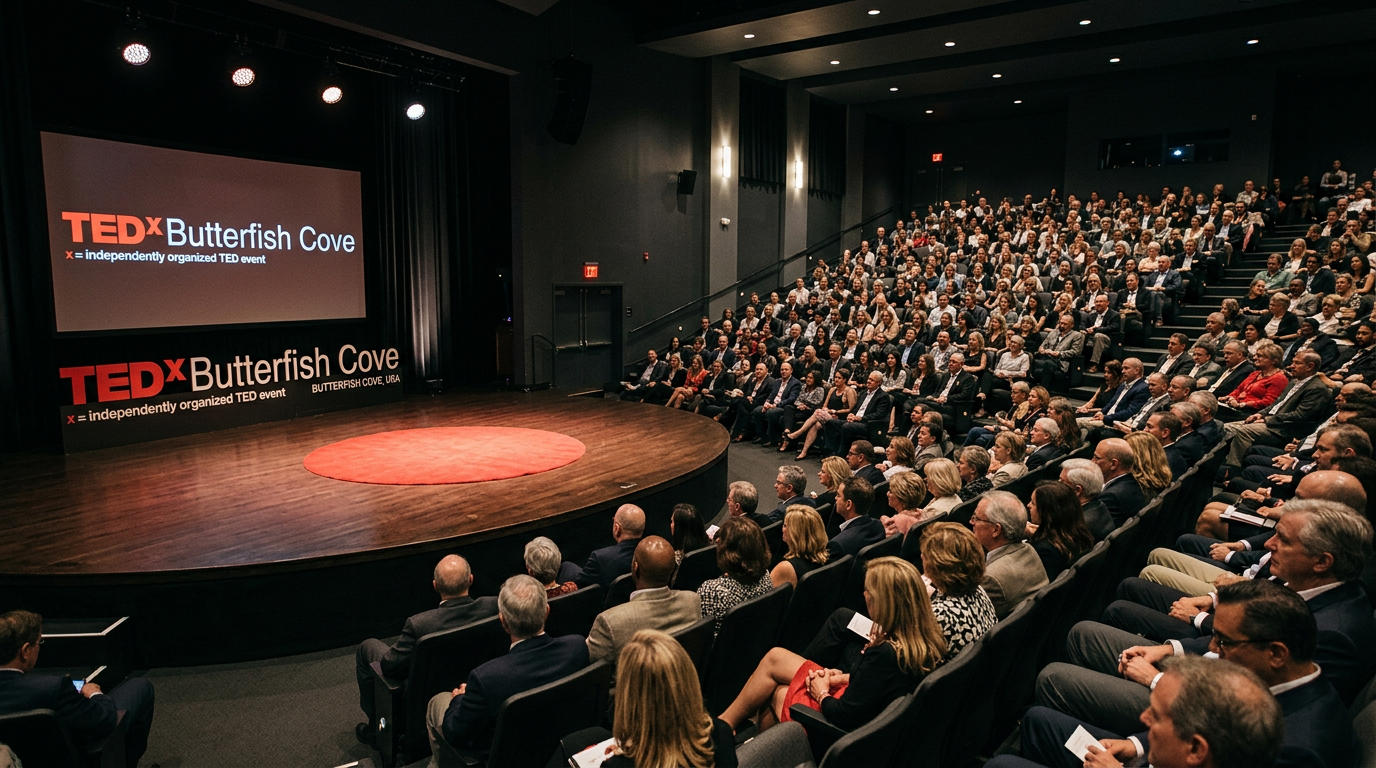
I once sat across from a man who had everything. The corner office. The corner house. A family who loved him. A name that opened doors on three continents. On paper, he had won. Every box a person is told to tick, he had ticked, twice over. Some boxes, I suspect, he had invented himself, just so he could tick them.
And halfway through our conversation, he stopped. He looked at me. And he said, almost embarrassed: “Krishna, I can’t remember the last time someone saw the real me.” Not his results. Not his reputation. Him. Here was a man the whole world called successful. And he had never felt more alone.
I have spent more than a decade in rooms like that one. With chief executives. Founders. Surgeons. Leaders whose names some of you would know. And the higher they climb, the more often I hear the same quiet sentence, in a hundred different voices. “I have everything I wanted. Why do I feel like this?”
Over the years I have come to believe something that I think we are all a little afraid to say out loud. The very things that make us successful… are often the very things that make us lonely.
Now, when I say lonely, I do not mean alone. This man was surrounded by people. His calendar was full. His phone never stopped buzzing. Because loneliness is not the absence of people. It is the absence of being known. You can be lonely in a crowd. Lonely in a marriage. Lonely at the head of a boardroom table with fifty people waiting on your word. Because not one of them can see the person underneath the performance.
And here is what the research shows. It stopped me the first time I understood it. When you feel rejected. Excluded. Unseen. The brain does not invent a new signal for it. It reaches for an old one. It lights up some of the same regions that register physical pain. The anterior cingulate cortex. The insula. The parts of you that hurt when you break a bone. Scientists have a name for this. Social pain. And to your brain, it is not a metaphor. The ache of being unseen and the ache of an injury live in the same place.
Which means loneliness was never weakness. It is a signal. The way thirst tells you to drink, loneliness tells you something too. You need to be known.
But here is the trap. This pain has no wound to point to. So high performers do what they always do with pain. They override it. They push through. They achieve over it. And the body quietly pays the bill. Because chronic loneliness is not only a heavy feeling. Researchers now link it to inflammation. To broken sleep. To a weaker immune system. In 2023, the US Surgeon General declared loneliness an epidemic. And the people we least suspect, the ones who seem to have it all handled, are often paying the highest price of all.
So why them? Why do the highest achievers so often carry the deepest loneliness? Over the years, I began to see a pattern. Five traits. Five traits that build extraordinary success. And quietly build extraordinary isolation. And underneath each one, psychology and neuroscience find the same machinery. Running in all of us.
One. Hyper self-reliance. We learn early, often as children, that the safest person to depend on is ourselves. Maybe someone let us down. Maybe love arrived only when we performed. So we build a self that needs no one. It makes us formidable. But the brain has quietly learned to read closeness as danger. The amygdala, its alarm, firing at the very thing that would heal us. And a person whose alarm goes off around love… cannot let love in.
Two. Emotional suppression. We learn to set the feeling aside and get the job done. In psychology, we call it a defence. A way the mind protects itself from what it cannot afford to feel. It makes us superb in a crisis. But feelings are not selective. Numb the hard ones, and you slowly numb the tender ones too. Until one day you can no longer quite feel your own life.
Three. Performance identity. Slowly, without noticing, we stop being a person who achieves. And we become the achievement itself. Our worth and our output fuse. And when you are what you achieve, you can never rest. Because to stop producing is to stop existing.
Four. Selective vulnerability. We show the world the edited version. The composed version. The winning version. Because somewhere we learned that closeness is conditional. That we are lovable only at our best. So the real self, the tired, uncertain, human self, waits backstage. And is never invited out to be loved as it actually is.
Five. The achievement loop. Every win buys a moment of relief. A small pulse of dopamine, the brain’s reward chemical. And then it fades. Faster each time. So we reach for the next win to feel it again. The same circuitry as any addiction, pointed at applause. Until we are no longer climbing towards something. We are running from the silence underneath.
A few years ago, a young founder sat where that first man sat. She had just sold her company. The photographs. The headlines. The number people dream about. And she said to me, very quietly: “Everyone is congratulating me. And I have never felt emptier in my life.” For seven years, she had been needed for what she could build. And somewhere in those seven years, she had quietly disappeared. The achievement arrived. The applause arrived. And no one in the room knew the woman behind it. Including, by then, herself.
There is a name for that hollow space between the cheering and the feeling. I call it the applause gap. The distance between how celebrated you are… and how known you feel. And the applause gap does not close with more applause.
Now, you may be listening to all of this thinking of someone. Your boss. A colleague. That friend who seems to have everything. Or you may be realising, quietly, that I am describing you.
I will tell you how I recognise it. For years, this talk was describing me. I collected the degrees. I built the organisations. I earned a name that opened doors on three continents. Just like the man in that first chair. And one night, in one more hotel room, in one more city, I scrolled through a phone full of names. And I could not find one person in it who truly knew me. Not the doctor. Not the coach. Me. The man who sat with lonely leaders for a living had quietly become one of them. So what I am about to share with you is not theory to me. I needed it first.
So how do we find our way back? Part of my life is spent in this fast, ambitious world we all live in. And part of it in an older, quieter discipline. I practise yoga. And I do not mean the postures on a studio floor. I mean yoga in its first sense. A training of attention. The skill of turning towards your own inner world, instead of away from it. Psychologists have a name for that skill. Interoception. The ability to feel what is happening inside you.
And here is the quiet tragedy of the high achiever. We spend decades sharpening our attention on targets. On markets. On other people. And we let the instrument that reads our own inner world go dark. This is not ancient or exotic. It is deeply ordinary. And neuroscience is now catching up to what quiet traditions always knew. That trained attention can calm the brain’s alarm. That being truly present with another person settles both nervous systems in the room.
We knew how to do this once. And we have quietly traded it all away. We had stillness. We swapped it for scrolling. We had witnesses, people who knew the whole of us. We swapped them for followers, who know the highlights. We had slow conversations. We swapped them for fast replies. The climb gave us so much. But somewhere on the way up, we set down the very things that keep a human being company inside their own life. And we never went back for them. Here is what I have seen, again and again, in that quiet room. None of it is lost for good. It can be picked back up. And it can begin tonight.
So let me leave you with three small steps. Three words. Audit. Anchor. Allow.
First, Audit. Tonight, ask yourself one honest question. Who in my life truly knows me? Not who I impress. Not who reports to me. Who actually knows me. And if that question stings, do not look away from the sting. That is not failure. That is the most useful thing you will learn all year.
Second, Anchor. Choose one person. Only one. And this week, let them see one true thing. Not the highlight reel. The truth. “I am tired.” “I am struggling.” “I have missed you.” Connection is not rebuilt with grand gestures. It is rebuilt one honest sentence at a time. And each time you are seen, and met with warmth, your nervous system learns something it had forgotten. That being known is safe.
And third, Allow. Allow yourself to be a human being. Not only a human doing. Allow yourself to be seen before you are finished. Because you will never be finished. No final achievement will ever make you feel known. That door only opens from the inside. And only now.
None of us was put here only to perform. We were put here to be known.
That man I told you about at the start. The one who could not remember the last time he was truly seen. We did this work together. And some months later, he called me. And he told me he had done something he had not done in twenty years. He had sat down with his daughter. And instead of asking about her grades, or her plans, or her future… he asked her one question. “How are you, really?” And then he did the harder thing. He stopped talking. And he listened.
He told me afterwards it was the first real conversation of his life. And that his daughter cried. Not because anything was wrong. But because, after all these years, her father had finally arrived.
You have built so much. The title. The house. The name. Everything you were told to build. Now build the one thing we forgot to measure. Let yourself be known.
Thank you.


