
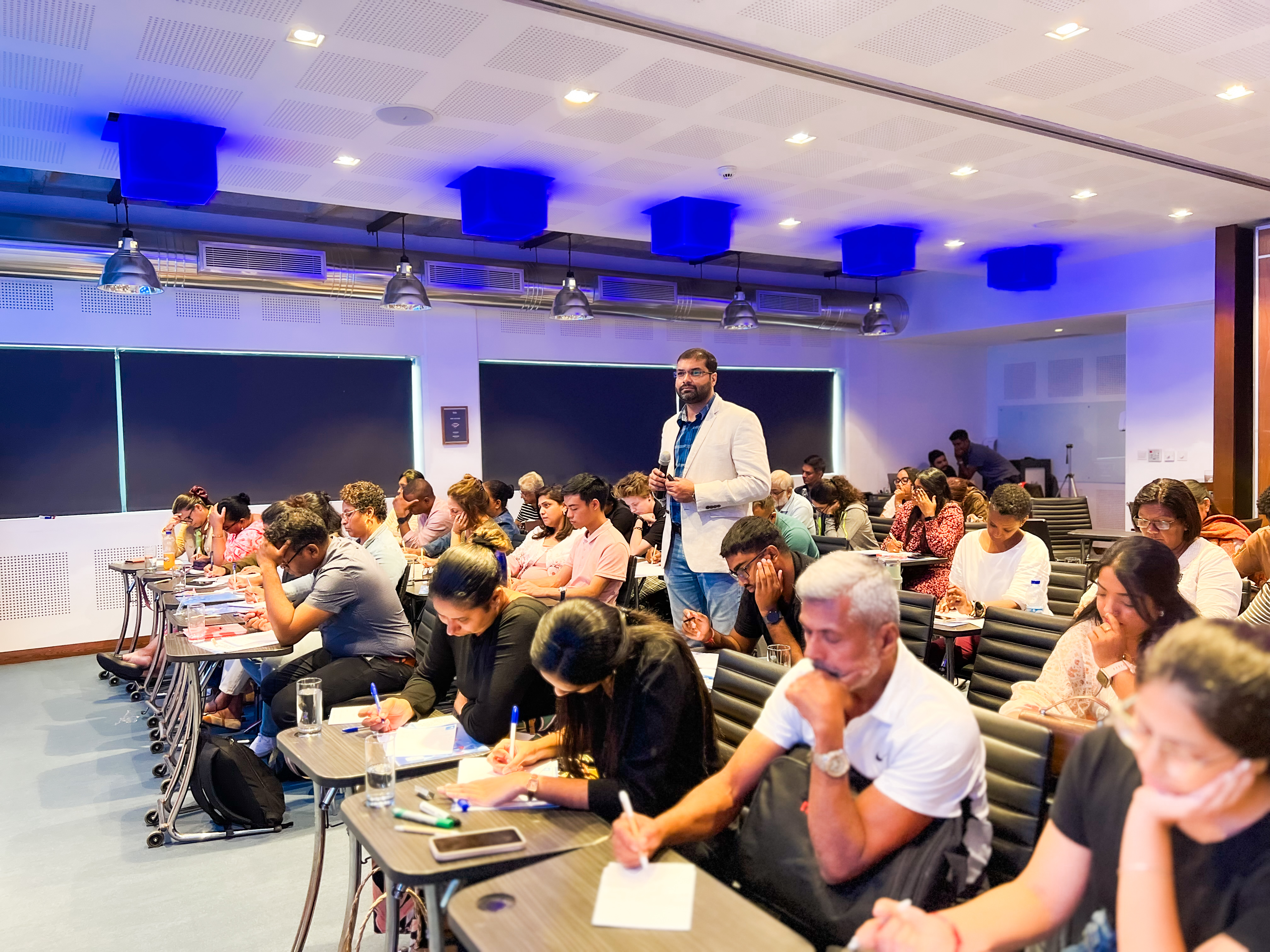
Conversations are the gateway to every human connection. A simple hello opens a door, but what comes next? On Saturday, 6 September 2025, YUVA hosted an immersive one-day workshop at Voilà Hotel, Bagatelle, presented by Dr. Krishna Athal, that asked this very question: “What Do You Say After You Say Hello?” This wasn’t just another seminar on communication skills—it was a journey into self-awareness, psychology, and authentic connection.
A Different Kind of Workshop
Most of us recycle the same patterns in conversations—small talk, polite scripts, and predictable exchanges. This workshop invited participants to pause, reflect, and consider what lies beneath those scripts. By blending Transactional Analysis, modern coaching psychology, and reflective exercises, attendees discovered how to move beyond superficial exchanges to create meaningful, lasting connections.
The workshop stood out because of its experiential design. Dr. Athal guided participants through role plays, reflective discussions, and exercises that revealed not just how we speak, but why we communicate the way we do. This deeper exploration created opportunities for lasting personal growth.
The Drama Triangle in Action
A key part of the workshop explored the Drama Triangle, a model developed by Dr. Stephen Karpman. It highlights the destructive roles people often fall into during conflicts:
- Victim – feeling powerless or mistreated.
- Persecutor – blaming, criticising, or controlling others.
- Rescuer – stepping in to save others, sometimes at their own expense.
Through role play, participants experienced each role in action, recognising how easily conversations slip into these unhealthy patterns. More importantly, they practised shifting out of the triangle towards Adult-to-Adult communication, which fosters equality, respect, and constructive dialogue.

Understanding the PAC Model
The workshop also introduced the Parent-Adult-Child (PAC model), one of the most valuable frameworks within Transactional Analysis. Every interaction we have originates from one of three ego states:
- Parent – the critical or nurturing voice shaped by authority figures.
- Adult – rational, objective, and focused on the present moment.
- Child – spontaneous, emotional, or rebellious, formed by early experiences.
Participants reflected on recent conflicts in their lives, identifying which ego states they and the other person were operating from. This exercise was particularly powerful—it shed light on how easily we fall into Parent or Child modes, and how communication shifts when both parties meet in the Adult state.
Beyond Words: Non-Verbal Connection
One unique exercise involved holding a conversation without words. By focusing on posture, facial expressions, and body language, participants experienced how much is communicated beyond speech. This heightened awareness of non-verbal signals reminded everyone that connection is about more than language—it is about presence, energy, and intention.
The Scripts We Carry
Perhaps the most transformative part of the workshop was the exploration of life scripts. These are the unconscious patterns and stories we adopt in childhood that shape our adult behaviour. They influence how we respond to others, what roles we take on, and how we see the world.
Questions posed during the session included:
- Which scripts do I unconsciously follow?
- How do these scripts affect my relationships and career?
- What new script would I like to write for myself?
Participants were encouraged to reflect deeply and imagine rewriting their scripts into empowering narratives. The realisation that you can edit your life script resonated strongly, offering hope and practical pathways to change.

Reflecting on Connection
Beyond psychological models, the workshop asked a fundamental question: What does connection mean to you? Answers varied—being truly listened to, sharing vulnerability, finding purpose, or simply feeling safe with others. Group reflections and exercises deepened understanding, making connection feel more intentional and authentic.
A Unique Experience in Mauritius
Mauritius has seen its fair share of training sessions, but nothing quite like this. By combining internationally respected psychological frameworks with Dr. Athal’s facilitation and local realities, YUVA created a workshop that was both global in outlook and personal in impact. The full-day format, from 9 AM to 4 PM, allowed space for exploration, learning, and transformation.
The event showed that small shifts in awareness—whether stepping into Adult mode, breaking free from scripts, or practising authentic connection—can ripple into every area of life, from leadership and careers to family and community.
Final Thoughts
The workshop “What Do You Say After You Say Hello?” reminded everyone that conversations are never just about words. They are about awareness, intention, and courage. By stepping out of the Drama Triangle, practising Adult-to-Adult communication, and rewriting limiting scripts, participants discovered that authentic, transformative conversations are within reach.
Saying hello may open the door, but what comes after has the power to change everything.


Leave a Reply