
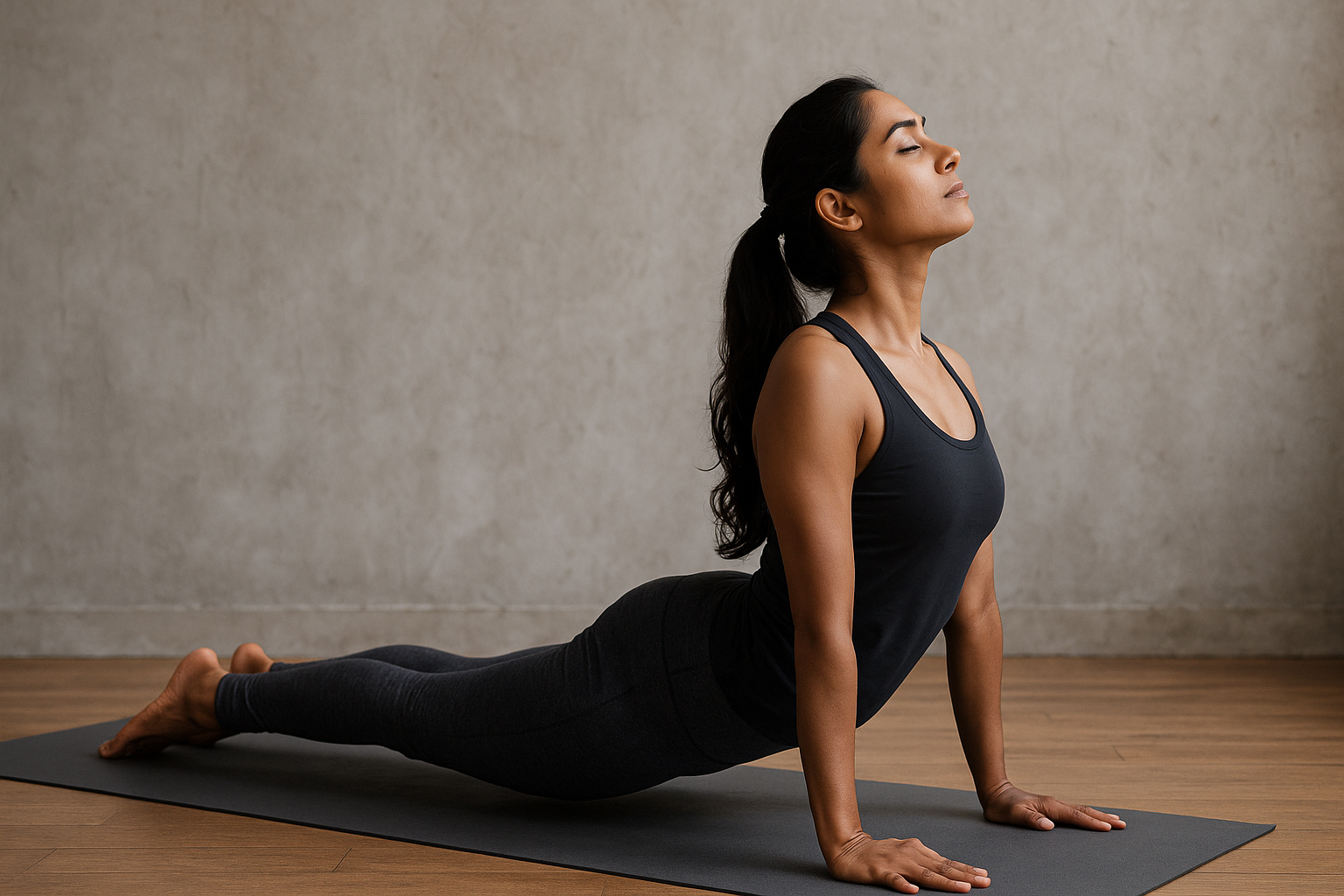
If you search online for Ashtanga Vinyasa yoga, you will mostly see photos of impossibly bendy bodies folding into shapes that look more like origami than human anatomy.
When I first walked into an Ashtanga Vinyasa class, I expected a fitness challenge. What I found was something more unsettling and more useful. I found a moving mirror that made it very hard to lie to myself.
So what is Ashtanga Vinyasa yoga really, beneath the Instagram mythology and the sweaty glamour of the practice?
Beyond the choreography: what is Ashtanga Vinyasa yoga?
At the simplest level, Ashtanga Vinyasa yoga is a structured system of yoga where breath and movement are linked in a set sequence of postures. The series is not random. Every posture prepares you for the next, and every vinyasa connects the shapes into one continuous flow.
You breathe in, you move. You breathe out, you move. The breath becomes the metronome. The body becomes the instrument. Over time, Ashtanga Vinyasa yoga feels less like a workout and more like a choreography designed to massage your nervous system and expose your habits.
When people ask me, What is Ashtanga Vinyasa, I rarely start with the technicalities. I say something simpler. It is a practice that refuses to adjust itself to your mood. It offers the same sequence again and again, then quietly watches what your mind does with that sameness.
Breath, bandha and the psychology of control
One of the key features of Ashtanga Vinyasa yoga is the way it uses breath, drishti and bandha. In plain language, that means you pay attention to how you breathe, where you look and how you engage your inner muscles.
At first, this can feel annoyingly detailed. Why does it matter if I stare at my feet or the wall. Why must I keep returning to this ujjayi breath that sounds like a calm ocean inside my throat. The answer is psychological before it is spiritual.
Most of us live in bodies that are half inhabited. We think in overdrive and breathe on autopilot. Ashtanga Vinyasa yoga reverses that hierarchy. The practice says, Let the body lead and the mind follow.
Bandhas, the inner locks, are particularly fascinating from a psychological perspective. When you gently engage them, you feel a contained strength, as if your core is quietly saying, I can hold myself. For someone who has spent years trying to control life by controlling other people or outcomes, this can be revolutionary. Control shifts from outside to inside.
A personal moment on the mat: when the pose is not the problem
I remember one morning in practice, stuck again in a standing balance that my body hated. My inner dialogue was brutal. You are failing. Everyone else can do it. You are behind.
Halfway through another wobble, I suddenly heard myself. This was not about the pose. This was the same voice that had commented on my grades in school, my career, my relationships. Ashtanga Vinyasa yoga had simply turned up the volume on a script that was already there.
In that moment, I did something very un-Ashtanga in the traditional sense. I bent the knee, softened the pose and stayed with the breath instead of the shape. The inner critic did not like that. But my nervous system sighed with relief.
That day I realised that the practice of Ashtanga Vinyasa yoga is not about conquering postures. It is about meeting the parts of you that only come out when you are tired, pushed and slightly vulnerable.
Discipline in a distracted age
We live in a culture addicted to novelty. New series, new apps, new trends, new distractions. We want transformation, but we also want constant entertainment. Ashtanga Vinyasa yoga is almost rude in how little it plays along.
You repeat the same primary series for months or even years. At first this seems boring. Then you notice something uncomfortable. The sequence is not boring. Your mind is restless. The practice becomes a quiet protest against a society that confuses stimulation with growth.
As a life coach, I often meet people who say they want deep change but secretly hope for a shortcut. Ashtanga Vinyasa yoga offers no shortcuts. It offers repetition. Breath by breath, vinyasa by vinyasa, it teaches the nervous system what consistency feels like.
Is this practice for everyone. Not necessarily. But the question is useful. If I cannot tolerate doing the same meaningful thing daily, what else am I avoiding facing in my life.
Emotional weather and the moving mat
Most modern conversations about yoga focus on flexibility and fitness. We talk less about emotional weather. In Ashtanga Vinyasa yoga, your emotions do not wait politely outside the shala. They travel with you into every sun salutation.
Grief shows up as a tight hip that refuses to open. Anger flares when a teacher adjusts you and your body feels exposed. Anxiety rushes in when you approach a backbend that makes your heart race. The practice becomes a moving laboratory where you can study your patterns without the storylines.
I have cried in savasana after an intense Ashtanga Vinyasa practice without knowing exactly why. Only later did I realise that the breath and repetition had loosened something in my chest that words had never reached. This is not therapy, but it can be deeply therapeutic.
Ashtanga Vinyasa yoga as quiet rebellion
There is a strange irony in how we use the body today. We sculpt it for photos, exhaust it for productivity, ignore it when it whispers and medicate it when it screams. Ashtanga Vinyasa yoga invites a different relationship.
Every time you step on the mat, you are choosing presence over performance. Yes, you will get stronger. Yes, your hamstrings may one day forgive you. But the deeper benefit of Ashtanga Vinyasa practice is subtler. You learn to notice the truth of the moment without instantly trying to escape it.
In a world that teaches you to scroll away discomfort, staying in a challenging pose for five conscious breaths is a tiny act of rebellion. You are saying, I can feel this and survive it. For someone dealing with anxiety, heartbreak or burnout, that realisation is pure gold.
How to begin Ashtanga Vinyasa without burning out your ego
If you are curious about Ashtanga Vinyasa yoga, start gently. The tradition can look intense from the outside, and in some studios it is treated like a competitive sport. Ignore that energy. This practice is a long conversation with your body and mind, not a race.
Find a teacher who respects alignment and anatomy, but also respects your story. Tell them about your injuries and your fears. Let them know if you are using Ashtanga Vinyasa practice to support mental health, recovery or grief. The right teacher will understand that your nervous system matters more than any particular posture.
Most importantly, remember this. Modifying a pose is not failure. Taking rest is not weakness. In fact, the moment you choose kindness over ego in your practice, Ashtanga Vinyasa yoga is working on you in the best possible way.
The real primary series is your life
In the tradition, the first sequence is called the Primary Series. It is often described as yoga chikitsa, yoga therapy, because it works deeply on the body and nervous system. I have come to feel that the true primary series is not the sequence on the mat, but the way we live when we step off it.
How do you breathe when a difficult email arrives. Where is your drishti when you are stuck in traffic with your thoughts. Which inner bandhas do you engage when life feels uncertain and you want to collapse.
Ashtanga Vinyasa yoga will not magically fix your life. That is not its job. What it can do is refine your attention, build emotional resilience and train you to stay present amid inner storms. It teaches you, one breath at a time, that you are more than your reactions.
In a world addicted to speed, Ashtanga Vinyasa yoga is an invitation. Slow down. Repeat. Notice. Grow. The sequence may stay the same, but you do not.


Leave a Reply