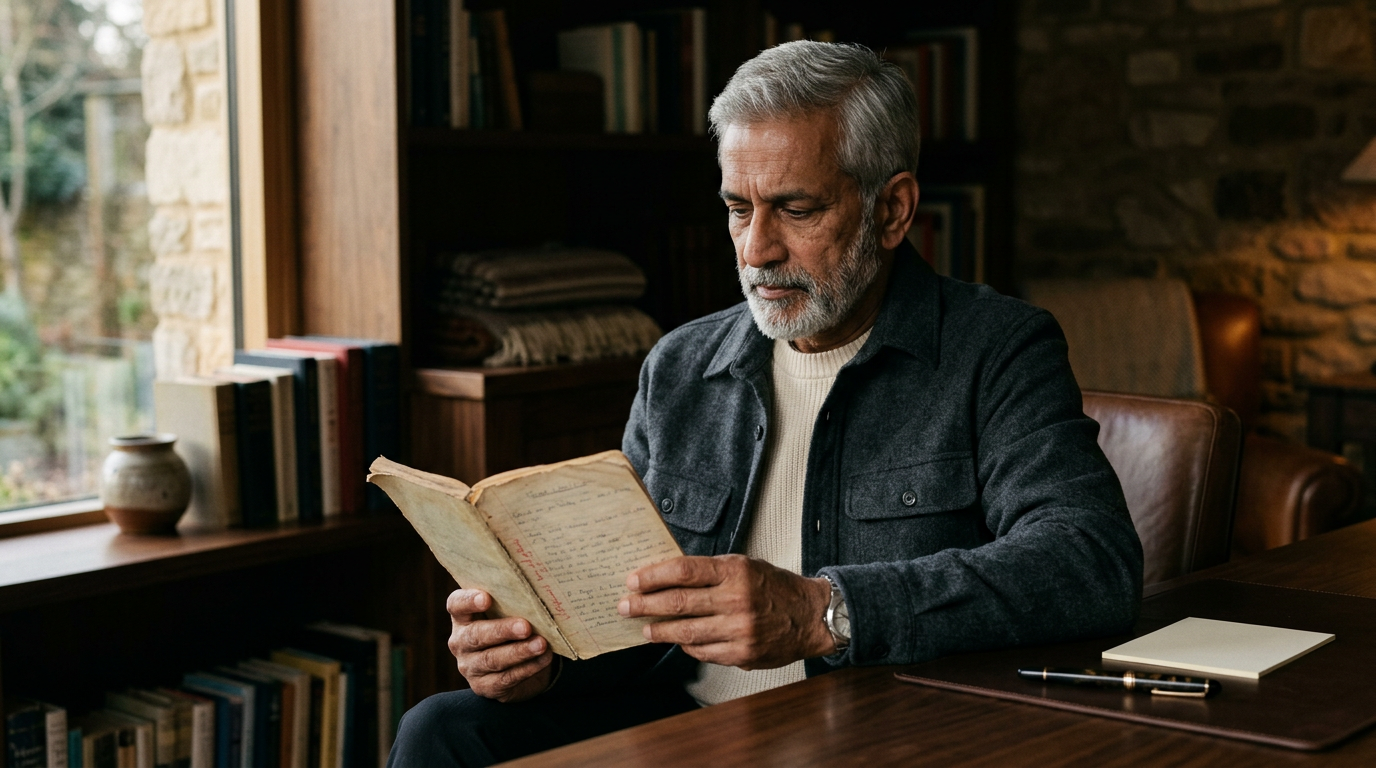
Somewhere in your life, there is a sentence a teacher once said to you that you are still living by. You probably cannot remember when you first heard it, and the person who said it has almost certainly never been told what it did. World Teachers’ Day 2026, on Monday 5 October, marks sixty years since the world first agreed on what teachers are owed, and the timing is pointed: the profession is losing people faster than it can replace them. This article covers the date, the theme and the history, and then asks the harder question underneath them: why the people who shape us most are the ones we thank least.
World Teachers’ Day 2026 falls on Monday 5 October 2026. It is held every year on 5 October to mark the anniversary of the 1966 ILO/UNESCO Recommendation concerning the Status of Teachers, the first international standard on teachers’ rights, responsibilities, training and working conditions, and it has been observed since 1994. This year is the Recommendation’s 60th anniversary, and UNESCO has set the theme as “Standing with teachers: 60 years of protecting the profession, advancing its status and shaping our futures”. The global celebration takes place at UNESCO Headquarters in Paris, co-convened with the International Labour Organization, UNICEF and Education International, and includes the award ceremony for the ninth UNESCO-Hamdan Prize for Teacher Development.
What is the theme of World Teachers’ Day 2026?
The theme looks backwards and forwards at once. Looking back, it honours a document that was ahead of its time: in 1966, governments agreed that teaching is a profession requiring expert knowledge, continuous learning and fair conditions, not a vocation to be paid in gratitude. Looking forward, it arrives while that Recommendation is being revised, because teachers now face pressures its drafters could not have imagined, from digital technologies and artificial intelligence to climate disruption, inclusion, migration and displacement.
UNESCO describes those pressures as threats to three kinds of status, and the distinction is worth borrowing. Symbolic status is how much a society respects and values teaching. Professional status is how much autonomy, support and voice teachers have in the decisions that shape their work. Material status is pay, workload and the conditions of the job itself. A teacher can be praised in a speech, ignored in a policy meeting and exhausted by a workload nobody would accept in another profession, all in the same week. Most World Teachers’ Day celebrations touch only the first kind of status. The 2026 theme quietly insists on all three.
You may see other slogans circulating on calendar websites this year. The wording above is UNESCO’s own.
Why World Teachers’ Day matters more in 2026
Behind the ceremony sits a staffing emergency. UNESCO’s Global Report on Teachers estimates that the world needs 44 million additional teachers by 2030 to deliver universal primary and secondary education, around 15 million of them in sub-Saharan Africa. As UN News reported, teacher attrition worldwide nearly doubled between 2015 and 2022, from 4.62% to 9.06%, with many teachers leaving within their first five years.
The exhaustion is not confined to poorer systems. In 2022, Gallup found that 44% of K-12 workers in the United States felt burned out at work always or very often, the highest rate of any industry it measured.
Shortage figures are usually read as a supply problem: train more teachers. I read them as a retention problem with a psychological core. Across sectors, people rarely leave demanding work simply because it is demanding. They leave when the effort stops feeling seen. And teaching has a peculiar structural reason for going unseen.
The delayed receipt: why teachers are the least-thanked people in our lives
The economists Raj Chetty, John Friedman and Jonah Rockoff followed more than a million children in the United States from school into adulthood. In their study of teacher impact, students assigned to a more effective teacher for a single year were more likely to attend college and earned more as adults, and replacing a teacher in the bottom 5% with an average one would raise a single classroom’s combined lifetime income by roughly $250,000. The most revealing detail, though, was the timeline. The teacher’s effect on test scores faded quickly in the following years, then reappeared in adult lives. The researchers described it as a pattern of fade-out and re-emergence.
That pattern describes the emotional economics of teaching as precisely as the financial ones. I call it the delayed receipt: the gap, often decades long, between the moment a teacher gives you something and the moment you realise you received it. By the time the receipt arrives, the teacher has usually moved schools, retired or died.
Psychology explains the delay. The first mechanism is source amnesia, the mind’s habit of keeping a lesson while forgetting where it came from. You remember how to structure an argument, steady yourself before an exam or hold your ground in a meeting; you do not remember the Tuesday afternoon when someone first showed you. The second is internalisation. The psychologist Lev Vygotsky argued that inner speech, the private voice we use to talk ourselves through difficulty, begins as social speech: the words of adults who once talked us through it. The patient voice that tells you to read the question again was once somebody else’s. When a teacher’s voice becomes part of yours, it stops feeling like a gift. It simply feels like you.
This is also why the symbolic status of teaching is so hard to raise. We honour professions whose results are visible at the point of delivery. A surgeon’s success is visible at the bedside. A teacher’s is visible at a graduation, a promotion or a wedding fifteen years later, where nobody thinks to credit them.
Sit with these privately for a moment:
- Whose voice do you hear when you talk yourself through something difficult?
- Which of your strengths do you consider entirely self-made, and who might quietly disagree?
- Is there a receipt you have been meaning to deliver for years?
Teaching is the only profession whose results arrive decades late, delivered to someone who has already left the building. That is why the people who shaped us most are the ones we thank least.
What a good teacher does for a developing nervous system
The case for teachers is not only economic. A widely cited meta-analysis by Debora Roorda and colleagues in the Review of Educational Research found that warm, supportive teacher-student relationships are associated with higher engagement and achievement at school, while conflictual relationships are associated with lower engagement.
Developmental science offers a useful lens for why. Co-regulation is the process by which a calm, attuned adult helps a child’s stressed nervous system settle. Children learn to regulate their emotions by borrowing an adult’s regulation first. A teacher who stays steady while a nine-year-old panics over a test is not only managing a classroom. They are lending the child a nervous system until the child can build one of their own.
The corollary is uncomfortable. A dysregulated adult cannot co-regulate anyone. An exhausted, overloaded, unsupported teacher does not simply teach less well; they lose the very capacity that made their teaching matter. Teacher well-being is therefore not a staffroom perk. It is part of the curriculum, whether or not a school budgets for it. I have written about what changes when teachers move from roles to responsibility, and the same principle holds here: ownership is hard to sustain in people who are running on empty.
Teachers are the first leaders we ever meet
Before most of us meet a manager, we meet a teacher. The classroom is where we first experience authority: whether it is fair or arbitrary, whether mistakes are punished or used, whether the person in charge notices the quiet one at the back. Many leaders carry a template absorbed at the age of eleven, copying the teacher who made them feel capable or overcorrecting against the one who made them feel small.
That is why I think World Teachers’ Day belongs in boardrooms as much as in schools. The questions a good teacher asks every day are leadership questions. What does this person need in order to grow? What can they do today that they could not do yesterday? How do I hold a standard without crushing the person trying to meet it? I have explored the more personal side of this relationship in what badminton taught me about the guru-student bond, and the modern shortage of genuine guides in Guru Purnima and the guru vacancy. World Teachers’ Day asks the public version of the question: whether a society is willing to protect the people who do this work every day.
How to mark World Teachers’ Day 2026 meaningfully
Flowers and speeches have their place. But if the delayed receipt is the problem, the most useful response is to shorten it.
If a teacher shaped you, deliver the receipt with specifics. “Thank you for everything” is kind but weightless. Name the moment, the sentence and what it made possible: “In Class 9 you told me my writing was worth reading aloud. I now write for a living.” Specificity turns gratitude into evidence, and evidence is exactly what an exhausted teacher is short of.
If you are a parent, thank a teacher in front of your child. Children learn what a society values by watching what the adults around them honour. Symbolic status begins at the dinner table.
If you lead a school, protect time before you hand out certificates. Recognition that arrives alongside an impossible workload reads as irony. Planning time, a real voice in decisions and genuine support for well-being address the professional and material status the 2026 theme is actually about.
If you lead an organisation, remember where your talent was built. Your best people were somebody’s students first. School partnerships, mentoring schemes and releasing staff to teach or mentor are ways of repaying a debt your balance sheet never recorded.
Frequently asked questions about World Teachers’ Day
Is World Teachers’ Day the same as Teachers’ Day in India?
No. India celebrates Teachers’ Day on 5 September, the birth anniversary of Dr Sarvepalli Radhakrishnan. Singapore marks its own Teachers’ Day on the first Friday of September, which fell on 4 September in 2026. Mauritius observes the international date on 5 October.
What was the World Teachers’ Day theme in 2025?
“Recasting teaching as a collaborative profession.”
Is World Teachers’ Day a public holiday?
No. It is an international observance rather than a public holiday, marked by schools, universities, teachers’ organisations and education ministries through events, awards and campaigns.
The receipt only you can deliver
Sixty years ago, the world wrote down what teachers are owed: fair pay, proper training, decent conditions. All of that still matters, and all of it is still unfinished. But underneath the treaty is a simpler debt that no government can enforce. Somewhere, a person who once stood at the front of your classroom is still waiting, without knowing it, for a receipt only you can deliver.
If you lead a school or an education team and want to protect the steadiness your teachers lend to every child, the Emotional Intelligence and Self-Regulation at Work programme is built for adults who carry demanding rooms all day.


