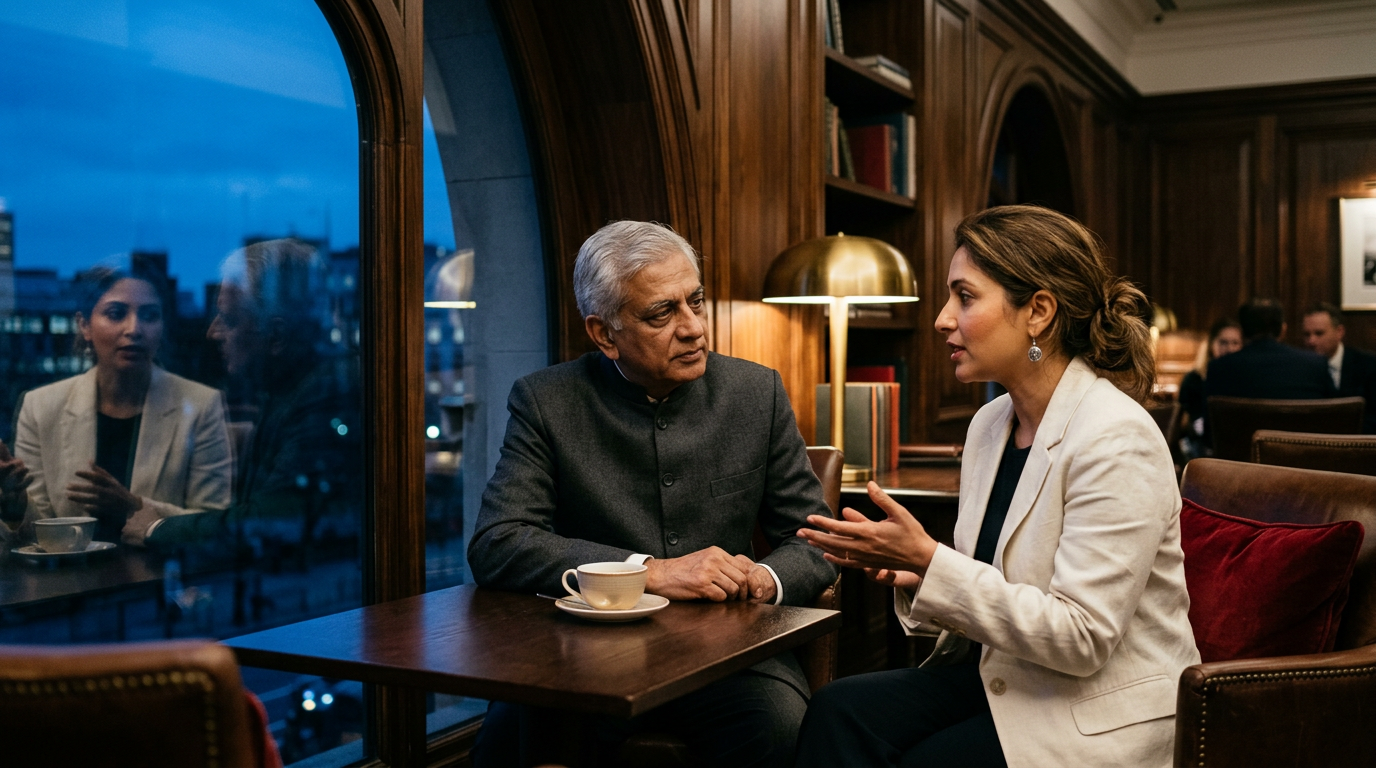
You are the one people call. You notice the shift in a colleague’s voice, remember what frightened your friend last spring, and can sit with a room’s grief without flinching. And yet, late at night, you may feel more alone than anyone you have ever comforted. That contradiction has a name, the empathy isolation paradox, and it is not proof that something is wrong with you.
This article explains why deep attunement can quietly lead to loneliness, and what it takes to be known rather than merely needed.
What Is the Empathy Isolation Paradox?
The empathy isolation paradox is the pattern in which people with a strong capacity to understand others end up feeling unseen themselves. It is not a clinical diagnosis. It describes three well-documented processes that meet in the same person:
- Relationships gradually organise around the empathic person’s listening, so reciprocity drains away.
- Absorbing other people’s distress without regulation becomes exhausting, and exhaustion breeds withdrawal.
- Loneliness itself bends perception, making others seem less caring than they really are.
The short answer is this. You are not lonely because you feel too much. You are lonely because your feeling has learnt to travel in only one direction.
The One-Way Mirror
I find it useful to name the pattern the one-way mirror. From your side of the glass, you can see into everyone: their fears, their unspoken needs, the story beneath the story. From their side, they see only themselves. Your attention reflects them back so well that they never think to look through it.
Consider a composite drawn from many conversations in my coaching work. A senior HR director is the person everyone confides in. Then her father falls seriously ill, and for three weeks she tells no one at work. When she finally mentions it, a colleague says, with real surprise, “But you never said anything.” He is right. She never did. Over the years, nobody had stopped wanting to know her. They had simply stopped imagining that she had anything to tell.
This is the quiet mechanics of the paradox. Nobody has been cruel. A role has hardened into an identity, and the identity has become the relationship.
Pause here for a moment. When did someone last ask you a question and wait for the whole answer? Whose problems could you describe in detail, and who could describe yours? If you vanished from your closest relationships for a month, what would people miss: you, or your listening?
Why Empathy Can Lead to Isolation
The role becomes the relationship
Intimacy grows through reciprocal self-disclosure, the gradual, two-way sharing of inner experience. Highly attuned people are superb at drawing disclosure out of others and rarely offer it back. Often this is generosity. Sometimes it is protection, because being the listener is safer than being seen. Either way, the exchange becomes lopsided, and a lopsided exchange cannot deepen into being known.
Empathic distress, then retreat
Empathy is not one thing. Neuroscience distinguishes between empathic distress, feeling another’s pain as if it were your own, and compassion, warm concern held from a steadier inner ground. Tania Singer and Olga Klimecki’s work on empathy and compassion links the first to exhaustion and withdrawal, and the second to resilience.
Many deeply empathic people live in distress mode without realising it. Eventually they protect themselves the only way they know: by pulling back. From the outside it looks like coolness. From the inside it feels like survival. I have written separately about what happens when carrying someone else’s pain begins to break you.
Loneliness bends the lens
Once loneliness sets in, it rewrites how you read people. John Cacioppo and Louise Hawkley’s research shows that perceived social isolation is linked to heightened sensitivity to social threats and a self-protective bias in social cognition that ends up working against the lonely person. The lonely brain, in other words, becomes more alert to threat while still wanting to reconnect.
A 2025 Stanford study makes this painfully concrete:
- Surveying more than 5,000 undergraduates, researchers found an “empathy perception gap”: students consistently rated their peers as less empathic than those peers rated themselves.
- Those who saw peers as less empathic took fewer social risks and became more isolated over time.
- The published study also found that simply showing students data on their peers’ empathy, alongside small nudges to take social risks, narrowed the gap and expanded their social networks months later.
Here is the cruel elegance of the empathy isolation paradox. The person most fluent in other people’s inner worlds becomes convinced that nobody could enter theirs. Psychologists call a version of this existential isolation, the sense that nobody understands or shares your way of experiencing the world. So the empathic person stops asking, and the silence that follows looks like confirmation.
Empathy without reciprocity is not connection. It is a one-way mirror: you see everyone clearly, and everyone sees only themselves in you.
Is This the Same as the “Empathy Paradox” or Being an Empath?
Not quite, and the distinction matters.
- “The empathy paradox” is also used for a societal pattern. Sara Konrath’s 2014 chapter examined how social disconnection and declining empathy co-occurred with the rise of social media, a world more connected and less close. That concerns culture. The empathy isolation paradox concerns what happens inside one person’s relationships.
- “Empath” is a popular label rather than a research construct. You do not need to identify as one for this pattern to fit. You only need to have become the person who gives attention far more often than you receive it.
Why Leaders and Caregivers Feel It Most
The pattern intensifies wherever empathy is part of the job. Emotionally intelligent leaders hold their teams’ anxieties while having nowhere to put their own, which is why leaders feel lonely even in crowded calendars. The same applies to the eldest daughter, the family mediator, the founder who steadies everyone through a bad quarter, and the doctor who is never asked how her week was. The better you are at holding others, the more natural it becomes for everyone, including you, to forget that you need holding too.
How to Break the Paradox Without Becoming Less Kind
The answer is not to care less. It is to let care become two-way traffic again.
Audit your reciprocity. List your five closest relationships. Beside each name, note when that person last asked about your inner life, not your work or your logistics. The pattern usually becomes obvious within minutes.
Disclose before it is resolved. Empathic people tend to share their struggles only in the past tense, neatly processed and safely over. Try sharing one true thing while it is still unfinished. Unfinished sentences invite people in. Finished stories only invite applause.
Return to first position. Neuro-Linguistic Programming describes perceptual positions: first position is your own experience, second is standing in another person’s shoes, and third is the neutral observer. Many attuned people live almost permanently in second position. Several times a day, ask yourself one plain question: what am I feeling right now, separate from what anyone else needs?
Regulate before you resonate. Slow, exhale-weighted breathing before a heavy conversation helps shift you from distress towards compassion. This is the same principle behind detachment without coldness: caring fully without carrying everything.
Test the lens. The Stanford findings suggest the people around you are probably more caring than your loneliness predicts. Take one small social risk this week. Ask for help with something minor, or tell someone you have been struggling. Treat it as an experiment, not a verdict.
Let someone be useful to you. Receiving is a skill, and for many empathic people it is the underdeveloped one. When someone offers help, resist the reflex to say you are fine. This is often where life coaching does its most valuable work. It is rarely about learning to give more. It is about learning, sometimes for the first time, to take.
The Mirror Was Never Meant to Be One-Way
The empathy isolation paradox is not a flaw in your character. It is what happens when a gift is used in only one direction for too long. The same attunement that lets you see others is perfectly capable of letting others see you. You may simply have to open the glass from your side first.
Understanding what empathy really means was never the hard part for you. Allowing it to come back to you is.
If you recognise yourself in these words and would like to talk it through, you are welcome to book a free fifteen-minute consultation. For once, you can be the one who is listened to.


