
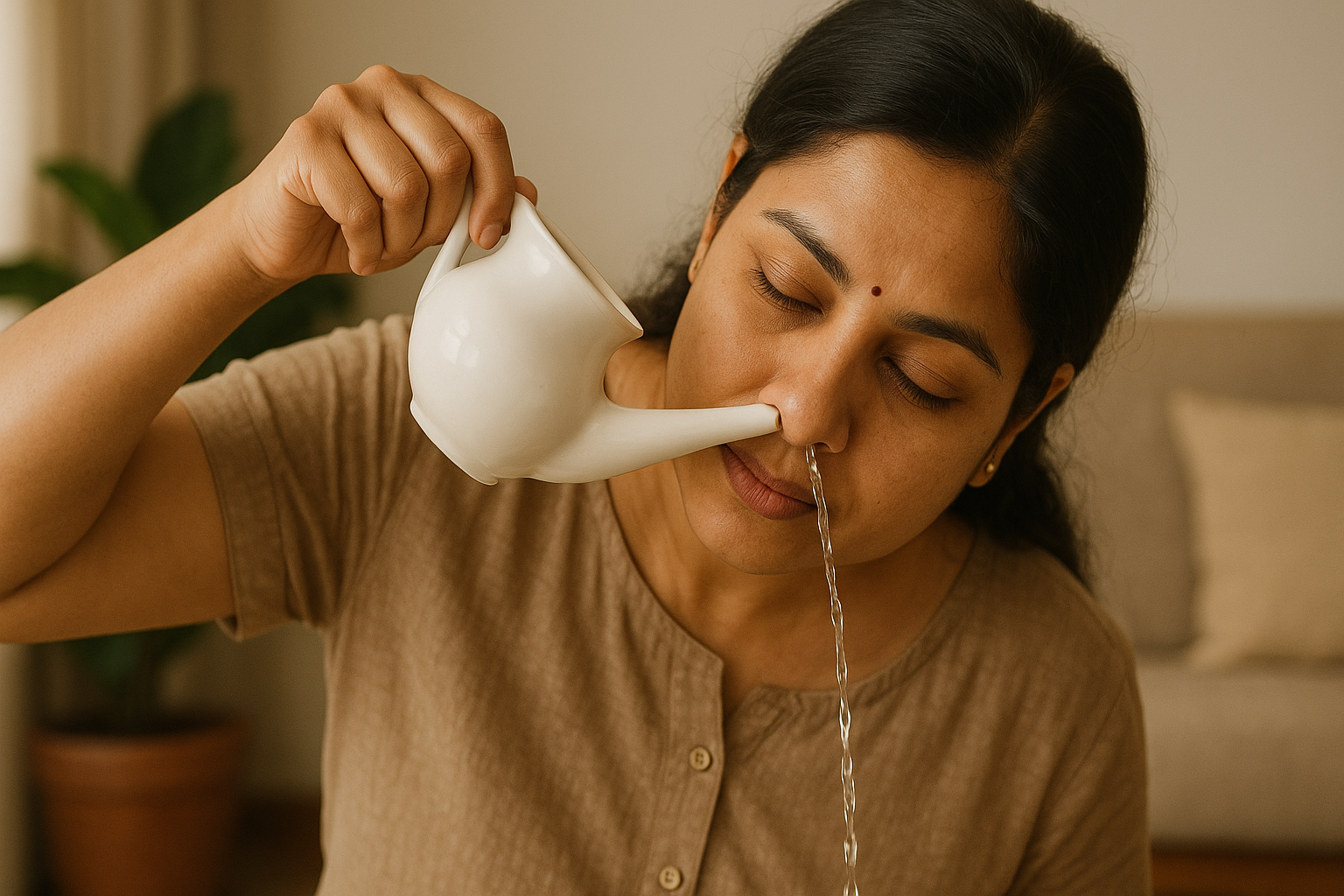
The first time I poured warm salty water through my nose, my mind whispered, “This cannot be a good idea.” Yet as the water flowed out of the other nostril and I took my first clear breath, something shifted. It was not just my nasal passage that felt open. My thoughts felt lighter. That is the quiet invitation of Jal Neti.
Jal Neti is a traditional yogic cleansing practice where we use warm saline water to gently rinse the nasal passages. On the surface it looks like a simple nose wash. At a deeper level, it is a small act of rebellion against the way we live today, rushing and cut off from our breath. When I teach Jal Neti, I do not only talk about mucus. I talk about fear, control, and the modern habit of tolerating discomfort without questioning it.
The Psychology Behind Jal Neti
In yoga, the nose is not just an opening in the face. It is the gatekeeper of breath, and breath is the bridge between body and mind. When the nasal passages are blocked, people unconsciously shift into mouth breathing. Mouth breathing is often shallow and fast. Over time, this keeps the nervous system slightly on edge and feeds anxiety and fatigue.
Jal Neti benefits go far beyond a clean nose. Each time you tilt the neti pot and allow water to flow, you are practising surrender. You cannot fight the water and relax at the same time. You are also building trust in your own body and emotional courage. Many people feel strange or vulnerable when they try Jal Neti for the first time. Staying with that awkwardness instead of running away builds resilience.
I often ask clients, “If you are uncomfortable letting water move through your nose for thirty seconds, how comfortable are you letting life move through your heart for real change.” Jal Neti becomes a metaphor for how we handle any cleansing process. We either resist, or we lean in.
Physical Jal Neti Benefits You Can Feel
Regular Jal Neti practice helps clear dust, pollen, pollution, and excess mucus from the nasal passages. People who live in cities, who wake up blocked every morning, often feel a striking difference within a few days.
Participants often report easier breathing, fewer headaches, less nasal congestion, and deeper sleep. When the nose is clear, pranayama becomes more effective and meditation feels more settled.
For me, one of the underrated Jal Neti benefits is the sense of agency it gives. Instead of being a passive victim of cold, allergy season, or pollution, you are doing something tangible to support your own respiratory health. That shift from helplessness to self-care is powerful.
How To Practise Jal Neti Safely
Jal Neti is powerful only when done correctly and gently.
You need a clean neti pot and lukewarm water that is mixed with the right amount of salt. The water should feel like tears in terms of saltiness, not like the sea. When the balance is right, the experience is surprisingly gentle.
Stand over a basin, keep your mouth slightly open, tilt your head to one side, and place the neti pot spout into the upper nostril. Breathe calmly through the mouth, tip the pot, and allow gravity to do its work. The water enters one nostril and exits the other, carrying dust and mucus along. Then repeat on the other side.
After the rinsing, gently expel any remaining water. Lean forward, look down, and very gently blow air out through each nostril without strain. A few soft breaths through the nose, then some light breathing practices, help dry the passages.
If you have ongoing nosebleeds, a severe infection, or any doubt about your condition, it is wise to check with a doctor before you start. Yogic practices are tools of love, not punishment.
When Is The Best Time To Do Jal Neti?
Traditional guidance suggests practising Jal Neti in the early morning on an empty stomach, before pranayama and meditation. I find that this rhythm works beautifully. You clear the physical pathways first, then you work with breath, then with mind.
Some people also use Jal Neti in the evening after a long day in polluted air or air conditioned offices. In that case, keep at least one hour gap before sleep, so that any remaining moisture has time to clear and the body does not feel startled at night.
Jal Neti does not need to be done many times a day. For most healthy adults, a consistent morning practice a few times a week is enough. As with all yoga, the nervous system loves regularity more than intensity.
The Emotional Cleanse No One Talks About
What fascinates me is how often people cry after their first Jal Neti session. Not from pain, but from release. When the breath opens, feelings follow. The body stores unprocessed grief, stress, and anger in muscles, jaw, chest, and even sinuses.
I remember a woman who came to a retreat insisting she “just wanted to learn a few techniques.” After two days of Jal Neti and breathwork, she looked at me and said, “I did not realise how long I have been holding my breath in my own life.”
This is where Jal Neti becomes more than hygiene. It becomes a doorway into self-inquiry. Where else am I blocked and pretending it is normal. Which relationships feel like congestion in my life. Who am I when my breath is actually free.
Jal Neti And Our Relationship With Discomfort
We live in a culture that sells instant relief and quick fixes. If there is discomfort, there must be a pill, a spray, or a gadget. Jal Neti asks a different question. What if you sat with your discomfort for a few seconds, breathed through it, and allowed the body to reset from within.
This practice gently challenges the belief that the body is a machine that must be hacked and optimised. Instead, Jal Neti treats the body as a wise companion that needs space, cleanliness, and respect. It is simple, low cost, and almost annoyingly honest. Yet the Jal Neti benefits are very real for the person willing to show up for five minutes with warm water, salt, and sincerity.
Bringing Jal Neti Into Your Inner Practice
If you decide to explore Jal Neti, treat it as a ritual, not just a technique. Prepare your space calmly, mix the water with care, and breathe with patience. Notice the mind’s commentary. Notice any fear, control, or resistance. Let the water move anyway.
Over time, you may notice that Jal Neti benefits show up in places you did not expect. A clearer mind at work, less reactivity in arguments, deeper meditation, and a growing respect for your own body. You might even catch yourself asking a bigger question. If a simple stream of water can clear so much, what else in my life am I finally ready to cleanse.
That is where true yoga begins. Not in the performance of a perfect posture, but in the willingness to meet yourself more truthfully, one clear breath at a time.


Leave a Reply