
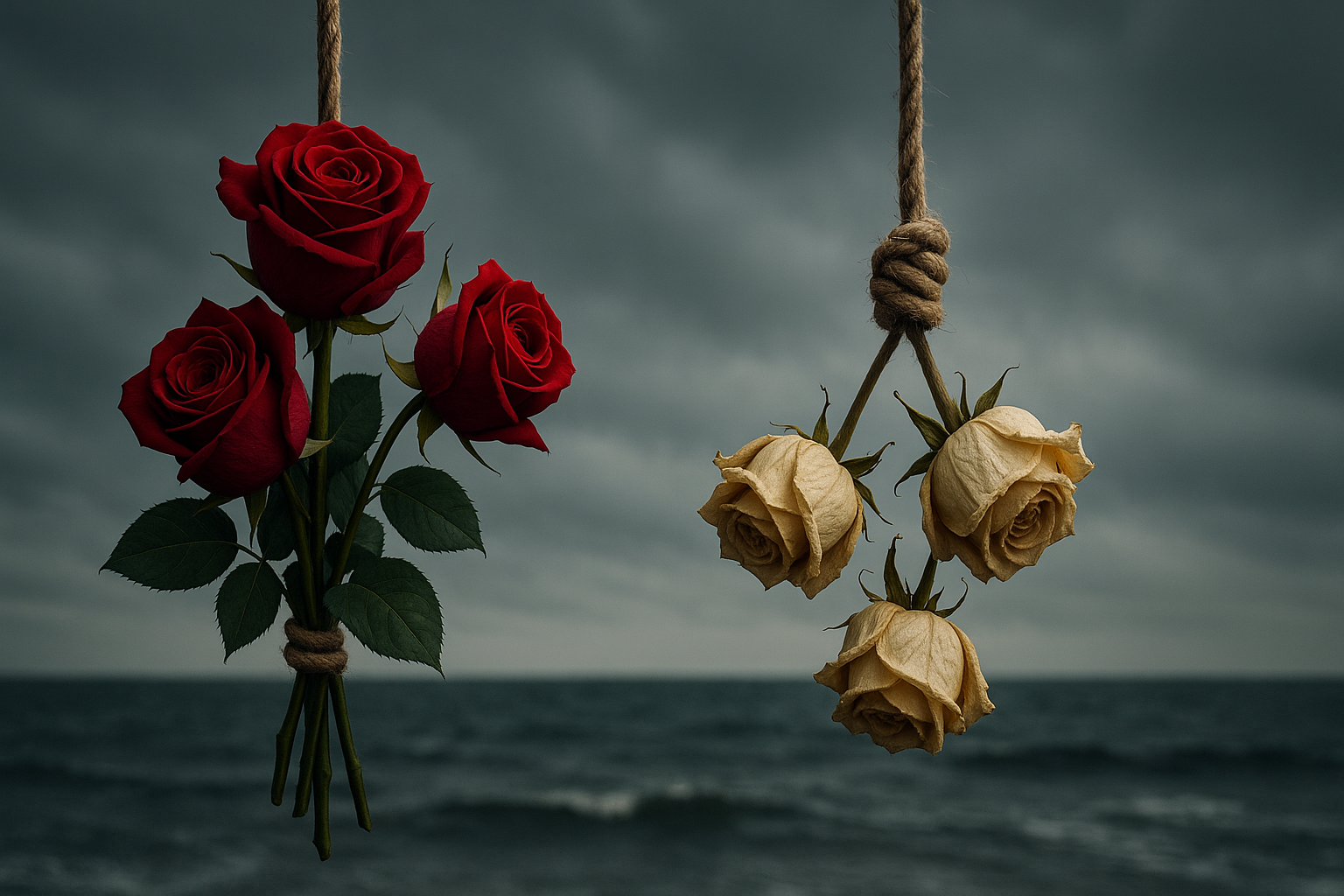
There is a quiet moment in many coaching sessions when someone looks at me, exhausted and teary, and says, “If this is love, why do I feel so small?” That is usually my cue to offer a difficult truth: what we call love is often attachment dressed up in poetry. Real love is detachment, and that shift changes how we breathe inside our relationships.
Attachment and love are not the same energy. When we mix them up, we create relationships that look romantic on the outside and feel suffocating on the inside. To heal that, we need to understand why love is not attachment and why love is detachment when it is healthy, conscious and free.
Attachment: When Love Starts To Hurt
Let us begin with attachment. In psychology, attachment is a natural system that helps infants stay close to their caregivers. In adult life, the same system shapes our romantic bonds. That itself is not a problem. The problem begins when attachment becomes clinging.
Attachment whispers, “If you leave, I will break.”
Love is detachment and whispers something very different: “If you leave, I will grieve, but I will not disappear.”
In my work, I meet many people who are in love with a fantasy, not a person. They cling to how it used to be or how it could be, while ignoring how it actually is. Attachment turns them into emotional hostages. Their mood swings with every text message. Their self-worth becomes a reflection of someone else’s attention span. That is not love. That is emotional captivity.
Why Love Is Detachment, Not Indifference
Many people hear “love is detachment” and imagine a cold monk who feels nothing. That picture is misleading. Detachment is not emotional numbness. Detachment is emotional clarity.
When I say love is detachment, I mean this: I can love you deeply without needing to own you, control you, or use you to patch my own emptiness. I stay connected, but I stay centred. I hold you with open hands rather than clenched fists.
Detached love can sit with joy without gripping it and sit with loss without collapsing. It is a love that does not beg, bargain or perform for crumbs. It can see clearly, choose clearly and let go when staying would mean self-betrayal.
Society’s Addiction To Attached Love
If you doubt how confused we are about love and attachment, look at mainstream culture. Films glorify the lover who cannot live without the beloved. Songs praise obsession as devotion. Social media turns relationships into performance art, where happiness is measured by couple selfies and public declarations.
We quietly reward drama more than stability. Jealousy is treated as a proof of passion. Constant texting is sold as caring. Checking your partner’s phone becomes a reasonable act “because I love you.” Love is detachment, yet our world markets attachment as the ultimate romantic ideal. We have built a culture that confuses control with care and possession with proof.
No wonder so many people feel anxious in love. They are trying to live up to a script that was written more for box office numbers than for human well being.
A Story From The Coaching Room
Last month, a client came to me after a painful breakup. She said, “I want him back. I do not know who I am without him.” On the surface, it sounded like devotion. Underneath, I could hear the panic of attachment.
We explored her belief that love meant merging completely. Her story went back to childhood, where caretaking had been her way of earning affection. Attachment, for her, was survival, not choice.
I introduced the idea that love is not attachment, that love is detachment. At first she resisted. “If I stop clinging, does that not mean I never really loved him?” she asked. Over time, through reflection, journaling and body based work, she noticed something surprising. As she practised detachment, she did not care less. She cared more clearly.
She could see his strengths and his limitations without romantic fog. She could see her own needs without shame. She still loved him, but now she loved herself too. Love as detachment gave her the courage to stop chasing a door that had already closed and walk towards her own life.
The Psychology Of Detached Love
From a psychological lens, attached love is fear-based. It says, “If you change or leave, I will lose myself.” Detached love is growth-based. It says, “I might hurt, but I will still be me.”
When love is detachment, your nervous system has more space. You are less reactive and more responsive. You do not need constant reassurance, because you are building an inner base of safety. Conflict changes shape. You can disagree without turning every argument into an existential crisis.
Detachment also interrupts old patterns of anxious and avoidant relating. If you tend to chase, love as detachment teaches you to pause and check whether you are running after love or running away from loneliness. If you tend to shut down, love as detachment invites you to stay a little longer with discomfort without attacking or retracting. Detached love is not the absence of emotion. It is emotion with roots.
Practising Detachment In Everyday Love
Detachment begins inside, not outside. It is less about creating distance and more about creating depth.
It starts with self-awareness. Notice when your mind slides into possessive thoughts. “Where are they? Why have they not replied? Who are they with?”
Gently bring your attention back to your own body. Ask, “What am I really afraid of right now?” Usually the fear is about abandonment, unworthiness or being replaced.
Next, cultivate a life that is larger than one person. When love is detachment, your partner is part of your life, not your entire identity. Invest in friendships, creative pursuits, spiritual practice and solitude. A full inner life reduces the temptation to treat one relationship as your only oxygen supply.
Finally, practise loving boundaries. Detached love can say no without guilt and yes without self-betrayal. You can hold space for another’s emotions without absorbing them. You can be in deep intimacy without losing your centre. In this sense, love is detachment because you are no longer fusing with another person in order to avoid being with yourself.
Love Is Detachment As A Spiritual Practice
As a life coach and yogi, I see detachment as a spiritual discipline. The ancient teachings on non-attachment were never anti-love. They were warnings against clinging to what will inevitably change.
To say love is detachment is to acknowledge that every person you love is a temporary companion in an ever changing universe. This does not cheapen love. It makes it sacred. You pay attention more fully because you do not pretend it will last forever in the same form.
Detachment in love is a kind of reverence. You recognise the other as a soul, not an object. You do your best to meet them with honesty, compassion and presence, while remembering that neither of you owns the other’s path.
Choosing Love Over Attachment
If you feel exhausted by love, it might be that you have been practising attachment, not love. Begin to experiment with the idea that love is not attachment, that love is detachment. Notice how the energy shifts when you hold someone lightly rather than gripping tightly.
In the end, love that is rooted in detachment feels quieter but more alive. It does not need grand gestures to prove itself. It shows up in the simple, consistent, grounded way you treat yourself and the people you care about.
You deserve a love that does not shrink you. You deserve a love that can stay even when it does not have to, and that can leave without destroying you. That kind of love is possible. It begins the moment you choose detachment over fear, and presence over possession.


