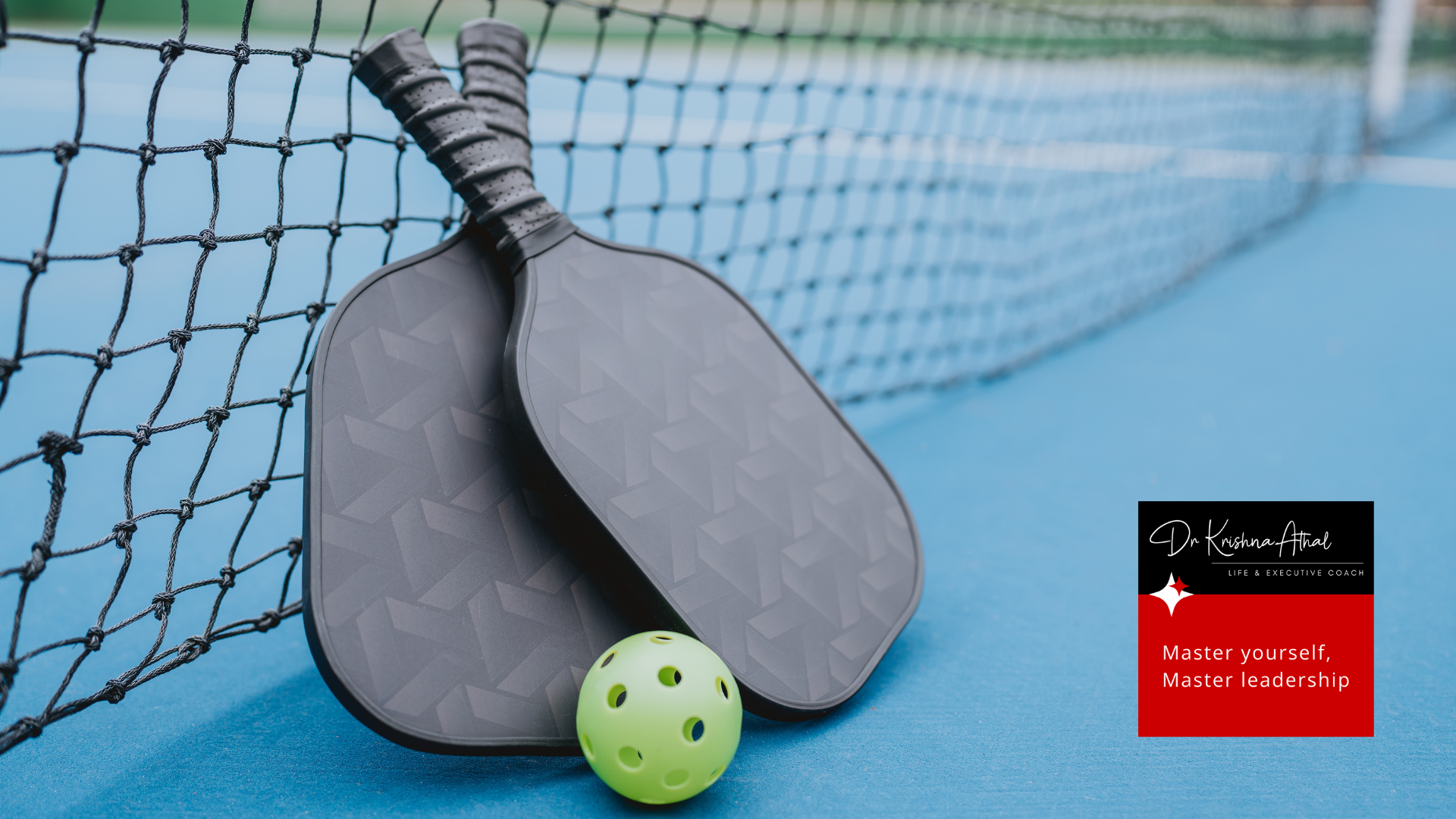
Pickleball in India is no longer a small curiosity whispered about in gated communities and sports clubs. It is becoming a full-blown cultural signal. With more than 1,200 courts and a dramatic rise in participation over the past few years, the sport has moved from niche to mainstream in cities such as Mumbai, Bengaluru, and Delhi-NCR. What fascinates me is not only how fast Pickleball in India is growing, but what this growth reveals about modern Indian life. Sometimes a sport is not just a sport. Sometimes it is a mirror.
The boom is real, but the deeper story is human
I have seen trends come and go. Some are all noise, no nervous system. But Pickleball in India seems different. It has reached that rare sweet spot where accessibility, novelty, fitness, and social connection all shake hands.
Reports through 2025 and early 2026 describe a sharp rise in infrastructure and participation. India moved from roughly 200 operational courts in early 2024 to around 1,200 by the first half of 2025, while organised leagues and tournaments helped push the sport into wider public consciousness.
Why does this matter? Because people do not merely adopt activities. They adopt experiences that solve emotional problems.
And that, to me, is where Pickleball in India becomes psychologically interesting.
Why this game fits the Indian mind right now
Modern Indian urban life is overstimulated and undernourished at the same time. We are flooded with information, expectations and performance pressure, yet starved of simple, embodied joy.
Pickleball enters like a refreshingly unpretentious guest. It is easy to learn, less intimidating than tennis, less punishing on the joints than many high-impact sports, and social almost by design. One does not need a heroic athletic identity to begin. One just needs a paddle, a court, and enough humility to miss a few shots in public.
In psychology, there is a term called self-efficacy. It means the belief that “I can do this.” Human beings stay with activities that let them experience progress without humiliation. Pickleball does that well. It gives quick wins. Quick wins create dopamine. Dopamine is not simply the “pleasure chemical” people casually call it. It is more accurately tied to motivation, anticipation and reward-seeking. When a game feels learnable, the brain leans in.
That is one reason Pickleball in India has become sticky.
It is not just fitness. It is belonging
If you ask me, one of the biggest epidemics in urban India is not obesity. It is disconnection.
Many adults have colleagues but not friends. Contacts but not community. Followers but not fellowship.
Pickleball quietly answers that ache. Doubles play invites banter. Short rallies keep people engaged. The court is small enough for conversation and large enough for competition. That balance matters. It allows the sport to carry both fun and meaning.
In neuroscience, social connection regulates the nervous system. Put simply, we calm down in the company of safe others. Laughter, cooperative play and rhythmic movement can lower stress and help the body shift away from chronic survival mode. So when people say they feel “lighter” after playing, that is not sentimental fluff. There is physiology behind it.
This may be why Pickleball in India is attracting teenagers, professionals, parents and older adults alike. It feels like exercise without the emotional loneliness of exercise.
The rise of the new social-status sport
Now let me say the slightly uncomfortable bit.
Every society turns some leisure activity into a status signal. Golf did this beautifully for years. It was never just about swings and grass. It was about access, class, deal-making, image and soft power. Today, in some urban pockets, Pickleball in India is beginning to flirt with the same social role.
I do not mean this cynically. Humans are tribal creatures. We use clothes, cafés, vocabulary and hobbies to signal who we are, or who we want to be seen as. Pickleball is compact, photogenic, urban-friendly and socially visible. It fits the attention economy well. It says: I care about health, but I am also plugged into what is current.
That partly explains why it has caught on so quickly among start-up founders, corporate professionals, creators and affluent city-dwellers. Recent reporting has also linked its growth to business networking, corporate wellness and the professionalisation of the sport through leagues and investments.
The interesting societal question is this: are we playing because it nourishes us, or because it photographs well?
Ideally, both. But one is deeper than the other.
Why all ages are showing up
One of the loveliest things about Pickleball in India is that it does not seem age-arrogant. Some sports quietly tell you that if you are not fast, young or technically polished, you do not belong. Pickleball is far more democratic.
Its appeal across age groups is part of its genius. Grandparents can play. Teenagers can play. Busy executives can squeeze in a session after work. Families can treat it as shared time rather than parallel screen time. That inclusiveness is not incidental. It is central to the sport’s rise.
I suspect this is also why the game lands emotionally. It restores something adulthood often steals from us: playful competence. Not the pressure to prove, but the permission to participate.
What Pickleball in India reveals about us
I do not think this boom is only about sport. I think it is about the Indian psyche looking for a healthier rhythm.
We are tired of intensity being the only measure of worth. We are tired of wellness being either sterile or performative. We want movement, but also meaning. Competition, but not cruelty. Community, but not suffocation.
Pickleball in India seems to offer a middle path. It is active without being punishing. Social without being emotionally heavy. Competitive without demanding an entire identity sacrifice.
That is why I believe its rise is not random. It reflects a wider hunger in India for accessible joy, low-barrier fitness and communities that do not require years of initiation.
My take: this sport may last, if we let it stay human
I think Pickleball in India has genuine staying power. But only if it resists becoming too self-important too quickly.
The moment every joyful thing becomes a brand, a hierarchy or a performance stage, it risks losing the very tenderness that made it attractive in the first place. India does not merely need another fashionable hobby. It needs more spaces where people can move, laugh, compete, recover and feel alive together.
If pickleball can remain that, then its boom will not be a passing fad. It will be a small cultural correction.
And perhaps that is what makes this sport so compelling to me. Beneath the paddles, rallies and club memberships, I see something more ancient. I see adults trying to find their way back to play. And in a country carrying this much pressure, that may be one of the healthiest signs of all.


