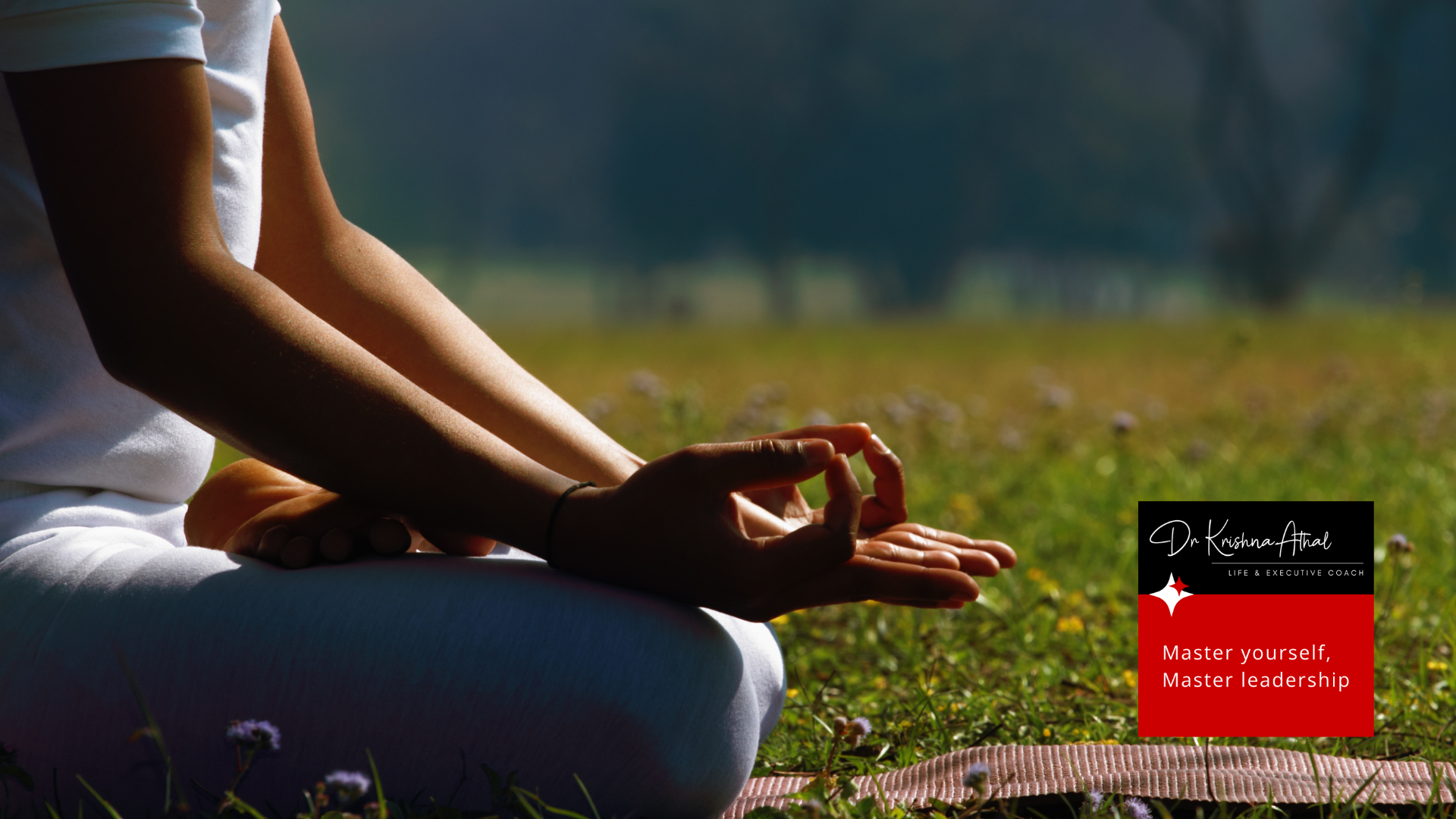
Yoga in Mauritius is quietly becoming more than a lifestyle choice. I see it as a response to something many people are feeling but not always naming: exhaustion, emotional noise, body-level stress and a longing to come back to oneself. Yoga in Mauritius is not only about flexibility, toned limbs or attractive beachside images. It is also about regulation, healing and learning how to sit with life without immediately trying to outrun it. In a society that often teaches us to keep going, smiling and performing, yoga in Mauritius may be asking a far more radical question: what happens when we finally pause?
When the body is busy but the nervous system is tired
I have met people who looked absolutely fine from the outside but were internally frayed. The smile was present. The job title was impressive. The family photos looked warm and polished. Yet the body told another story. Tight shoulders. Shallow breathing. Restless sleep. A mind that would not switch off.
This is where yoga in Mauritius begins to matter. Not as a fashionable accessory to an already curated life, but as a practice that reveals what the body has been carrying in silence.
In psychology, we often speak of the stress response. In neuroscience, we look at the autonomic nervous system, which helps govern whether the body is in a state of fight, flight, freeze or rest. Put simply, many people are living as if danger never left the room. Yoga in Mauritius offers a way to signal safety to the body again. Breathing deeply, moving slowly, holding attention in the present moment, all of this can help reduce physiological over-activation.
That matters more than many people realise.
Yoga in Mauritius is touching something deeper than fitness
Let me say something slightly provocative. Not everybody who joins yoga in Mauritius is looking for spiritual growth. Many begin because of back pain, burnout, anxiety or the simple fact that their friend dragged them along. Fair enough. The body often brings us to doors the mind would never willingly knock on.
But once people stay, something shifts.
Yoga in Mauritius starts as movement and often becomes self-confrontation. You begin by trying to stretch your hamstrings. You end up noticing how impatient you are, how disconnected you are from your breath, how uncomfortable stillness feels, how often your thoughts bully you. That is where the practice becomes psychologically rich.
The word interoception is useful here. It refers to the ability to sense what is happening inside the body. A racing heart. A clenched jaw. A sinking stomach. Yoga strengthens interoception. In simple language, it helps you notice yourself earlier. That can change relationships, decisions and emotional reactions.
On an island of beauty, why are so many people still internally restless?
Mauritius is beautiful. Let us not pretend otherwise. Sea, sun, mountains, colour, rhythm. Yet beauty outside does not automatically create peace inside.
This is one of the contradictions that fascinates me. We can live in paradise and still carry panic in the chest. We can post sunsets and still feel lonely. We can attend social events, answer work emails, drive through traffic, care for children, perform for family, and quietly drift away from ourselves.
So when yoga in Mauritius grows, I do not see only a wellness movement. I see a cultural clue. People are seeking spaces where they can stop performing. They want somewhere they do not have to be productive, impressive or constantly available.
That need is not trivial. It is deeply human.
The emotional power of breath, stillness and repetition
I remember once speaking to someone who told me, almost apologetically, “I do not know why, but I cried in class during savasana.” I smiled. The body often releases what the personality has been managing for months.
Yoga in Mauritius can create those moments because it gently lowers the noise. When the body slows down, unprocessed emotion sometimes rises. That is not weakness. That is information.
There is also something important happening in the brain. Repeated mindful movement and breathwork can support neuroplasticity, which is the brain’s capacity to change through experience. In everyday terms, yoga can help create new patterns. Not magically, not overnight, but gradually. The person who always reacts may begin to pause. The person who always braces may begin to soften. The person who has lived in constant inner acceleration may learn a different rhythm.
This is one reason yoga in Mauritius deserves to be taken seriously, especially in conversations about mental health and well-being.
Yoga in Mauritius is also challenging the culture of constant output
There is a societal edge to this conversation that I do not want to ignore. Many of us have been trained to admire busyness. The packed schedule is treated like proof of value. Rest is postponed. Presence is romanticised but rarely practised.
Yoga in Mauritius quietly resists that mentality.
To stand on a mat and breathe with attention is almost rebellious in a world obsessed with speed. To choose inwardness in a culture of performance is no small thing. To learn that you are not your productivity is, for many people, a profound emotional education.
This is where yoga in Mauritius can become more than personal well-being. It can become a social mirror. Why are we so tired? Why do so many people struggle to be alone with themselves? Why does slowness feel guilty? These are not yoga questions only. They are civilisation questions.
Not every class is the same, and that matters
Of course, yoga in Mauritius is not one single thing. Some classes are rigorous and physical. Some are meditative. Some are more commercial. Some are deeply thoughtful. Some are little more than stretching with incense.
That is why discernment matters.
A good yoga space does not merely push bodies into shapes. It helps people build awareness, steadiness and respect for their own limits. The best teachers understand trauma-sensitivity, breath, embodiment and pace. They do not confuse intensity with wisdom.
If you are exploring yoga in Mauritius, choose spaces that make you feel more present, not more inadequate. Real yoga does not humiliate the body. It teaches you how to listen to it.
What yoga in Mauritius may really be giving people
At its best, yoga in Mauritius gives something many people have quietly lost: a relationship with themselves that is not based on performance.
It offers a way back to the body without vanity. A way back to the mind without domination. A way back to breath without forcing. A way back to the self without drama.
I think that is why yoga in Mauritius is resonating with students, professionals, parents, entrepreneurs and older adults alike. Everyone is carrying something. Everyone is trying to hold themselves together in one way or another. The mat becomes a place where holding can become softening.
And perhaps that is the real story. Yoga in Mauritius is not growing simply because people want better posture. It is growing because many people are tired of living at the surface of themselves.
Maybe the body knew before the mind did.


