
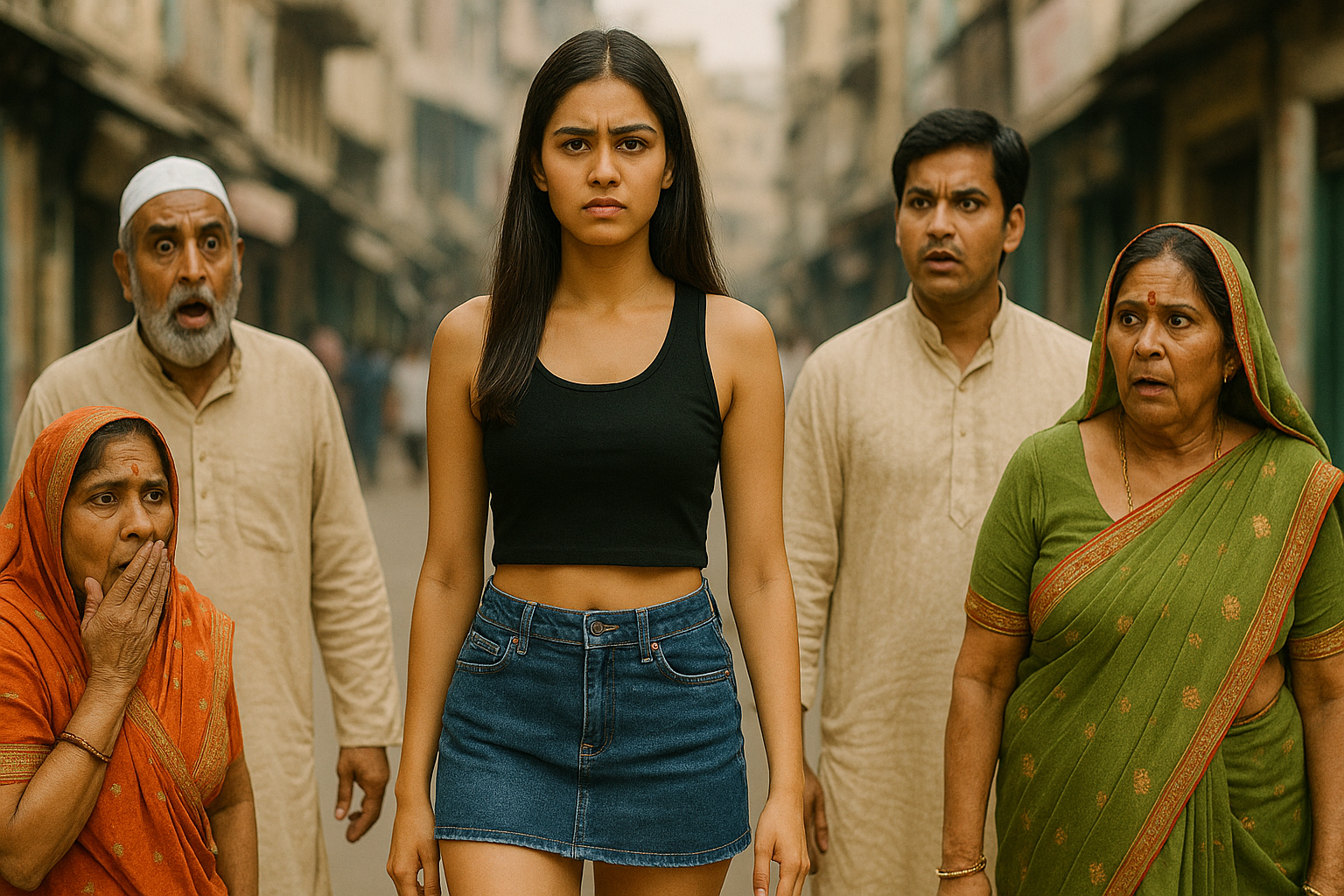
Every time I walk down a busy street in any modern city, there is always a moment when a woman in a short skirt catches the eye of passers-by. It’s rarely neutral; short skirts evoke attention, curiosity, and often judgement. The sight of them sparks debates: Is she trying to prove something? Is she rebelling against norms? Or is she simply dressing for herself?
This seemingly simple piece of clothing has, for decades, carried an emotional, cultural, and psychological weight. To dismiss it as “just fashion” is to ignore the complexities of choice, identity, and power that accompany it.
The Vigilance Behind the Choice
Let’s be clear: wearing a short skirt is not a carefree choice. Women often know they’ll need to be vigilant—crossing their legs while sitting, adjusting hems, constantly aware of wandering eyes or predatory comments. There’s an unspoken labour that comes with such clothing: the mental checklist of safety, posture, and dignity.
When I spoke to a friend about this, she told me: “It’s exhausting sometimes. I love the feeling of a short skirt, but I’m always scanning my environment. Is someone staring too much? Is someone walking too close?” That vigilance itself speaks to the paradox of freedom and risk.
The Attention and Its Double Edge
Short skirts undeniably attract attention. Sometimes that attention is flattering—compliments, a sense of feeling noticed. At other times, it tips into objectification, where the woman is reduced to her legs, her body, a fleeting image rather than a full human.
This double edge is crucial. Attention is not inherently bad; humans crave recognition. But objectification strips away individuality, leaving women feeling both visible and invisible at the same time.
A short skirt, then, becomes both a beacon of confidence and, unfairly, a magnet for judgement.
Liberation or Rebellion?
So why do women still wear them? The psychology behind it is rich.
For many, short skirts represent liberation. After generations of being told to cover up, to shrink, to be modest, the choice to wear something revealing is an act of reclaiming one’s body. It’s saying: I choose how I show myself to the world. The hemline becomes a declaration of agency.
For others, it is rebellion. In cultures or families where women are expected to dress conservatively, the short skirt is a protest. It’s a refusal to conform, a way of carving out individuality in a sea of expectations. This rebellion is not always loud or angry—it can be a quiet defiance, a whispered statement of: I will not be controlled.
What Is Being Proven?
But what do women want to prove when they wear short skirts? That they are attractive? Modern? Confident? Perhaps, but often the intent is subtler. It’s not about proving something to others—it’s about proving something to oneself.
A short skirt can be an intimate pep talk: I am comfortable in my own skin. I do not need permission to feel beautiful. I can face the world as I am.
I remember once watching a colleague walk into a corporate party in a fitted black mini-skirt. People turned to look. Some whispered. Later, she told me, “It wasn’t about them. I wore it because I wanted to feel powerful. That skirt was my armour.” What struck me was that she didn’t see vulnerability in the shortness of her skirt—she saw strength.
The Cultural Layer
Psychologically, the meaning of a short skirt changes with geography and culture. In some societies, it’s a symbol of Westernisation, modernity, even affluence. In others, it’s still read as scandalous, immoral, or provocative.
This cultural lens shapes not just how women feel wearing them, but also how they are treated. A woman in London may feel stylish in a short skirt; the same skirt in a conservative town may draw shame or danger. Thus, the choice is not just personal, but deeply contextual.
The Emotional Conflict
And yet, beneath all this, there’s an emotional conflict many women face: the desire to feel free versus the fear of being misunderstood.
Psychologists speak of cognitive dissonance—the stress that arises when one’s actions and one’s environment are in tension. Wearing a short skirt can create this dissonance. A woman may feel empowered, but the stares, comments, and risks may pull her into discomfort.
This is why some women oscillate—wearing short skirts one day, avoiding them the next. It is less about indecision and more about negotiating with the world around them.
The Deeper Human Truth
At its core, the short skirt is not about hemlines but about humanity. It is about expression, freedom, rebellion, identity, and survival.
To wear one is to step into a complex social theatre: to risk objectification while asserting autonomy, to court attention while demanding respect, to carry vulnerability while embodying strength.
And perhaps that is why the choice feels so profound. It’s never just about fashion. It’s about the eternal human desire to be seen—as whole, as free, as enough.
When I reflect on the question, Why do women wear short skirts? the most honest answer I find is this: because it makes them feel like themselves. Sometimes bold, sometimes rebellious, sometimes liberated. But always, in that moment, true.


Leave a Reply