
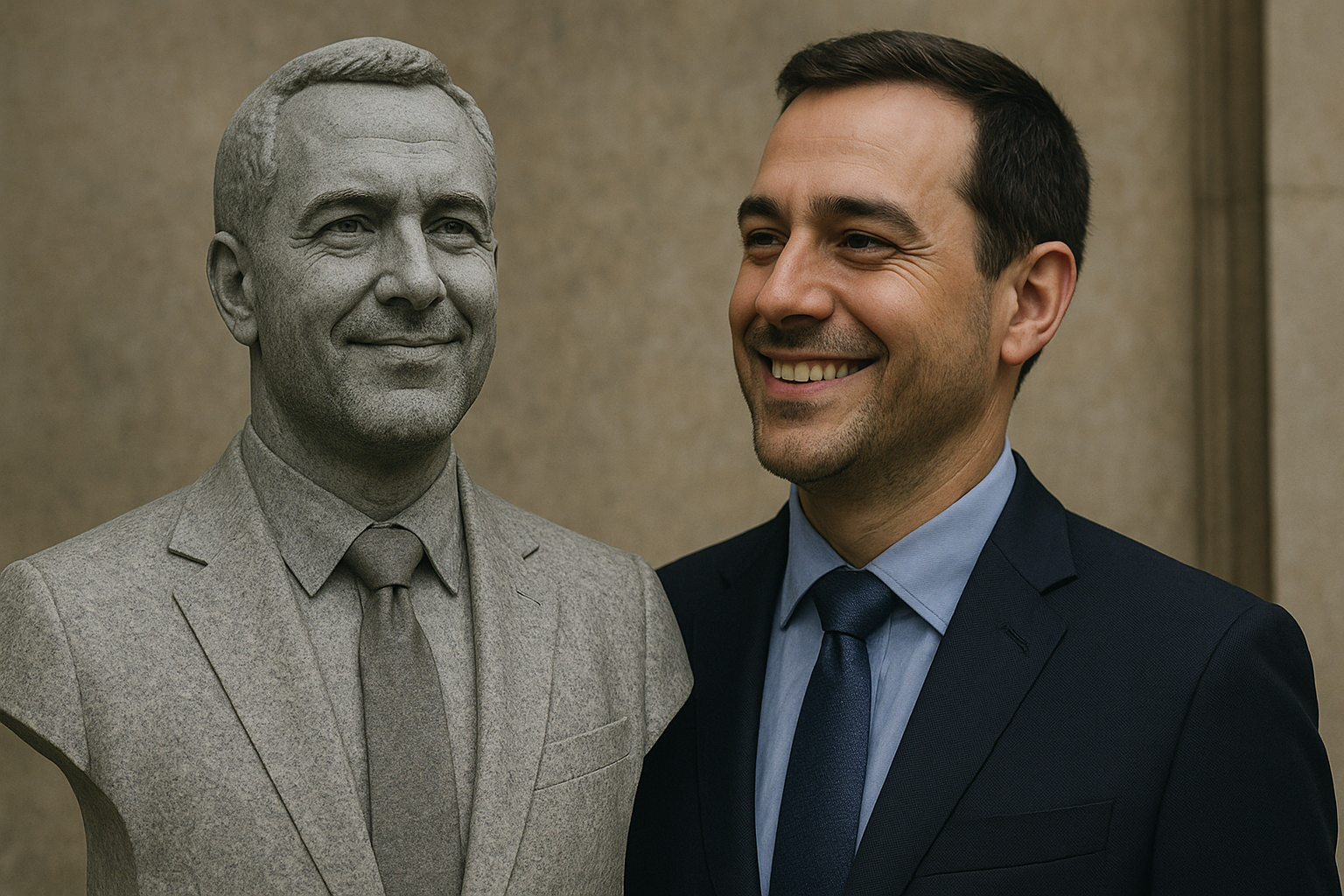
“I want to make an impact. I want to leave a legacy. People should remember me for something before I die.”
I hear these words often. They sound lofty, but underneath I usually detect not wisdom, but worry. What if the world forgets me? What if my life dissolves into the same dust that swallows billions of others? It is less a cry of vision and more a quiet panic dressed up as ambition.
This obsession with legacy is not just individual. Society feeds it to us. Every self-help book, motivational video and glossy entrepreneur interview carries the same undertone: build something that outlives you, or your life was small. We live in a culture that sells immortality in instalments. Write the book. Create the empire. Leave your mark. It sounds inspiring until you pause and ask: inspiring to whom, and at what cost?
I once coached a forty-year-old CEO who confessed, “I want my name in the history books.” He had money, employees, and power. But when I asked him what made him feel alive, he paused for too long. Then he whispered, “I don’t know anymore.” His days were consumed not by living, but by rehearsing how he hoped to be remembered. It was a tragedy disguised as success.
The psychologist Ernest Becker argued that much of human behaviour is a defence against death. Legacy is the modern version of that shield. We fear vanishing, so we try to brand ourselves into eternity. But history is not a hard drive. It deletes most files. Countless souls—artists, teachers, healers—gave everything to their time and vanished nameless. Yet their impact was no less real for being unrecorded. They were remembered by life itself, not by Wikipedia.
My grandmother never chased legacy. She never spoke of impact. She made chapatis with her bare hands and sang while she worked. She left no speeches, no memoirs. Yet she lives in me whenever I smell coriander or hear that lullaby. Her legacy is not a monument. It is breath and memory, fleeting but alive. She never asked to be remembered, and yet she is.
Here’s the uncomfortable truth: the more we obsess over legacy, the less present we become. We end up performing for an audience of the unborn, instead of being awake with the living. Society applauds this madness. It tells us we must sacrifice today for tomorrow’s applause. But applause fades. The hands that clap will one day wither. The real scandal is not that people will forget us. It is that we forget ourselves while trying to prevent it.
I challenge the idea that we owe the world a legacy. Who decided that was the debt of being alive? Perhaps this is capitalism’s slyest trick: convincing us to turn our lives into brands, even after death. Impact is sold like a product. Legacy is marketed like an insurance policy. And in buying it, we impoverish our present.
I think of a client who told me, “If I don’t leave a legacy, my life will mean nothing.” I looked at him and asked, “Does the smile you gave your daughter last night mean nothing? Did the way you comforted your grieving friend mean nothing?” He was silent. He realised he had been taught to measure worth in monuments, not in moments. That is how society cheats us: by making us chase immortality while life itself quietly slips by.
What if the real rebellion is to stop worrying about being remembered at all? To laugh loudly, to love deeply, to create joy not because it will be archived, but because it matters now. Maybe the flower does not care whether its fragrance is written about in history books. Maybe the river does not care if it is painted or named. It flows, and in flowing, it lives.
I often tell my clients: impact is not carved in marble, it is breathed into the present. A stranger remembers your kindness long after you forget you offered it. A child grows up with quiet confidence because you listened to them once. None of it is traceable, none of it will put your name on a building. Yet it changes the world more than you will ever know.
So the next time society whispers, “Leave a legacy,” dare to laugh. The pursuit of legacy is not noble; it is often just fear in a costume. Live instead. Risk being forgotten, and in doing so, you may finally taste what it means to matter.


Leave a Reply