
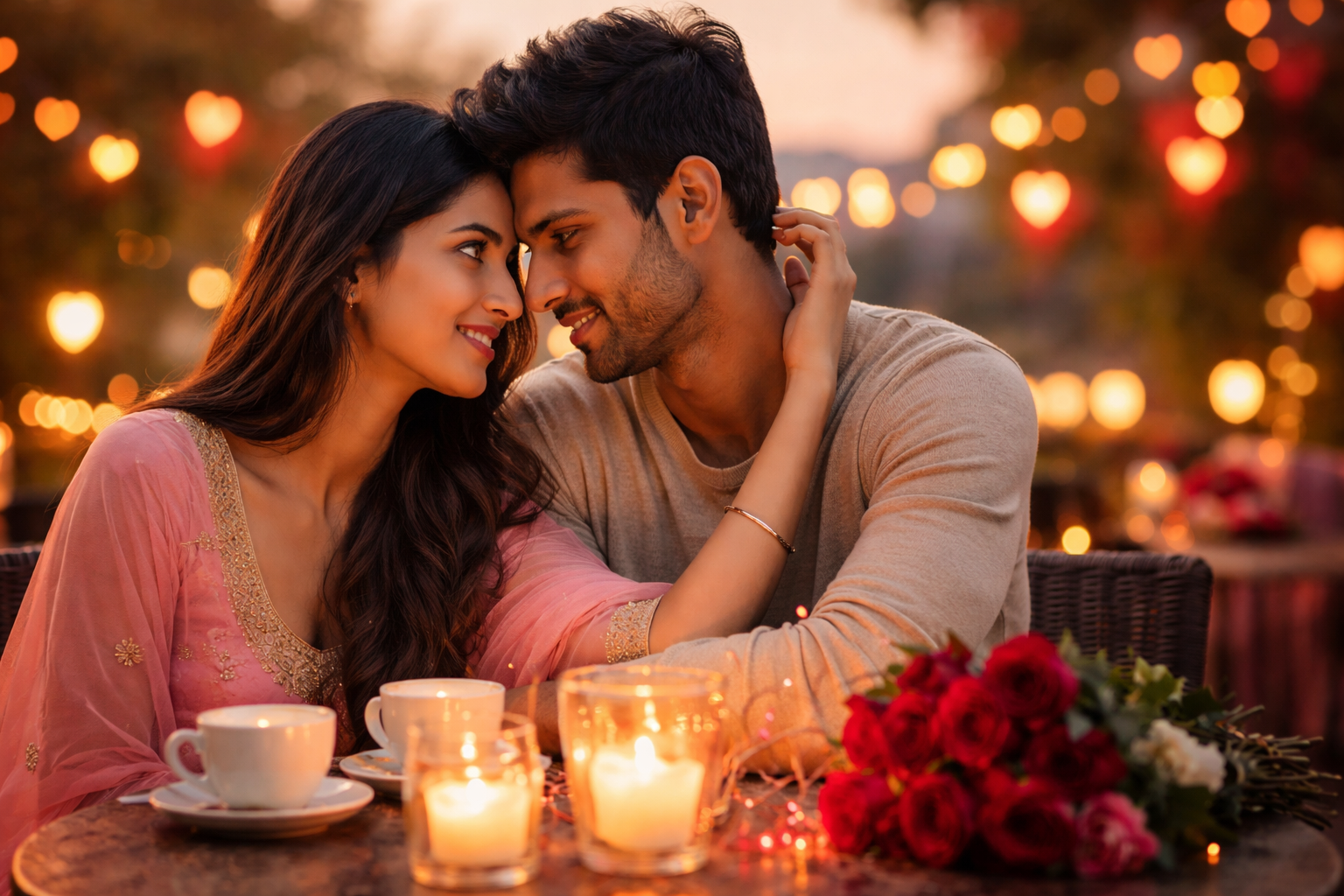
Valentine’s Day 2026 in India will arrive with the same familiar props: red roses, restaurant surge pricing, and Instagram couples performing joy like it is a competitive sport. Yet, each year, I notice something more interesting than the flowers. The day does not merely celebrate love. It exposes our relationship with love. That difference matters.
I have coached founders who can negotiate million-rupee deals but cannot ask their partner for a hug without sounding like they are requesting a service. I have coached high-achievers who feel safest when they are praised, yet strangely threatened when they are deeply known. On Valentine’s Day, these patterns do not disappear. They become louder. And that is exactly why this day can be useful, if you know where to look.
This is not a piece about “how to impress your partner”. India does not need another list of date ideas. This is an invitation to use Valentine’s Day 2026 in India as a mirror, and maybe as a reset.
The Romance Industry vs Your Real Nervous System
Let me be blunt. The romance industry sells intensity, not intimacy. Intensity is easy. It is dopamine-friendly, novelty-driven, and camera-ready. Intimacy is slower. It requires emotional risk, nervous-system safety, and repeated repair after misunderstandings.
Neuroscience has a quiet truth here: your brain does not experience “love” as a single emotion. It experiences a cocktail. Dopamine fuels pursuit and reward. Oxytocin supports bonding and trust. Cortisol spikes under uncertainty and emotional threat. If your relationship is running on cortisol disguised as passion, Valentine’s Day can feel like pressure, not pleasure.
In India, this pressure comes with extra toppings: family expectations, cultural scripts, and the unspoken comparison game. Some couples are still negotiating privacy and autonomy. Some are married and still emotionally alone. Some are single and treated like an unfinished project.
So I ask a simple question: are you celebrating love, or performing belonging?
The Indian Love Dilemma: Tradition, Choice, and the Need to Be Seen
Valentine’s Day 2026 in India sits at an awkward intersection. On one side, tradition offers stability, duty, and social structure. On the other, modern love sells choice, chemistry, and personal fulfilment. Many people are trying to hold both, without a user manual.
I remember a client who told me, “I love my spouse, but I miss being desired.” Another said, “My partner desires me, but I do not feel emotionally safe.” These are not contradictions. They are different needs. Indian relationships often carry a hidden deal: “We will be loyal and functional, and we will not talk too much about feelings.” That deal keeps families running, but it can quietly starve intimacy.
To be seen is not the same as being looked at. A relationship can have constant contact and still lack connection. Valentine’s Day exposes that gap because it demands a moment of meaning, and meaning cannot be faked for long.
Attachment Styles: Why Valentine’s Day Triggers People
If Valentine’s Day reliably makes you anxious, numb, irritated, or overly needy, I would not blame your “attitude”. I would look at your attachment pattern.
Attachment is your nervous system’s relationship blueprint, often formed long before your first adult relationship. In simple terms:
Anxious patterns crave reassurance and fear abandonment. Avoidant patterns crave space and fear engulfment. Secure patterns can hold closeness and independence without panic.
Valentine’s Day compresses expectations into a single day. That compression is a trigger machine. Anxious partners may interpret a delayed reply as rejection. Avoidant partners may experience a romantic plan as a demand. Both are often reacting to old survival strategies, not the present moment.
The real work is not a perfect date. The real work is learning to say, with dignity, “This is what helps me feel close” and “This is what overwhelms me” without shaming each other.
Love Languages Are Cute. Emotional Labour Is Real.
We love the simplicity of love languages because they make love sound like a preference menu. But most relationship suffering is not caused by a mismatch of gifts versus words. It is caused by invisible emotional labour and unspoken resentment.
Who carries the mental load? Who initiates repair after conflict? Who keeps track of birthdays, health, in-laws, finances, school WhatsApp groups, and the emotional weather of the home?
Valentine’s Day 2026 in India is a perfect moment to ask a bolder question than “What should we do?” Ask, “What have we been avoiding?” Not as an accusation, but as an honest check-in.
A relationship does not die from one fight. It dies from years of not feeling met.
A Yogic Angle: Valentine’s Day as Practice, Not Performance
As an aspiring yogi, I find Valentine’s Day fascinating because it tests our capacity for presence. Yoga, at its best, is not flexibility. It is intimacy with reality. It is the willingness to stay with what is true without theatrics.
If you are partnered, try this on Valentine’s Day: reduce the performance, increase the presence. Put the phone away for a while. Make eye contact for longer than is comfortable. Notice the urge to fill silence. Let it settle. Often, what you call “boredom” is simply the nervous system detoxing from constant stimulation.
If you are single, Valentine’s Day can become a practice in self-respect. Not self-help slogans, but self-respect. Can you refuse the story that says love is only valid when witnessed by someone else? Can you treat yourself as someone worth keeping company with?
I once spent a Valentine’s Day travelling between two cities for work, eating dal-chawal alone in a hotel room. I remember feeling oddly peaceful, because I was not bargaining for attention. That night taught me a surprising lesson: loneliness is not the absence of people. It is the absence of inner safety.
The Modern Indian Question: Are We Dating, or Are We Marketing Ourselves?
Here is the societal question we avoid. In 2026, many of us are not dating, we are branding. We curate our attractiveness, our achievements, our “vibe”. We optimise ourselves to be chosen, then wonder why being chosen does not feel nourishing.
When love becomes a marketplace, anxiety becomes normal. You start tracking effort like a stock chart. You interpret minor changes in tone as market signals. This is not romance. This is stress with a filter.
Valentine’s Day 2026 in India can be the day you stop treating connection as a product. A partner is not an audience. And if you are always auditioning, you are never resting.
A Simple Valentine’s Ritual for Real Intimacy
I will offer one practice that is deceptively powerful. It needs no fancy décor.
Sit together and answer three sentences each, slowly:
- “This year, I felt most loved when you…”
- “This year, I felt most alone when…”
- “In the next 30 days, I would feel closer if we…”
Keep it specific. Keep it kind. Do not debate the other person’s truth. Listen like you are learning someone, not managing them. This is couples’ communication that actually changes nervous-system safety.
If you are single, write the same sentences, addressed to yourself. You are not being dramatic. You are building emotional intimacy with your own life.
The Real Point of Valentine’s Day 2026 in India
If Valentine’s Day leaves you with photographs but no softness, you have not celebrated love. You have documented it.
Love, in psychological terms, is not constant happiness. It is secure connection plus repair. It is the ability to be honest without cruelty, and vulnerable without performing. It is choosing each other in small ways when nobody is watching.
So this Valentine’s Day 2026 in India, I am less interested in what you buy, and more interested in what you stop pretending.
Because the deepest romance is not roses. It is reality, held with tenderness.


Leave a Reply