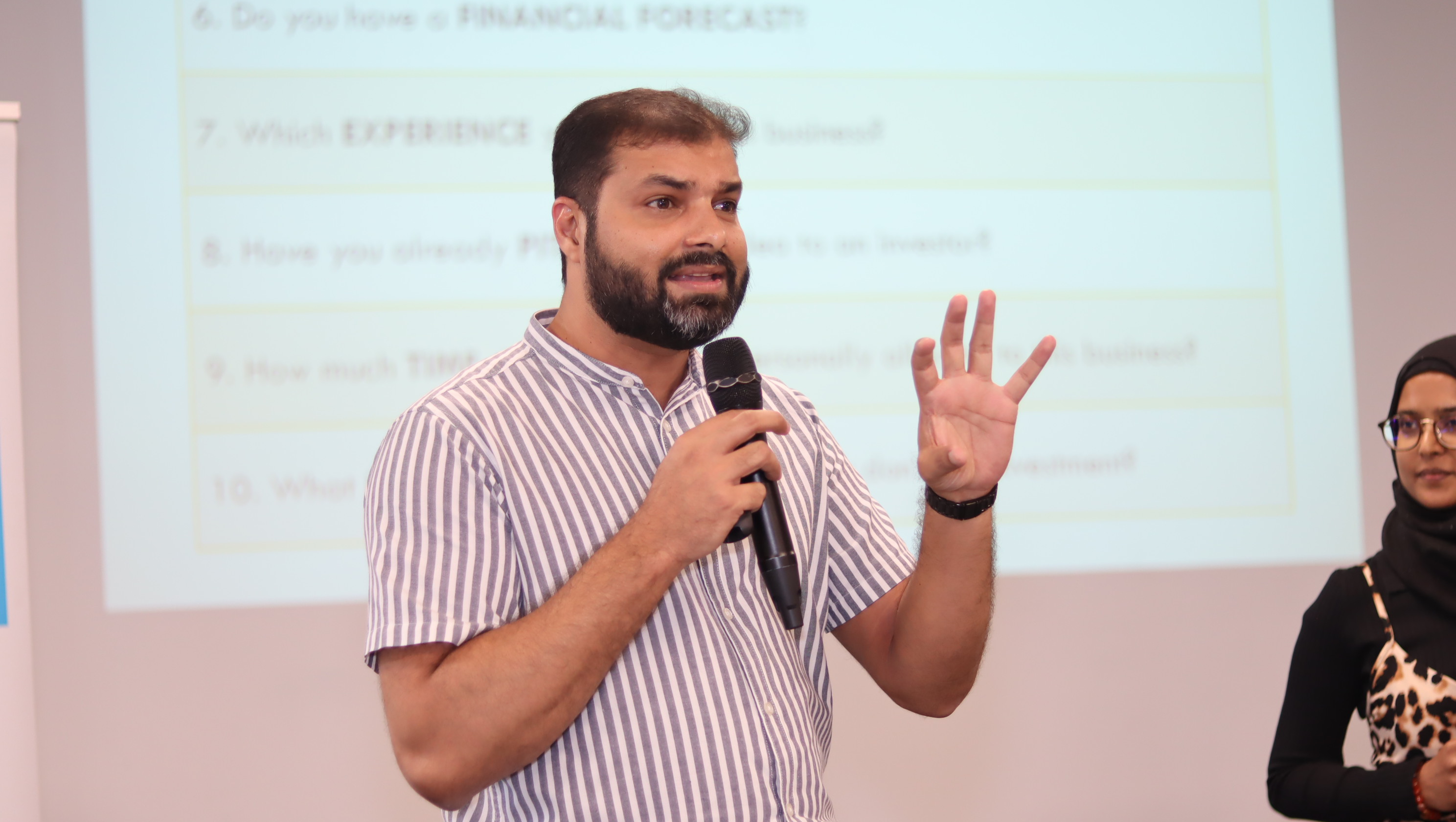
My workshop for women home-based workers in Mauritius was successful in a way that numbers alone cannot explain. Yes, the room was full. Yes, the engagement was strong. Yes, the feedback was deeply positive. But the real success of this workshop lay elsewhere. It lay in the emotional charge of the room, in the seriousness with which women showed up, and in the quiet but unmistakable shift that happens when women begin to see their work not as a side activity, but as a serious act of economic and personal agency.
A full room is not always a meaningful room
I have attended enough events to know that a full hall can be deceptive. People can arrive, sit, smile politely, collect a certificate, eat lunch, and leave unchanged. That is not success. That is attendance with better lighting.
What happened at our workshop for women home-based workers in Mauritius was different. Organised by YUVA Mauritius in close collaboration with IndianOil Mauritius, the event brought together women who were not there to decorate a room. They were there because life has been asking something of them. Some were running home-based business activities quietly for years. Some were only beginning. Some arrived with notebooks. Some arrived with children on their minds, pricing confusion in their heads, and fatigue in their nervous systems.
Yet there was alertness in the room. A kind of inner leaning forward.
That matters. In psychology, attention is not just a mental process. It is a sign of readiness. It tells you that the brain is not merely receiving information. It is preparing for change.
Why women home-based workers in Mauritius needed this space
Let us ask an uncomfortable question. Why do women still have to fight so hard to be taken seriously when they work from home?
A man managing numbers from a laptop is called strategic. A woman managing customers, products, family schedules, pricing, stock, emotional labour and unpaid domestic work from the same square footage is often described as doing a little something from home. Language reveals value. Society still has a habit of shrinking women’s labour with soft words.
This is exactly why this workshop for women home-based workers in Mauritius mattered. It was not only about business skills, financial literacy, or digital transformation. It was about dignity. It was about helping women recognise that structure is not arrogance, pricing is not greed, visibility is not vanity, and ambition is not a moral failure.
I remember one participant who told me, quietly, almost apologetically, that she only sells from home. Only. That word has crushed more women than we admit. By the end of the day, her posture had changed. She was asking sharper questions about margin, customer behaviour, and digital positioning. Same woman. Different internal narrative.
That is success.
The psychology of why the workshop landed so deeply
When people feel psychologically safe, they learn better. Psychological safety means the nervous system does not feel under attack. It does not mean comfort in the lazy sense. It means enough emotional safety for honest thought to emerge.
This workshop created that.
From the first session onwards, there was visible emotional engagement. Women were not merely processing content. They were processing identity. In neuroscience, we often speak about neuroplasticity, which simply means the brain’s ability to reorganise itself through experience. Most people hear that word and think of something abstract. It is not abstract at all. It is what happens when a woman stops repeating an inherited script and begins rehearsing a new one.
I am not made for business.
I am not good with money.
I am too small to grow.
I am too late to begin.
These are not just thoughts. They become neural habits. Repeated beliefs form well worn pathways in the brain. But when a woman is placed in a room where she is challenged, encouraged, seen, and given practical tools, those pathways can begin to shift.
That is why the workshop worked. It spoke not only to knowledge gaps, but to identity gaps.
Business skills are not only commercial tools
Too many people think a business skills workshop is about sales techniques and tidy formulas. But business skills workshop spaces can become mirrors. They reveal how people think, avoid, sabotage, delay, or doubt.
At this workshop, we explored business skills workshop themes, financial literacy concerns, and digital transformation realities in ways that were practical and human. We were not performing jargon for effect. We were naming the gap between effort and structure.
One woman described how she had been underpricing her work for years because she felt bad charging more. Another realised she had no system at all for tracking profit. A third admitted she was frightened of digital tools and had stayed dependent on informal word of mouth for too long. None of these are merely technical issues. They are behavioural patterns.
This is where psychology becomes useful. Behaviour is rarely random. It is usually protecting something. Fear of pricing may protect belonging. Avoidance of numbers may protect self esteem. Resistance to visibility may protect the person from judgment. Once that becomes visible, change becomes possible.
The emotional intelligence inside the room
Success is not always loud. Sometimes it looks like a woman taking a note she should have taken two years ago. Sometimes it looks like asking a question she has been postponing out of shame. Sometimes it looks like laughing with other women and realising she is not behind. She is simply under-supported.
That collective recognition was one of the strongest elements of the day. Women entrepreneurs conversations are often framed around hustle, output, and motivation. But community matters too. Co-regulation matters too. Co-regulation is a psychological term for the calming and stabilising effect human beings can have on one another. Put simply, when one person feels less alone, the body softens and the mind can think better.
That is what I witnessed. The room became more than a training space. It became a social correction.
Why YUVA Mauritius and IndianOil Mauritius made this count
A meaningful initiative needs more than good intention. It needs structure, legitimacy, and follow through. YUVA Mauritius and IndianOil Mauritius helped create exactly that. This was not charity theatre. It was a serious workshop for women home-based workers in Mauritius with real content, real people, and real relevance.
And perhaps that is the larger point. Mauritius does not need more decorative language around empowerment. It needs investment in women entrepreneurs spaces that are practical, emotionally intelligent, and socially honest.
If we want stronger families, stronger communities, and stronger economic participation, then home-based business realities cannot remain invisible. Women are already building. The question is whether society is mature enough to build with them.
The real measure of success
So yes, the workshop was successful.
It was successful because the feedback was positive, but not only because of that. It was successful because women stayed engaged. Because the room had seriousness. Because practical learning met emotional truth. Because women home-based workers in Mauritius did not just receive information. They received language, confidence, and a stronger sense of authorship over their own work.
That is what I will remember.
Not the full house alone.
Not the photographs alone.
Not the applause alone.
I will remember the shift in the room when women began to realise that what they are building deserves rigour, respect, and scale.
And that, to me, is the kind of success worth writing about.


