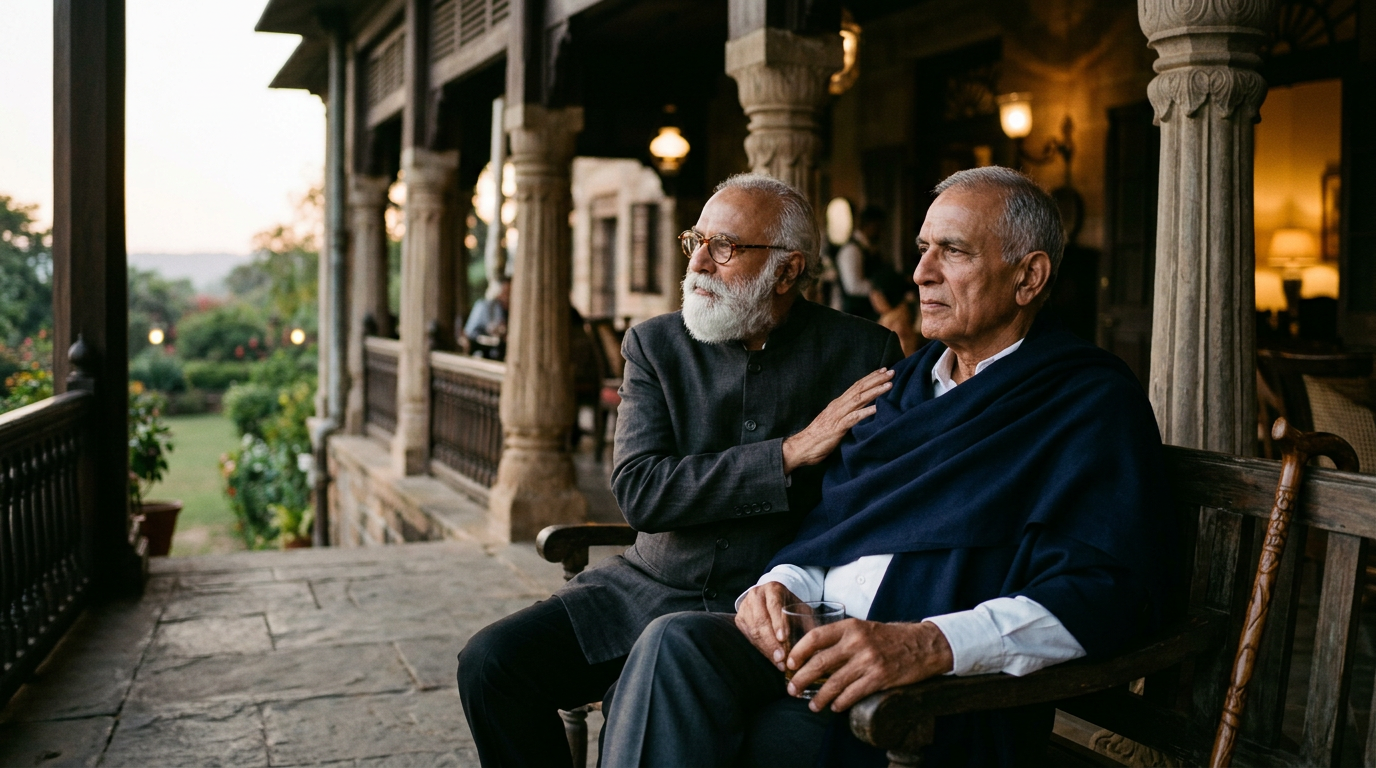
International Men’s Day falls on Thursday 19 November 2026, and for many men it will pass the way their own needs usually do: quietly, politely and largely unspoken. Yet the day exists for a serious reason. Worldwide, more than twice as many men as women die by suicide, and many men will keep saying “I’m fine” right up to the moment they are not.
This article gives you the date, the 2026 theme and the history in plain terms, then turns to the harder question underneath: why so many capable men are seen every day for what they do, and so rarely for who they are.
Here is what you need to know at a glance:
- Date: Thursday 19 November 2026; the observance falls on 19 November every year
- 2026 global theme: “The Future Is Everyone”, a call for compassion and collaboration between men and women
- UK theme: the UK campaign keeps its standing theme, “Supporting Men and Boys”
- Origins: the modern observance began in 1999 in Trinidad and Tobago, founded by Dr Jerome Teelucksingh, and is now marked in more than 80 countries
- Purpose: recognising men’s contributions and promoting well-being, positive role models and gender equality
What Is the International Men’s Day 2026 Theme?
The global leadership team of International Men’s Day announced the 2026 theme in March, “The Future Is Everyone”, built on the idea that men and women are at their best when they work together. The organisers have also backed a push for formal recognition of the day on the UN calendar, noting there is currently no official UN day for men or boys while there are 13 for women and girls.
I like this theme because it refuses the zero-sum argument that so often hijacks the conversation. Men’s well-being is not taken from women’s. The son who learns to name his fear becomes a gentler partner. The father who can say “I’m struggling” raises children who believe struggle can be spoken. Care for men is not a rival cause. It is part of the same one.
Why International Men’s Day Exists
The day rests on six pillars: promoting positive male role models, celebrating men’s contributions to family and society, focusing on men’s and boys’ health and well-being, highlighting discrimination against males, improving gender relations and promoting gender equality, and creating a safer, better world.
Read them closely and you will notice something. Most are about what men give. Only one is about what men need. That imbalance mirrors how many men live.
What the Numbers Say About Men’s Mental Health
The statistics are not abstract, and in India they are stark:
- India: NCRB recorded 170,746 suicides in 2024, with a male-to-female ratio of 73.5 to 26.5. Nearly three in every four were men.
- Work and livelihood: of the 52,910 daily wage earners who died by suicide in 2024, 48,311 were men.
- Friendship: American research by the Survey Center on American Life found the share of men with no close friends rose from 3% to 15% between 1990 and 2021, while those with six or more close friends fell from 55% to 27%. That is US data, but the pattern is worth noticing wherever you live.
If you, or a man you love, are thinking about ending your life, please contact a local crisis line or emergency services today. Telling one person is enough to begin.
Why Do Men Find It So Hard to Ask for Help?
The research points less to weakness and more to a script. A systematic review by Seidler and colleagues found that conformity to traditional masculine norms affects men with depression in three ways: how their symptoms show up, whether they seek help, and how they manage what they feel.
A larger meta-analysis of 78 samples and 19,453 participants found that self-reliance was consistently and unfavourably linked to mental health outcomes, whereas prioritising work was not. That distinction matters. Ambition is not the problem. The belief that you must carry everything alone is.
Psychologists sometimes use the term normative male alexithymia, meaning a learned difficulty in recognising and naming one’s own feelings. The psychologist Ronald Levant coined it in 1992. Importantly, some researchers argue that men’s reluctance to express emotion stems from how they have internalised masculinity, not from an inability to recognise feelings. In other words, many men can feel it. They have simply learned that showing it costs too much.
I have described one form of this as the receiving deficit: the learned inability to accept care, attention or celebration without discomfort. It sits beside what I call wall strength, the steadiness that holds a surface still while everything behind it strains. And in India it compounds the wider reluctance to seek therapy, so many men wait until a crisis gives them permission.
Seen for the Role, Unseen as the Person
Consider a composite drawn from a pattern familiar to anyone who works with senior men. He is 46, runs a profitable business, supports his parents, pays the school fees and is the first call when anything breaks. Everyone sees him. His team sees the decision-maker. His family sees the provider. His friends see the man who always picks up the bill.
What nobody sees is the 3am arithmetic, the father he still cannot talk to, or the private fear that if he stopped being useful, nobody would have a reason to stay. He is praised in nouns: provider, pillar, rock. Nobody asks after the person underneath them.
Many men learn this early, often from fathers who learned it from theirs, which is why the complicated father-son relationship so often sits at the centre of adult male silence.
“Men are rarely invisible. They are seen every day as the earner, the fixer, the one who copes. What goes unseen is the person holding the role.”
Pause here for a moment:
- When did someone last ask how you were and receive the true answer?
- Which of your roles would you be afraid to set down for one week, and what are you afraid it would reveal?
- Who in your life knows the person, not the function?
How to Mark International Men’s Day in a Way That Matters
If you are a man: tell one person one true thing this week. Not a crisis, just a truth. Then repair one friendship that has quietly lapsed by putting a date in the diary, not a vague “we must catch up”. And book the health check you have been postponing, because the well-being pillar applies to your body as much as your mind.
If you love a man: ask the second question. “How are you?” invites “fine”. “What has been weighing on you lately?” invites the truth. Many men also talk more easily side by side than face to face, on a drive, a walk or at a game, so make room for that.
If you lead people: skip the token breakfast. Make help-seeking visible from the top, train managers to notice withdrawal rather than only output, and let the 2026 theme guide you by including everyone in the conversation, not only men.
Sometimes the most useful step is a confidential space to think aloud without performing strength. That is what life coaching offers: a non-clinical partnership for understanding patterns and making clearer choices. Where distress runs deeper, a therapist or doctor is the right first call, and there is no weakness in that either.
Strength was never the problem. Loneliness inside strength is. This International Men’s Day, the most generous thing you can offer a man is not admiration for how much he carries, but a place where he is allowed to put it down.
If you recognise yourself in these pages, a free 15-minute conversation is a quiet, no-obligation place to begin.


