
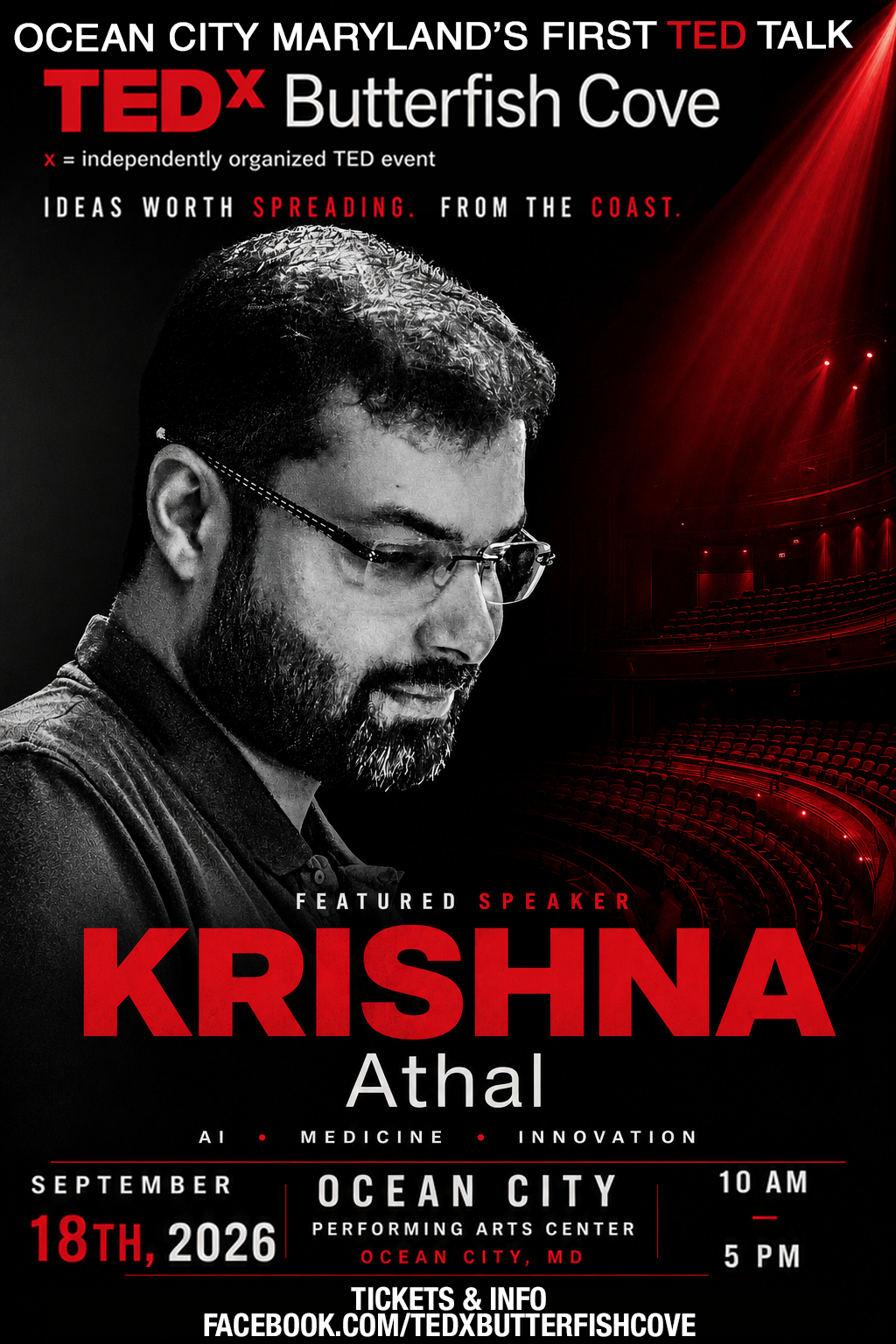
We are fluent in the language of ambition and almost silent in the language of what ambition costs. The loneliness of success is the quiet ache that arrives exactly when the applause is loudest, the strange hollowing that visits people who, by every visible measure, have arrived. This September I will step onto the TEDxButterfish Cove stage in Ocean City to name it out loud, because too many capable people are carrying it alone. This is not a story about failure. It is a story about what happens to the human heart when winning becomes a habit and honesty starts to feel like a risk.
A founder I work with told me recently that her proudest day and her loneliest day were the same day. She had closed the round, her phone would not stop lighting up with congratulations, and that night she sat alone in the office car park and wept without being able to explain why. Nothing had gone wrong. That was the part that unsettled her most.
The applause was loud, the room was empty
She is not unusual. I meet a particular kind of person again and again in my coaching room: accomplished, respected, often admired by thousands, and privately starved of the one thing achievement cannot manufacture, which is being known. I have come to call this the Applause Gap: the widening distance between how loudly you are celebrated and how truly you are understood. The Applause Gap is not grief about losing. It is the disorientation of winning, and then noticing that the people clapping do not actually know you, and that you have quietly run out of anyone you can tell the truth to.
We rarely talk about this, because it sounds ungrateful. Complaining about loneliness while standing on a stage feels like complaining about the weather in paradise. So the feeling goes underground, and underground is exactly where it does the most damage.
Why success can deepen the very loneliness it promised to cure
Here is the uncomfortable mechanics of it. Each rise narrows your circle. The people who once spoke to you plainly become people who report to you, pitch to you, or want something from you. Candour becomes expensive. You begin to perform competence for a living, and after enough years the performance runs on its own, even at home, even with the people who love you.
The data is sobering. According to Harvard Business Review, around half of chief executives report feeling lonely in the role, and most of those believe it is hurting their performance. This is not a fragility problem. It is a structural one. The higher you climb, the fewer people remain who can relate to what you are actually carrying, and the more your survival seems to depend on never letting them see it. I have written before about leadership loneliness as an overlooked reality, and the years since have only made it louder.
What loneliness does to the brain and the body
This matters because loneliness is not only an emotion. It is a physiological state. Neuroscience has shown that social pain runs through some of the same circuitry as physical pain, lighting up a region called the dorsal anterior cingulate cortex, the brain’s alarm system for anything that threatens our survival. In plain terms, the brain treats disconnection as a kind of injury, because for most of human history being cut off from the group genuinely was one.
Left unattended, that alarm holds the nervous system in a low, humming state of threat. Cortisol, the body’s main stress hormone, stays elevated. Sleep thins. Judgement narrows. This is why the former United States Surgeon General described loneliness as a public health emergency, with a long-term toll on the body comparable to smoking around 15 cigarettes a day. The lonely high achiever is not being dramatic. Their biology is keeping an honest score.
So sit with three questions, quietly, before you read on. When did you last tell someone the unedited truth about how you are, and trust that they could hold it? Who in your life knows the real number, not the rounded-up one? And if everything you are admired for vanished tomorrow, who would still be in the room?
Why this ache is sharper now than ever
Every generation has known the loneliness of the summit. Ours has industrialised it. We now measure our worth in figures that look like connection but rarely deliver it: followers, likes, views, reach. You can be seen by a hundred thousand people and known by none of them. Visibility has become so cheap and intimacy so scarce that we routinely confuse the two.
Add remote work, scattered families, and a culture that treats vulnerability as a personal brand risk, and you have the perfect conditions for the Applause Gap to widen. Many of us now reach for the phone to soften the ache, trading presence for a numbing scroll that leaves us lonelier than before. The yogic traditions kept a distinction we have nearly lost: solitude is being alone and at peace, while loneliness is being alone and at war. Modern success is very good at producing the second and very poor at teaching the first.
Success does not always make you lonely. It simply removes, one by one, the people who used to tell you the truth, and forgets to replace them.
From audited to anchored
The way through is not more achievement. It begins, oddly, with honesty in private before honesty in public. In my coaching work I help people practise emotional awareness, the simple and underrated skill of naming what is actually happening inside, because a feeling named is a feeling that loosens its grip.
In my TEDxButterfish Cove talk I walk through three movements I use with clients: audit, anchor, allow. Audit the gap honestly, without shame. Anchor your worth in something steadier than applause, in your values, in a handful of real relationships, in the quiet self that existed before the titles. And allow yourself to be known by a small circle who love the person and not the performance. You do not need a hundred thousand confidants. You need three or four people in front of whom you can finally exhale. That, more than any further career success, is what protects a life.
If any of this has named something you have carried for years but never quite said, that recognition is not a weakness. It is the beginning of the way back. You are allowed to keep your ambition. You simply have to stop letting it cost you the people who make it worth having.
If you would like to think this through with someone, you are welcome to book a fifteen-minute conversation with me. No performance required.
Dr Krishna Athal is an award-winning Life and Executive Coach and Amazon bestselling author, working across India, Mauritius, and Singapore at the intersection of leadership, psychology, neuroscience, and human behaviour. He will speak on the loneliness of success at TEDxButterfish Cove, Ocean City’s first TEDx, at the Ocean City Performing Arts Center on 18 September 2026.


