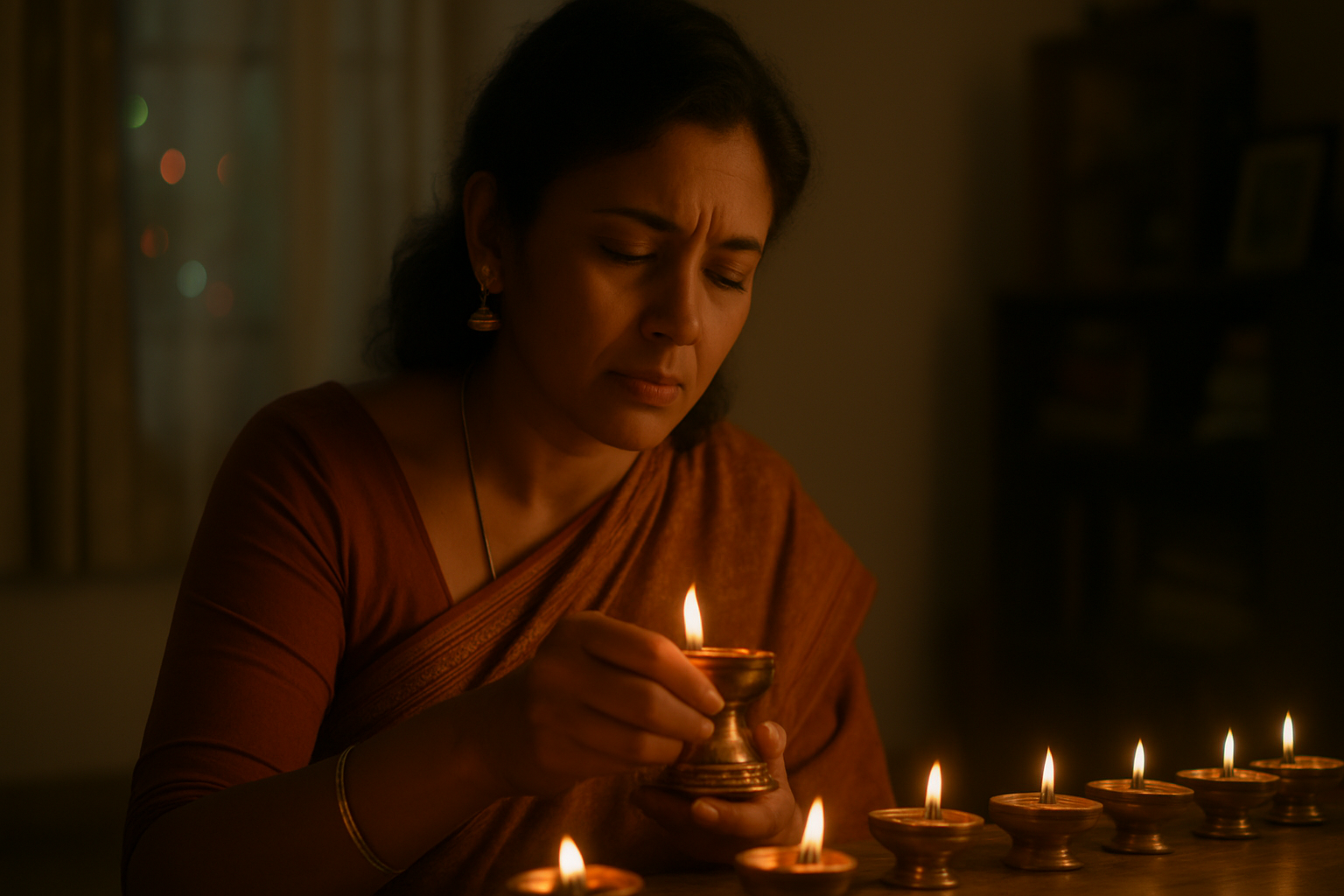
Every Diwali, we sweep, scrub, and decorate. We lay out sweets, buy new clothes, and post filtered pictures of light-filled evenings. Yet beneath the glitter, few pause to ask: what are we really celebrating? For me, Diwali has always been less about the fireworks outside and more about the quiet explosions within. It is the psychology of light.
As a life coach, I’ve watched countless people experience their own “Diwalis” — moments of dawning clarity after long stretches of internal darkness. Sometimes, those moments come after therapy, sometimes after heartbreak or failure. But the essence remains the same: the real illumination is inward.
The Ritual of Cleansing: A Mirror for the Mind
Every year, before the first diya is lit, families clean their homes meticulously. Curtains washed, cupboards emptied, junk thrown out. It’s a ritual of release, not vanity. Yet when it comes to our minds, we rarely show the same devotion.
We accumulate emotional clutter: unprocessed grief, grudges, guilt that quietly grows mould. Imagine if we treated our minds like our homes before Diwali. Would we still hoard so many regrets? Would we let negative self-talk lie like dust on the furniture of our thoughts?
One of my clients once told me, “I’ve kept a mental list of people I resent. I open it sometimes just to stay angry.” We both laughed, but she knew what I meant when I said, “It’s time to declutter that shelf.” The practice of cleansing before celebration isn’t just cultural; it’s psychological wisdom disguised as tradition.
From Darkness to Awareness
Diwali commemorates the triumph of light over darkness, but “darkness” isn’t evil; it’s ignorance. It’s acting from fear, habit, or pain rather than awareness. I often tell my coachees that we all have three states within us: the Parent, the Adult, and the Child. Most people live their lives reacting from either the wounded Child or the rigid Parent. Diwali is an invitation to return to the Adult, to awareness, balance, and choice.
We can’t banish darkness by hating it. We can only transform it by understanding it. Mental health works the same way. You can’t simply light affirmations over the ashes of avoidance. Healing begins when you dare to face what you’ve long kept hidden.
The Ramayana, which underpins the story of Diwali, isn’t just about victory. It’s about exile, endurance, and return. Every one of us goes through an exile, from our peace, our confidence, our authenticity, and the journey back home is what makes the light worth lighting.
Abundance without Awareness Is Just Noise
Lakshmi, the goddess of wealth, arrives only when the home is clean and the lamp is lit. Yet modern life celebrates Lakshmi without inviting Saraswati, the goddess of wisdom. The result? Prosperity without purpose.
I see it daily: people chasing promotions, followers, or luxury, yet feeling emptier by the year. The world teaches us to accumulate, but rarely to integrate. Diwali reminds us that abundance without awareness collapses. What’s the use of a mansion if you’re afraid to sit alone in it?
I once coached a successful entrepreneur who confessed, “Every Diwali, my house glows brighter, but I feel dimmer.” We explored that discomfort. He realised he’d been lighting lamps for the gods but not for himself. His inner world was still dark, crowded with expectations he no longer believed in. The following year, he celebrated quietly, with fewer lights, fewer guests, and more meaning.
Togetherness as Therapy
Another beautiful aspect of Diwali is the gathering. Families who haven’t spoken for months share a meal, neighbours exchange sweets, and laughter fills the cracks between people. Beneath that social noise is a profound psychological truth: connection heals.
Isolation is one of the silent epidemics of our time. We scroll, compare, and consume more than we converse. The ancient festival knew what we’ve forgotten: that human connection is a form of medicine. To sit together, to be seen, to share light, this is the original group therapy.
But there’s also a more complex truth. Togetherness often brings tension to the surface. Old wounds reopen at family tables. The light, quite literally, exposes what was hidden. If you find yourself triggered during festive gatherings, remember that illumination burns before it comforts. Growth rarely feels pretty in the beginning.
The Fragility of the Flame
A diya’s flame is delicate. One careless breeze, and it’s gone. That fragility mirrors mental health itself. You can’t take light for granted. You must guard it, not with walls but with presence.
Self-care has become a fashionable term, but it’s often confused with indulgence. True care is consistency: sleep when your mind screams to scroll, breathe when anxiety insists on panic, reflect when your ego rushes to react. Like tending a lamp, it’s about small, steady acts that keep your light alive.
In my own life, I’ve had Diwalis where the lights outside mocked the storm inside—smiling for others while battling quiet exhaustion. I learnt that you don’t always have to shine for the world. Sometimes, it’s enough to keep a single flame burning just for yourself. That, too, is victory.
Light as a Daily Practice
What if Diwali wasn’t a date but a discipline? What if every evening you asked, “Where did I bring light today?” Perhaps it was forgiving someone. Or saying no without guilt. Or sitting in silence long enough to hear your real thoughts.
Coaching, at its core, is about teaching people to create their own festivals of light. Not the performative kind, but the sustainable kind where the illumination comes from self-awareness and emotional courage.
Society often celebrates Diwali as the conquest of darkness. I see it more as a conversation with it. You don’t conquer your fears by destroying them; you outshine them through understanding.
The Real Festival
The real Diwali isn’t outside your window; it’s in your mind. The true fireworks happen when insight replaces illusion. When you stop chasing validation and start tending to your truth. When you no longer decorate your pain, but dismantle it.
So before you buy another box of lights this year, pause. Ask yourself: what part of me is waiting to come home from exile? What needs cleaning, forgiving, or releasing before the celebration begins?
Light, after all, isn’t the opposite of darkness. It’s its purpose.


