
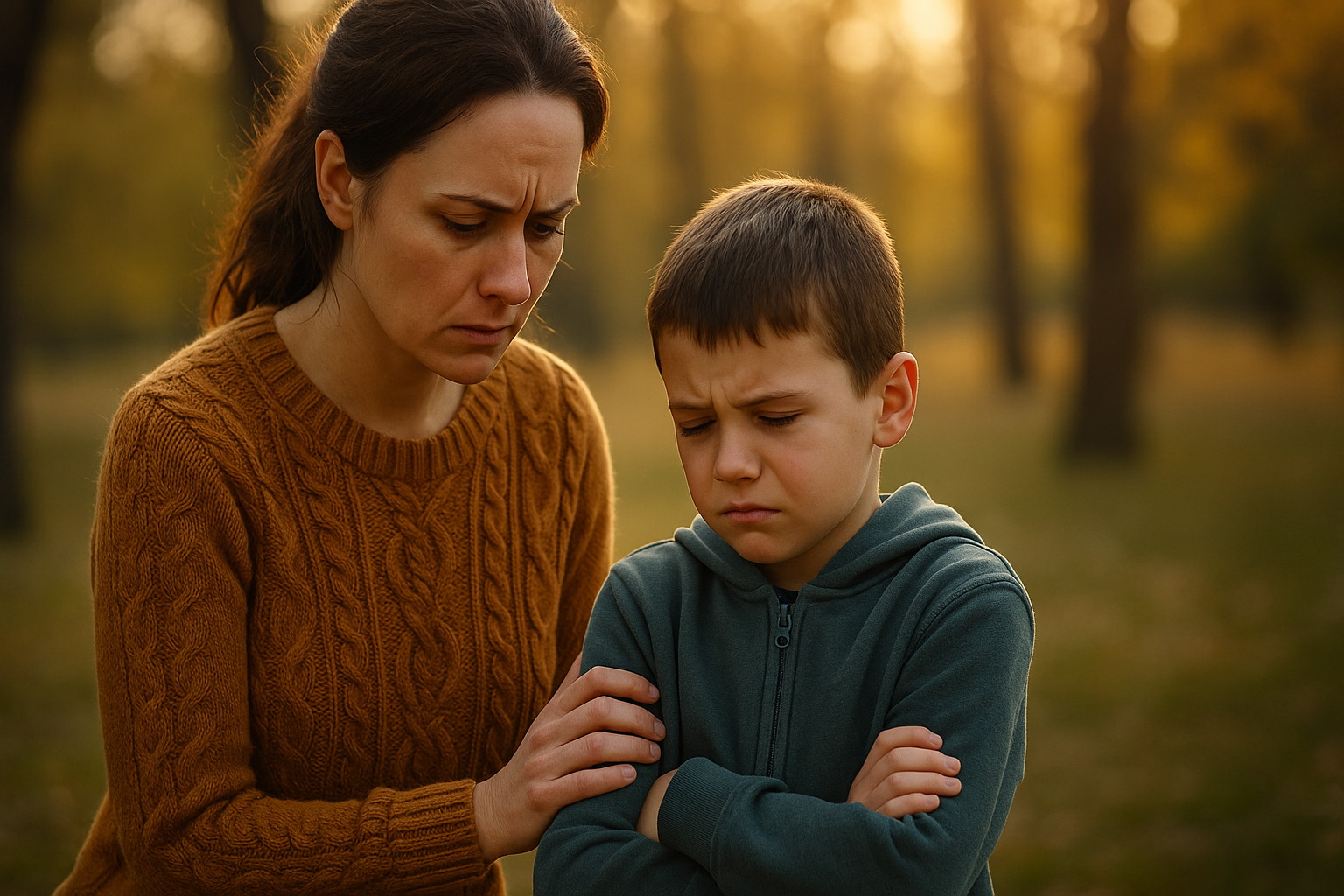
I sometimes catch myself smiling at the ironies of human progress. My parents grew up with very little. They made do with hand-me-downs, limited food choices, and an education system that was more survival than discovery. They wanted something different for me. And, in their own way, they gave it.
But now I look around at today’s parents—many of them my friends, colleagues, clients—and I see an arms race in parenting. Everyone wants to make sure their children never feel what they once felt: the sting of lack, the ache of longing, the humiliation of not having.
On paper, it sounds noble. Who wouldn’t want their child to have an easier path? But somewhere between aspiration and over-compensation, I worry we are creating a generation so protected that they will not know how to stand when the wind inevitably blows against them.
The Inherited Wounds We Try to Heal
Every parent is, in some sense, a rebel against their own childhood. A father who never had enough to eat ensures his son’s plate is always full. A mother who worked at fourteen buys every book, gadget, and tutor to spare her daughter the grind. I have met parents who measure their success not in their own comfort but in how completely they can erase their children’s discomfort.
Yet psychology whispers a hard truth: children don’t just inherit our advantages, they also inherit our fears. If we are haunted by hunger, by failure, by rejection, we often overcorrect, pouring our anxieties into our child’s upbringing. Instead of teaching resilience, we build cushions. Instead of preparing them for uncertainty, we construct a padded room.
The Trouble with “Better”
The word “better” is slippery. Better clothes? Better schools? Better toys? Better holidays? These may look impressive in photos, but do they actually build a stronger human being? I remember one conversation with a teenager whose parents had spared her every chore, every responsibility, because they wanted her to “focus on studies.” She could solve quadratic equations in minutes but had never boiled an egg. She confessed to me, in a trembling voice, that she was terrified of moving to university because she simply did not know how to live without help.
This is not an isolated story. Many of us know young people who crumble when their first boss criticises them, or when their first relationship ends badly. It is not because they are weak by nature. It is because their parents mistook protection for preparation.
Struggle Is Not a Punishment
I often think back to the times I struggled as a child. The exam I failed. The cricket match where I was the last to be picked. The day I had to patch my own trousers because my mother was working late. At the time, these moments felt unfair. Yet they forged something inside me that no amount of parental cushioning could have provided: adaptability.
Psychologists call this “stress inoculation.” Just as a vaccine introduces the body to a manageable dose of a virus, small struggles introduce the psyche to discomfort, teaching it how to respond without collapsing. Parents who erase all possibility of struggle unknowingly deny their children the psychological antibodies they will need later.
The Modern Trap of Parenting as Performance
There’s another layer to all this: parenting has become public. Social media feeds are full of children in designer clothes, exotic travel diaries, curated birthday parties. Parents aren’t just raising children; they are curating brands. To be a “good parent” is no longer about love and guidance—it is about spectacle.
I find it fascinating, and troubling, that parents will often justify these excesses as “giving a better childhood.” But if the better childhood is mostly about the child being an accessory in the parent’s own redemption story, then who is it really for?
The Missing Ingredient: Space to Fail
I once mentored a young professional who had never been told “no” at home. He had been the golden boy, praised and indulged. When his first manager rejected his project proposal, he fell into a deep spiral of depression. He admitted no one had ever trained him to separate his worth from his work. His parents thought they were protecting him from pain. In truth, they had stolen from him the practice of bouncing back.
Failure is not the enemy of a good life; it is the tutor of resilience. But failure requires exposure. Parents who eliminate every risk, every scrape, every potential fall, raise children who stand on pedestals with no balance. The higher they are raised, the harder the eventual tumble.
The Emotional Economy of Sacrifice
Of course, I understand the parental impulse. Love is irrational. If I have suffered, I want to spare you. If I have been scarred, I want to shield you. But love, unchecked by wisdom, can spoil as easily as it can save. We forget that resilience, independence, and inner strength are not gifted; they are grown in the soil of difficulty.
I sometimes ask parents this uncomfortable question: Are you giving your child the life they need, or the life you wish you had? The two are rarely the same. One is grounded in the child’s growth; the other is tangled in the parent’s wounds.
Towards a Different Kind of “Better”
Maybe it’s time to redefine “better.” Not better gadgets, schools, or birthday parties. But better chances to make mistakes. Better opportunities to discover self-worth. Better room to question, to fail, to learn how to patch their own trousers.
Children don’t need a museum of comfort curated by their parents. They need a rehearsal space for real life. They need to learn that hunger sharpens gratitude, rejection sharpens self-awareness, and effort sharpens character. They need to know that suffering, in small doses, is not cruelty but training.
My Last Words
The most powerful gift a parent can give is not a life without pain but the courage to face it. Shielding children from every difficulty might look like love, but it often leaves them fragile. The paradox of parenting is this: to truly protect your child, you must sometimes allow them to suffer.
And so, I return to the irony I began with. Our parents suffered and made us stronger. We, determined to be kinder, may be making ours weaker. Perhaps love’s hardest task is knowing when to step back and let the world toughen the ones we cherish most.


Leave a Reply