
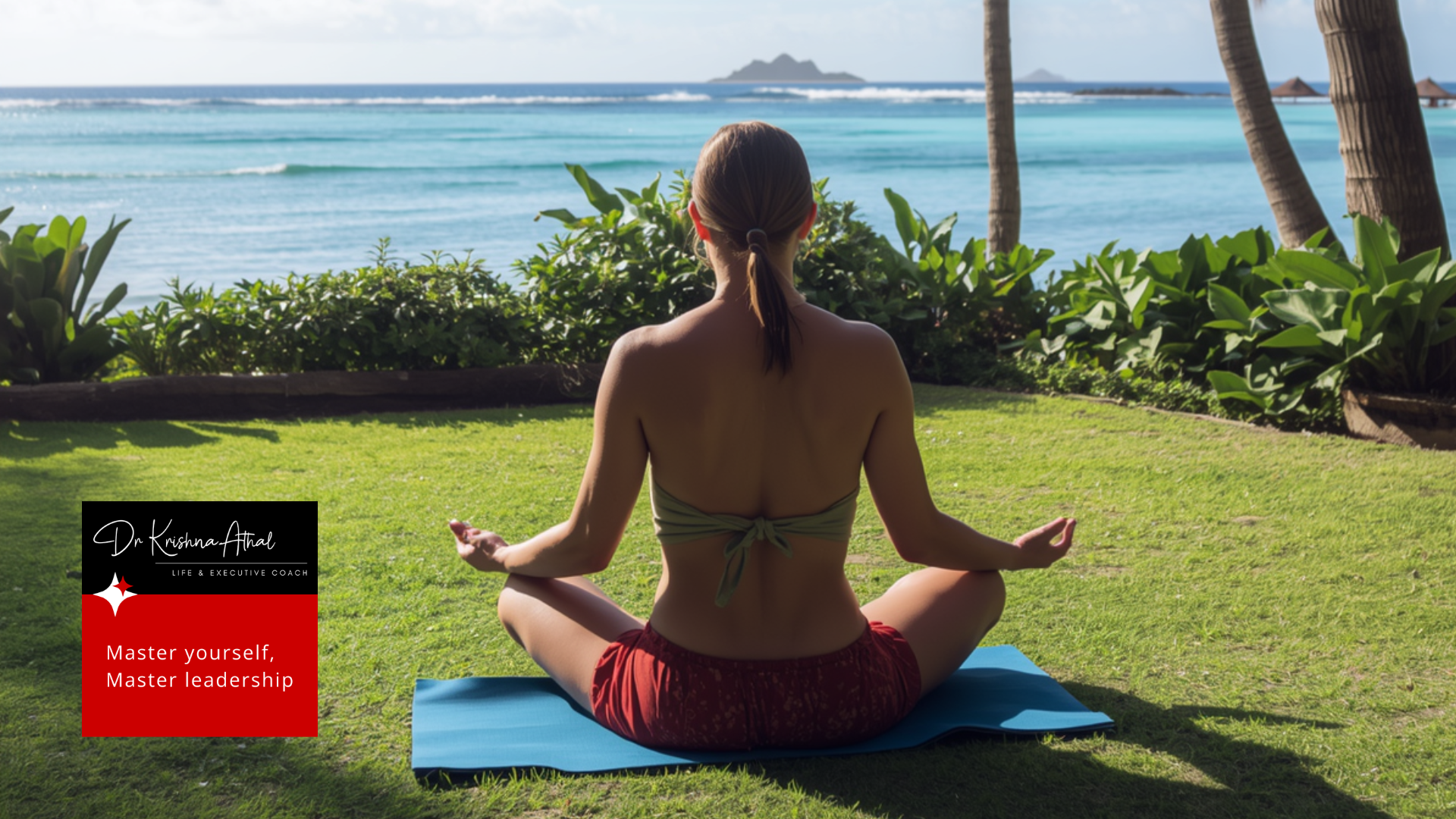
Meditation in Mauritius is no longer a fringe interest for mystics, retirees, or the spiritually dramatic. It is becoming a quiet necessity for ordinary people living under extraordinary inner pressure. On an island known for lagoons, weddings, and postcard calm, many nervous systems are anything but calm. When I think about meditation in Mauritius, I do not just think about technique. I think about loneliness, overstimulation, emotional fatigue, and the human hunger to come home to oneself.
The island looks calm. The mind often is not.
Meditation in Mauritius has become more relevant because modern life here, like everywhere else, is noisy in subtler ways. There is social comparison, family pressure, financial strain, digital overstimulation, and the peculiar exhaustion of always having to appear fine. A beach does not regulate a burnt-out nervous system by itself. A sunset is beautiful, yes. But beauty is not the same as healing.
From a neuroscience point of view, meditation helps settle what psychologists often call hyperarousal. That simply means the brain and body remain stuck in a low-grade fight-or-flight mode. The amygdala, which helps detect threat, becomes overactive. The prefrontal cortex, which supports reflection and self-control, gets outmuscled by urgency, impulse, and emotional reactivity. Meditation is not magic. It is training. It helps the mind stop behaving like a room full of people shouting over each other.
That is why I find meditation in Mauritius worth discussing seriously. Not as lifestyle decoration, but as mental hygiene.
Meditation in Mauritius is not one thing
One mistake people make is to treat meditation in Mauritius as a single category. It is not. Some spaces are devotional. Some are secular-ish. Some are retreat-led. Some are discipline-heavy. Some are structured around breathwork, mantra, silence, self-inquiry, or Raja Yoga. That matters, because the right place depends on what the person is actually seeking.
If someone is emotionally frayed, highly anxious, and new to inner work, they may need guided entry and community. If someone is already serious and wants silence, retreat structure, and less chatter, a different path may fit. If someone wants meditation in Mauritius only because it sounds elegant on Instagram, I would gently suggest that incense is not transformation.
The main centres and organisations offering meditation in Mauritius
When people search for meditation in Mauritius, they usually want real places, not vague philosophy. Mauritius does have a meaningful range of centres and organisations.
The Brahma Kumaris in Mauritius offer free Raja Yoga meditation courses and community programmes through their local organisation. Their Global Peace House is described as one of the main Brahma Kumaris centres in Mauritius, and it coordinates sub-centres in Goodlands, Triolet, and Rivière du Rempart. Their approach is gentle, value-based, and reflective, with a strong emphasis on self-respect, soul-consciousness, and inner peace.
The Art of Living Mauritius is one of the more visible structured organisations for meditation in Mauritius. Their official site lists a centre in Wooton, Curepipe, and also references activity in Goodlands, with courses, regular follow-ups, meditation and breath-based programmes, including Sahaj Samadhi and silence retreats.
For those drawn to silent discipline rather than conversational spirituality, Vipassana in Mauritius is available through the Goenka tradition. The official schedule shows 10-day Vipassana courses in Mauritius, run on a donation basis, and clarifies that in Mauritius these are currently held at non-centre course sites, meaning temporary venues rather than a permanent dedicated centre.
Those interested in mantra-based practice can look into Transcendental Meditation in Mauritius through Maharishi Vedic University Mauritius, whose official site says it has been teaching TM in Mauritius for more than 50 years and identifies the Maharishi Ayurveda & Transcendental Meditation Centre in the Port Louis stream of its local offering.
A more holistic alternative is the Centre for Natural Healing and Meditation in Bonne Terre, Vacoas, which presents itself as a local centre offering free meditation sessions and related practices such as chakra meditation and other healing-oriented modalities.
For those drawn to yogic or devotional pathways, Bhakti Marga Mauritius offers yoga and meditation within a bhakti, or devotional, framework. Its Mauritius site positions meditation as part of a God-centred path rather than a purely stress-management practice.
There is also a Mauritius Meditation Circle affiliated with Self-Realisation Fellowship, listed in Espérance, Mauritius, for those interested in the Yogananda tradition and group meditation.
Alongside these organisations, there are retreat-style wellness spaces such as The Quiet Space, which offers meditation, mindfulness, breathwork, workshops and retreats in Mauritius. These spaces may suit people looking for a softer, more integrative entry point into meditation in Mauritius, especially if they prefer a wellness setting over a formal spiritual organisation.
My take on meditation in Mauritius
My take is simple. Meditation in Mauritius should not become another performance of goodness. We already perform enough. We perform strength, niceness, spirituality, marriage, success, and even healing. I have no interest in meditation that merely teaches people how to sit beautifully while avoiding the truth.
I value meditation in Mauritius when it helps a person become more honest, less reactive, less vain, and less enslaved by every passing emotion. Real meditation should improve your relationship with silence, yes, but also with conflict, frustration, envy, grief, and desire. If your meditation does not make you kinder to the people you live with, more accountable for your patterns, and less addicted to external noise, then something has gone a bit cosmetic.
I say this with affection. Mauritius does not only need more meditation classes. It needs more psychologically mature practitioners. More people who can breathe before reacting. More people who do not weaponise spirituality to avoid difficult conversations. More people who can sit alone without immediately reaching for their phone, their ego, or a new distraction dressed up as destiny.
How to choose the right place
If you are exploring meditation in Mauritius for the first time, choose based on your temperament, not the trend. If you want silence and rigour, Vipassana may appeal. If you want structured spiritual teaching and a gentler entry point into a community, Brahma Kumaris may work. If you want breathwork and guided courses, Art of Living may suit you. If you want mantra-based practice, Transcendental Meditation may resonate. If you want a hybrid healing space, Vacoas-based holistic centres or retreat spaces may feel more accessible.
The question is not, “Which centre is best?” The better question is, “What is my nervous system, my personality, and my season of life actually asking for?”
That is a more intelligent beginning.
Meditation is not escape. It is return.
The deepest reason I care about meditation in Mauritius is that this island, for all its beauty, is not immune to modern fragmentation. People are connected and cut off at the same time. Families live close and speak little truth. Many high-functioning adults are carrying fatigue that no holiday can fix. Meditation, done properly, becomes a return to psychological reality.
It teaches interoception, which is the ability to notice what is happening inside the body. It strengthens attentional control, meaning the mind is less dragged around by every stimulus. It improves emotional regulation, which is simply the skill of having a feeling without becoming its employee.
That is no small thing.
So yes, meditation in Mauritius is worth pursuing. But not as a fashionable accessory. Not as borrowed serenity. Not as spiritual theatre. I would rather see one honest beginner sit for ten minutes a day than a hundred people advertise peace they have never really practised.
Mauritius does not need more appearances of calm. It needs more inner steadiness.


Leave a Reply